English
- Afrikaans
- Albanian
- Amharic
- Arabic
- Armenian
- Azerbaijani
- Basque
- Belarusian
- Bengali
- Bosnian
- Bulgarian
- Catalan
- Cebuano
- Corsican
- Croatian
- Czech
- Danish
- Dutch
- English
- Esperanto
- Estonian
- Finnish
- French
- Frisian
- Galician
- Georgian
- German
- Greek
- Gujarati
- Haitian Creole
- hausa
- hawaiian
- Hebrew
- Hindi
- Miao
- Hungarian
- Icelandic
- igbo
- Indonesian
- irish
- Italian
- Japanese
- Javanese
- Kannada
- kazakh
- Khmer
- Rwandese
- Korean
- Kurdish
- Kyrgyz
- Lao
- Latin
- Latvian
- Lithuanian
- Luxembourgish
- Macedonian
- Malgashi
- Malay
- Malayalam
- Maltese
- Maori
- Marathi
- Mongolian
- Myanmar
- Nepali
- Norwegian
- Norwegian
- Occitan
- Pashto
- Persian
- Polish
- Portuguese
- Punjabi
- Romanian
- Russian
- Samoan
- Scottish Gaelic
- Serbian
- Sesotho
- Shona
- Sindhi
- Sinhala
- Slovak
- Slovenian
- Somali
- Spanish
- Sundanese
- Swahili
- Swedish
- Tagalog
- Tajik
- Tamil
- Tatar
- Telugu
- Thai
- Turkish
- Turkmen
- Ukrainian
- Urdu
- Uighur
- Uzbek
- Vietnamese
- Welsh
- Bantu
- Yiddish
- Yoruba
- Zulu

Telephone: +86 13120555503
Email: frank@cypump.com


Apr . 01, 2024 17:55 Back to list
Ejector System Performance Analysis
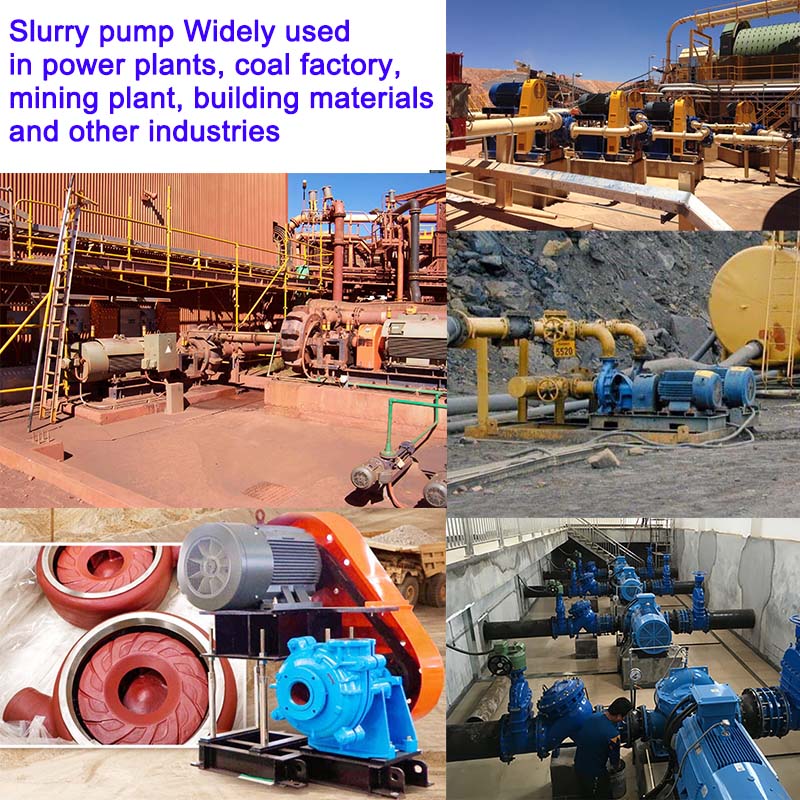
Introduction
Ejector systems, also known as eductors or jet pumps, are static mixing devices used to convey fluids or gases. They operate on Bernoulli's principle, utilizing the momentum transfer from a high-velocity motive fluid to entrain and transport a secondary fluid. In industrial applications, ejector systems find use in vacuum generation, liquid transfer, chemical processing, and wastewater treatment. Their advantage lies in their simplicity – possessing no moving parts – leading to reduced maintenance and increased reliability compared to mechanical pumps. However, their efficiency is sensitive to pressure differentials and fluid properties, constituting a critical design consideration. This guide provides an in-depth technical exploration of ejector system design, materials, performance, failure modes, and relevant industry standards, geared towards B2B industrial procurement and engineering professionals.
Material Science & Manufacturing
The construction of an ejector system necessitates careful material selection based on fluid compatibility, operating pressure, and temperature. Common materials include stainless steels (304, 316L, 316Ti) for corrosive environments, carbon steel (ASTM A53 Grade B) for less aggressive applications, and various polymers (PTFE, PVC, Polypropylene) for specific chemical resistance requirements. The nozzle, which generates the high-velocity motive fluid stream, is typically fabricated from hardened metals to resist erosion. Manufacturing processes vary depending on the scale and complexity of the ejector. Small-scale ejectors are often machined from solid stock using CNC milling and turning. Larger ejectors often involve fabrication via welding of rolled and formed plates. Critical parameters during manufacturing include nozzle diameter tolerances (±0.02mm), throat diameter accuracy (±0.01mm), and the smoothness of internal surfaces to minimize frictional losses. Welding processes (GTAW/TIG, SMAW) require strict adherence to ASME Section IX for quality control and non-destructive testing (NDT) such as radiographic inspection (RT) and ultrasonic testing (UT). Surface treatments like passivation for stainless steel components are employed to enhance corrosion resistance. Polymer ejectors are commonly produced using injection molding, demanding precise mold design and control of melt temperature, injection pressure, and cooling rates to achieve dimensional accuracy and eliminate internal stresses.
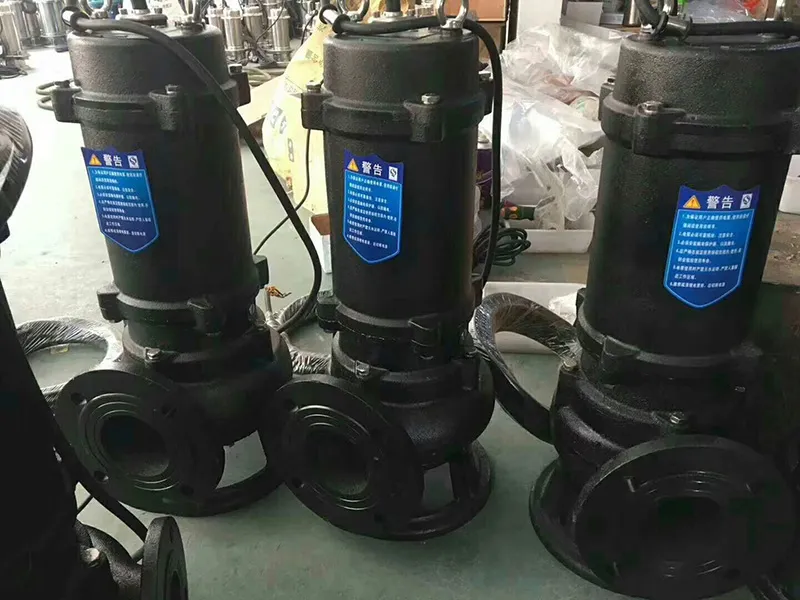
Performance & Engineering
Ejector system performance is dictated by several key engineering principles. The entrainment ratio (mass flow rate of secondary fluid / mass flow rate of motive fluid) is a primary metric. This ratio is heavily influenced by the motive fluid pressure, the pressure of the secondary fluid, and the geometry of the ejector. Bernoulli's equation dictates that increasing the motive fluid velocity generates a lower pressure at the throat, creating suction that draws in the secondary fluid. However, momentum transfer efficiency isn’t perfect; friction losses within the mixing chamber and diffuser reduce overall performance. Computational Fluid Dynamics (CFD) modeling is extensively used to optimize ejector geometry for maximum entrainment ratio and minimize pressure drop. Force analysis must account for the hydrodynamic forces acting on the ejector body, particularly in applications involving high-velocity fluids. Environmental resistance considerations include temperature extremes, UV exposure (for polymeric components), and corrosive attack. Compliance requirements depend on the application. For instance, ejectors used in food and beverage processing must adhere to 3-A Sanitary Standards, while those used in hazardous environments require ATEX certification to prevent ignition of flammable materials. Proper sizing of the ejector is crucial. Undersizing leads to insufficient flow, while oversizing results in inefficient operation and increased energy consumption.
Technical Specifications
| Parameter | Unit | Typical Value (Stainless Steel Ejector) | Typical Value (PVC Ejector) |
|---|---|---|---|
| Motive Fluid Pressure | bar | 2 - 10 | 0.5 - 3 |
| Entrainment Ratio (Air/Water) | - | 5:1 - 15:1 | 3:1 - 8:1 |
| Maximum Suction Lift | m | 8 - 12 | 3 - 6 |
| Maximum Operating Temperature | °C | 200 | 60 |
| Motive Fluid Connection Size | mm | 1/2" - 2" | 1/4" - 1" |
| Suction Fluid Connection Size | mm | 1/2" - 4" | 1/4" - 2" |
Failure Mode & Maintenance
Ejector systems, while mechanically simple, are susceptible to several failure modes. Erosion of the nozzle due to abrasive particles in the fluid stream is a common issue, leading to a reduction in motive fluid velocity and decreased entrainment ratio. Cavitation, caused by low suction pressure, can damage the ejector’s internal surfaces. Corrosion, particularly in aggressive chemical environments, can weaken the material and cause leaks. Fatigue cracking may occur in welded joints subjected to cyclic loading. Delamination can be observed in polymer ejectors due to improper molding or thermal stresses. Oxidation of stainless steel components at high temperatures can also lead to performance degradation. Preventive maintenance includes regular inspection for erosion, corrosion, and cracks. Periodic cleaning to remove deposits and debris is crucial. Nozzle replacement is often necessary when erosion becomes significant. Lubrication of any external seals or bearings (if present) should be performed according to manufacturer’s recommendations. For polymeric ejectors, avoid exposure to incompatible chemicals and excessive temperatures. Non-destructive testing (NDT) methods such as visual inspection, ultrasonic testing, and liquid penetrant testing can detect hidden defects before they lead to catastrophic failure.
Industry FAQ
Q: What are the key differences between liquid-jet ejectors and gas-jet ejectors, and how does this impact material selection?
A: Liquid-jet ejectors utilize a liquid motive fluid, generally water, and are suited for vacuum creation or liquid transfer. They can handle higher entrainment ratios than gas-jet ejectors. Material selection prioritizes corrosion resistance, particularly with water-based solutions, making stainless steel (316L) a common choice. Gas-jet ejectors utilize a gaseous motive fluid, such as steam or compressed air, and are preferred for lower flow rates and applications where liquid contamination is undesirable. Material selection focuses on temperature resistance (for steam) and erosion resistance (for air-borne particles).
Q: How does the specific gravity of the fluids being handled affect ejector performance?
A: The specific gravity difference between the motive and secondary fluids significantly impacts performance. A larger difference generally leads to a higher entrainment ratio. Ejectors are typically designed for specific fluid densities; significant deviations can reduce efficiency. For example, an ejector designed for water may exhibit reduced performance when used with a heavier oil.
Q: What is the role of the diffuser section in an ejector, and how does its design influence efficiency?
A: The diffuser section is crucial for converting the kinetic energy of the mixed motive and secondary fluid streams into static pressure, recovering pressure energy and increasing overall efficiency. A properly designed diffuser with a gradual expansion angle minimizes flow separation and turbulence, maximizing pressure recovery. A poorly designed diffuser can cause significant energy losses and reduce entrainment ratio.
Q: Can ejectors be used to handle fluids containing solids, and what are the considerations?
A: While ejectors can handle fluids with some solids content, it's not ideal. Abrasive solids will accelerate erosion of the nozzle and internal surfaces. Larger solids can cause blockage and reduce flow. If handling fluids with solids is unavoidable, selecting hardened materials (e.g., tungsten carbide coatings for the nozzle) and incorporating a strainer upstream of the ejector is recommended.
Q: What are the limitations of using ejectors compared to positive displacement pumps?
A: Ejectors have lower efficiency compared to positive displacement pumps, particularly at high pressure differentials. Their performance is heavily dependent on the motive fluid pressure, and they are less effective at self-priming. Positive displacement pumps offer consistent flow rates regardless of discharge pressure, while ejector flow rates vary. However, ejectors excel in applications requiring simplicity, reliability, and the ability to handle fluids with entrained gases.
Conclusion
Ejector systems represent a robust and reliable solution for fluid and gas conveyance in a wide range of industrial applications. Their inherent simplicity, lack of moving parts, and adaptability to diverse fluids offer significant advantages. However, achieving optimal performance requires careful consideration of material selection, geometric design, and operating parameters. Understanding the limitations regarding efficiency and sensitivity to fluid properties is crucial for successful implementation.
Future developments in ejector technology will likely focus on improving efficiency through advanced CFD modeling, exploring novel materials with enhanced erosion and corrosion resistance, and integrating smart sensors for real-time performance monitoring and control. The continued demand for sustainable and energy-efficient industrial processes will drive innovation in ejector system design and applications.
-
Precision at the Pump: How Better Machining Protects Flow and Uptime
News2026-11-20
-
Why Pump Reliability Begins Before the First Drop of Fluid
News2026-11-20
-
Beyond the Pump: Designing Safer Access Around Critical Water Infrastructure
News2026-11-20
-
Why Pumping Stations Depend on the Infrastructure Beneath the Pumps
News2026-11-20
-
Beyond the Pump Room: How Smarter Loading Protects Industrial Equipment
News2026-11-19
-
When Pumps Stop: Designing More Resilient Power for Critical Pumping Systems
News2026-11-19
-
The Hidden Role of Dust and Gas Monitoring in Reliable Pump Operations
News2026-11-19
-
The Hidden Role of Mineral Compounds in Extending Industrial Pump Lifespan
News2026-10-12
-
Why Pump System Reliability Depends on Precision Hose Assembly Methods
News2026-09-15
-
How Advanced Imaging Films Are Transforming Pump Component Quality Control
News2026-08-25
-
How Advanced Filtration Protects Pump Systems from Premature Wear and Costly Downtime
News2026-08-25
-
How Steel Material Selection Drives Pump Reliability in Heavy-Duty Systems
News2026-08-25
-
Ensuring Pump System Efficiency: The Role of High-Quality Pipe Fittings and Tubing
News2026-08-24
-
Optimizing Fluid Dynamics and Material Consistency in Industrial Processing
News2026-08-18
-
Innovations and Challenges in Hydraulic Systems for Heavy Machinery
News2026-08-13




