English
- Afrikaans
- Albanian
- Amharic
- Arabic
- Armenian
- Azerbaijani
- Basque
- Belarusian
- Bengali
- Bosnian
- Bulgarian
- Catalan
- Cebuano
- Corsican
- Croatian
- Czech
- Danish
- Dutch
- English
- Esperanto
- Estonian
- Finnish
- French
- Frisian
- Galician
- Georgian
- German
- Greek
- Gujarati
- Haitian Creole
- hausa
- hawaiian
- Hebrew
- Hindi
- Miao
- Hungarian
- Icelandic
- igbo
- Indonesian
- irish
- Italian
- Japanese
- Javanese
- Kannada
- kazakh
- Khmer
- Rwandese
- Korean
- Kurdish
- Kyrgyz
- Lao
- Latin
- Latvian
- Lithuanian
- Luxembourgish
- Macedonian
- Malgashi
- Malay
- Malayalam
- Maltese
- Maori
- Marathi
- Mongolian
- Myanmar
- Nepali
- Norwegian
- Norwegian
- Occitan
- Pashto
- Persian
- Polish
- Portuguese
- Punjabi
- Romanian
- Russian
- Samoan
- Scottish Gaelic
- Serbian
- Sesotho
- Shona
- Sindhi
- Sinhala
- Slovak
- Slovenian
- Somali
- Spanish
- Sundanese
- Swahili
- Swedish
- Tagalog
- Tajik
- Tamil
- Tatar
- Telugu
- Thai
- Turkish
- Turkmen
- Ukrainian
- Urdu
- Uighur
- Uzbek
- Vietnamese
- Welsh
- Bantu
- Yiddish
- Yoruba
- Zulu

Telephone: +86 13120555503
Email: frank@cypump.com


Apr . 01, 2024 17:55 Back to list
Ejector Pump Sewer Performance Analysis
Introduction
Ejector pump sewer systems are critical components of wastewater management in buildings and infrastructure where gravity drainage is insufficient. These systems utilize a submersible pump within a pit to collect and discharge wastewater, sewage, and stormwater to a municipal sewer system or septic tank. The technical positioning within the wastewater infrastructure chain is as a lift station, providing the hydraulic head necessary to overcome elevation differences or long distances. Core performance characteristics are defined by flow rate (gallons per minute or liters per second), total dynamic head (TDH – the vertical distance the pump can lift the fluid, plus friction losses), motor horsepower, and solids handling capability. Addressing common pain points in the industry such as frequent pump failures due to abrasive solids, insufficient pump capacity leading to backups, and corrosion of system components requires a thorough understanding of the materials, design, and operational considerations outlined in this guide.
Material Science & Manufacturing
Ejector pump systems are constructed from several key materials, each chosen for specific properties. Pump housings are commonly made from cast iron (ASTM A48 Class 30), stainless steel (304 or 316 for enhanced corrosion resistance – ASTM A240), or high-density polyethylene (HDPE) for smaller, residential applications. Impeller materials are typically ductile iron (ASTM A536) or bronze for improved wear resistance and efficiency. The pump’s motor casing is usually cast iron or steel, encapsulating a hermetically sealed motor. Manufacturing processes involve several stages: casting of the pump housing and impeller, machining to precise tolerances, assembly of the pump end (impeller, diffuser, wear plates), and finally, integration with the electric motor and a check valve to prevent backflow. Critical parameter control during manufacturing includes impeller balancing to minimize vibration, concentricity of the pump shaft, and proper sealing of the motor to prevent ingress of wastewater. Shaft seals are frequently composed of silicon carbide mechanical seals (DIN 24960) due to their hardness and resistance to abrasion. The pit itself is often constructed of reinforced concrete (ACI 318) or precast concrete sections, sealed with a waterproof coating to prevent groundwater infiltration. The selection of materials must account for the pH levels and chemical composition of the wastewater being handled, to mitigate corrosion.
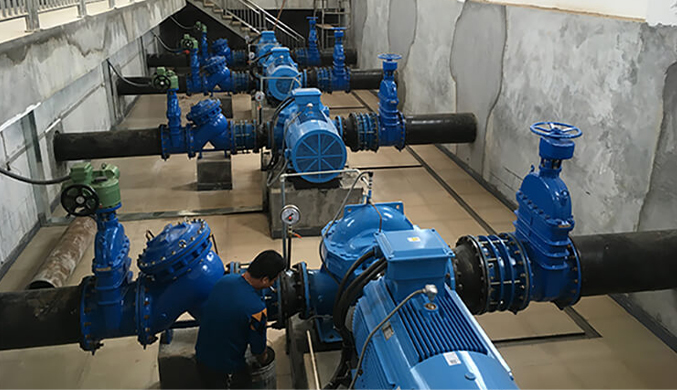
Performance & Engineering
Ejector pump performance is fundamentally governed by hydraulic principles, specifically the relationship between flow rate, head, and power. Force analysis involves calculating the hydrostatic pressure at the pump inlet, the dynamic pressure created by the impeller, and the frictional losses within the piping system. The pump’s curve, a graphical representation of flow rate versus head, is a critical design parameter. Environmental resistance considerations include temperature extremes (impacting lubricant viscosity and seal performance), humidity (potential for corrosion), and the presence of corrosive chemicals in the wastewater. Compliance requirements are dictated by local and national plumbing codes (IPC, UPC), electrical safety standards (UL 508A, IEC 60079), and environmental regulations regarding discharge limits. Functional implementation requires accurate sizing of the pump to meet peak flow demands, proper selection of piping materials and diameters to minimize friction losses (Darcy-Weisbach equation), and installation of appropriate controls such as float switches (SPDT) to automatically start and stop the pump based on liquid level in the pit. A key engineering challenge is preventing vortex formation in the pit, which can draw air into the pump and reduce efficiency. Anti-vortex baffles and properly designed inlet configurations are essential.
Technical Specifications
| Parameter | Unit | Typical Value (Residential) | Typical Value (Commercial) |
|---|---|---|---|
| Flow Rate | GPM (Gallons Per Minute) | 20-40 | 100-500 |
| Total Dynamic Head (TDH) | Feet | 10-20 | 30-100 |
| Motor Horsepower | HP | 1/2 - 1 | 3-10 |
| Solids Handling Capability | Inches | 1-2 | 2-4 |
| Discharge Pipe Size | Inches | 1.25 - 2 | 3-6 |
| Voltage | V | 120/240 | 208-230/460 |
Failure Mode & Maintenance
Ejector pump failures are often attributed to several common modes. Fatigue cracking in the impeller or housing can occur due to repeated stress cycles and cavitation. Delamination of the pump’s coating or internal lining can expose the metal to corrosion. Degradation of the motor windings can result from overheating or moisture ingress. Oxidation and corrosion, particularly in systems handling corrosive wastewater, significantly reduce component life. Abrasive solids can cause excessive wear on the impeller and seals. Failure analysis often reveals that insufficient maintenance is a contributing factor. Regular maintenance procedures include inspection of the pump for wear and corrosion, cleaning of the pump pit to remove debris, lubrication of motor bearings, testing of the check valve, and verification of float switch operation. Predictive maintenance techniques, such as vibration analysis (ISO 10816) and infrared thermography, can identify potential failures before they occur. Replacement of worn components, such as impellers, seals, and check valves, is crucial to prevent catastrophic failures. Annual inspection and cleaning of the wet well are recommended, alongside periodic testing of emergency backup systems.
Industry FAQ
Q: What are the primary causes of ejector pump failure in a municipal wastewater lift station?
A: The primary causes in municipal applications are often related to the higher volume and variety of solids present in the wastewater stream. Excessive wear from abrasive materials, rag accumulation leading to pump blockage and overheating, and corrosion from hydrogen sulfide (H2S) and other corrosive compounds are common. Proper solids management strategies and corrosion-resistant materials are critical.
Q: How does the impeller design affect pump efficiency and solids handling capability?
A: Impeller design is a crucial factor. A radial impeller generally provides higher head but lower flow, while a mixed-flow impeller offers a balance. Open impellers are better suited for handling solids as they are less prone to clogging, but typically have lower efficiency than closed impellers. Vane angle and impeller diameter also directly impact performance.
Q: What are the benefits of using a duplex stainless steel (e.g., 2205) for pump components in corrosive environments?
A: Duplex stainless steels offer superior corrosion resistance compared to austenitic stainless steels (e.g., 304, 316), particularly against pitting and crevice corrosion in chloride-rich environments. They also possess higher strength and improved resistance to stress corrosion cracking, extending the service life of pump components.
Q: What is the role of the check valve, and what types are commonly used in ejector pump systems?
A: The check valve prevents backflow of wastewater into the pump pit when the pump shuts off, maintaining prime and preventing water hammer. Common types include swing check valves, lift check valves, and silent check valves. The selection depends on factors like flow rate, pressure drop, and potential for water hammer.
Q: How often should the pump pit be inspected and cleaned to prevent operational problems?
A: The pump pit should be inspected and cleaned at least annually, and more frequently in systems prone to excessive solids accumulation. Regular cleaning removes debris, prevents blockage of the pump inlet, and minimizes the formation of harmful gases. A detailed inspection should also include a check of the pit’s structural integrity and sealing.
Conclusion
Ejector pump sewer systems represent a vital, yet often overlooked, component of modern wastewater infrastructure. Achieving reliable and efficient operation necessitates a comprehensive understanding of material science, hydraulic principles, and manufacturing processes. Selecting appropriate materials resistant to corrosion and abrasion, ensuring precise manufacturing tolerances, and implementing a robust preventative maintenance program are all essential for maximizing system longevity and minimizing operational disruptions.
Future advancements in ejector pump technology are likely to focus on improved pump efficiency through optimized impeller designs, the integration of smart sensors for predictive maintenance, and the development of more durable and corrosion-resistant materials. Continued adherence to industry standards and best practices will be critical for ensuring the long-term performance and reliability of these critical systems.
-
Comprehensive Guide to Waterproof ORings for Optimal Sealing Solutions
News2026-06-09
-
submergable pump Material Science
News2026-06-23
-
sewer injection pump Performance Engineering
News2026-06-23
-
Sewer Ejector Pump System Performance Analysis
News2026-06-23
-
septic tank pump for sale Performance Engineering
News2026-06-23
-
septic pump for sale Performance Engineering
News2026-06-23
-
septic ejector system Performance Analysis
News2026-06-22
-
replace septic pump Performance Analysis
News2026-06-22
-
pump system septic tank Performance Analysis
News2026-06-22
-
lift pump for sewer Performance and Engineering
News2026-06-22
-
industrial submersible water pump Material Science
News2026-06-22
-
industrial submersible pumps Material Science and Manufacturing
News2026-06-21
-
best sewer ejector pump Performance Analysis
News2026-06-21
-
best septic pump Performance Analysis
News2026-06-21
-
1 2 hp septic pump Performance Engineering
News2026-06-21




