English
- Afrikaans
- Albanian
- Amharic
- Arabic
- Armenian
- Azerbaijani
- Basque
- Belarusian
- Bengali
- Bosnian
- Bulgarian
- Catalan
- Cebuano
- Corsican
- Croatian
- Czech
- Danish
- Dutch
- English
- Esperanto
- Estonian
- Finnish
- French
- Frisian
- Galician
- Georgian
- German
- Greek
- Gujarati
- Haitian Creole
- hausa
- hawaiian
- Hebrew
- Hindi
- Miao
- Hungarian
- Icelandic
- igbo
- Indonesian
- irish
- Italian
- Japanese
- Javanese
- Kannada
- kazakh
- Khmer
- Rwandese
- Korean
- Kurdish
- Kyrgyz
- Lao
- Latin
- Latvian
- Lithuanian
- Luxembourgish
- Macedonian
- Malgashi
- Malay
- Malayalam
- Maltese
- Maori
- Marathi
- Mongolian
- Myanmar
- Nepali
- Norwegian
- Norwegian
- Occitan
- Pashto
- Persian
- Polish
- Portuguese
- Punjabi
- Romanian
- Russian
- Samoan
- Scottish Gaelic
- Serbian
- Sesotho
- Shona
- Sindhi
- Sinhala
- Slovak
- Slovenian
- Somali
- Spanish
- Sundanese
- Swahili
- Swedish
- Tagalog
- Tajik
- Tamil
- Tatar
- Telugu
- Thai
- Turkish
- Turkmen
- Ukrainian
- Urdu
- Uighur
- Uzbek
- Vietnamese
- Welsh
- Bantu
- Yiddish
- Yoruba
- Zulu

Telephone: +86 13120555503
Email: frank@cypump.com


Apr . 01, 2024 17:55 Back to list
Ejector Pump Cost Analysis
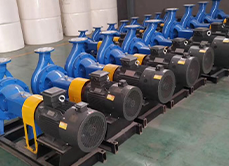
Introduction
Ejector pumps, also known as jet pumps, represent a crucial component in numerous industrial fluid handling systems. Their function is to utilize a motive fluid to entrain and convey another fluid – the suction fluid – without employing moving mechanical parts. This guide comprehensively details ejector pump cost considerations, extending beyond initial purchase price to encompass lifecycle costs, material selection impact, and performance factors. Within the broader pump industry, ejector pumps occupy a niche application, primarily chosen for their simplicity, reliability in handling abrasive or viscous fluids, and ability to operate in remote locations without electrical power. The cost of an ejector pump is heavily influenced by its construction material (stainless steel, polypropylene, PVC, etc.), the pressure and flow rate requirements of the application, and the complexity of the nozzle and throat design. Understanding these variables is vital for accurate budgeting and optimal system performance. Miscalculation of these parameters frequently leads to inefficient operation, increased maintenance, and ultimately, higher total cost of ownership.
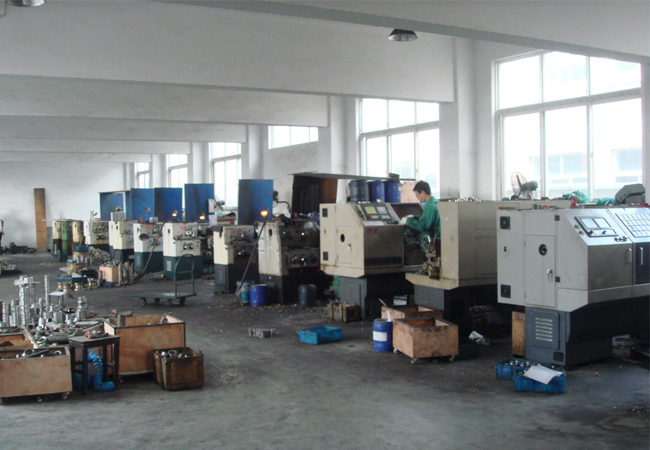
Material Science & Manufacturing
The core materials employed in ejector pump construction dictate both performance capabilities and cost. Common materials include carbon steel (economical but prone to corrosion), stainless steel 304/316 (superior corrosion resistance, higher cost), polypropylene (excellent chemical resistance, limited temperature range, lower cost), and PVC (similar to polypropylene but with different chemical compatibility profiles, also low cost). The nozzle, the critical component for motive fluid acceleration, is often manufactured from harder materials like hardened stainless steel or specialized polymers to resist erosion from high-velocity fluid streams. Manufacturing processes typically involve machining, welding (for metallic components), and injection molding or thermoforming (for plastic components). Welding, particularly for stainless steel, necessitates skilled technicians and stringent quality control to prevent defects like porosity or incomplete fusion, which can lead to premature failure. Surface finish is also crucial; a smooth internal surface minimizes friction losses and improves pumping efficiency. The throat, where the suction fluid is entrained, requires precise dimensional tolerances to ensure optimal mixing and momentum transfer. Material traceability is paramount, especially in industries like pharmaceutical or food processing, where compliance with stringent regulations (e.g., FDA) is essential. The selection of gasket materials (e.g., Viton, PTFE) directly impacts chemical compatibility and leakage prevention, also influencing long-term operational costs.
Performance & Engineering
Ejector pump performance hinges on several key engineering principles. Bernoulli’s principle governs the acceleration of the motive fluid through the nozzle, creating a low-pressure zone that draws in the suction fluid. Momentum transfer between the motive and suction fluids is critical for achieving efficient pumping. The performance is quantified by the ‘entrainment ratio’ – the mass flow rate of the suction fluid divided by the mass flow rate of the motive fluid. Higher entrainment ratios indicate greater efficiency but are typically achievable only under specific operating conditions. Force analysis must consider the pressure drop across the ejector, the potential for cavitation (especially with volatile fluids), and the stress on the housing and connections. Environmental resistance is dictated by material selection; exposure to corrosive fluids, high temperatures, or UV radiation can degrade performance and necessitate more frequent maintenance. Compliance requirements vary by industry; for example, in the oil & gas sector, ejector pumps used in offshore applications must meet stringent safety standards (e.g., ATEX directives for explosion protection). Proper sizing of the ejector pump is essential; undersizing results in insufficient flow, while oversizing leads to inefficient motive fluid consumption and increased operating costs. System integration, including inlet and outlet piping design, significantly impacts overall system performance.
Technical Specifications
| Parameter | Unit | Typical Range (Small Scale) | Typical Range (Large Scale) |
|---|---|---|---|
| Suction Flow Rate | GPM (Gallons Per Minute) | 0.5 – 10 | 50 – 500 |
| Motive Flow Rate | GPM | 1 – 20 | 100 – 1000 |
| Entrainment Ratio (Suction/Motive) | - | 0.2 – 1.0 | 0.5 – 2.0 |
| Suction Lift | Feet | Up to 25 | Up to 150 |
| Maximum Discharge Pressure | PSI (Pounds per Square Inch) | Up to 100 | Up to 500 |
| Operating Temperature | °F | 20 – 200 | -20 – 400 (material dependent) |
Failure Mode & Maintenance
Ejector pumps, while simple in design, are susceptible to several failure modes. Erosion of the nozzle due to high-velocity fluid flow is a common issue, particularly when handling abrasive fluids. Cavitation, caused by insufficient inlet pressure, can lead to impeller damage and reduced performance. Corrosion, especially in metallic components exposed to corrosive fluids, can weaken the structure and cause leaks. Scaling or fouling within the ejector body can restrict flow and reduce efficiency. Fatigue cracking, induced by cyclic pressure fluctuations, can occur in the housing and connections. Maintenance strategies include regular inspection for erosion and corrosion, cleaning to remove scale and debris, and lubrication of any moving parts (if present in ancillary equipment). Non-destructive testing methods (e.g., ultrasonic testing) can detect hidden cracks and defects. Preventative maintenance, such as replacing worn nozzles before catastrophic failure, is significantly more cost-effective than reactive repairs. Monitoring suction and discharge pressures can provide early warning signs of impending issues. Proper filtration of the suction fluid is crucial to minimize abrasive wear. Failure analysis should always be conducted to identify the root cause of failures and implement corrective actions.
Industry FAQ
Q: What is the typical payback period for an ejector pump installation, considering the cost of the pump itself and ongoing operational expenses?
A: The payback period varies significantly depending on the application and operating conditions. Generally, for applications requiring handling of abrasive or viscous fluids where other pump types experience frequent failures, the payback period can be as short as 12-18 months due to reduced maintenance costs and increased uptime. However, if the motive fluid is costly or the entrainment ratio is low, the payback period could extend to 3-5 years. A detailed lifecycle cost analysis, factoring in initial investment, energy consumption, maintenance, and downtime, is crucial for accurate assessment.
Q: How does material selection affect the long-term cost of ownership for an ejector pump in a corrosive environment?
A: Material selection is paramount in corrosive environments. Carbon steel, while initially cheaper, will require frequent replacement or costly repairs due to corrosion. Stainless steel (316 is preferred for higher chloride content) offers superior corrosion resistance, significantly extending the pump’s lifespan and reducing maintenance costs. Polymeric materials like polypropylene or PTFE may be suitable for specific chemicals but may have limitations in temperature or pressure. The upfront investment in a corrosion-resistant material typically results in substantial savings over the pump’s lifecycle.
Q: What are the key factors influencing the efficiency of an ejector pump, and how can they be optimized to minimize motive fluid consumption?
A: Nozzle design, throat geometry, and the pressure drop across the ejector are key factors. Optimizing the nozzle shape for maximum motive fluid velocity and ensuring proper mixing between the motive and suction fluids maximizes efficiency. Minimizing pressure drop through proper piping design and reducing flow restrictions is also essential. Regular cleaning to remove scale or fouling within the ejector body helps maintain efficiency. Operating the pump within its design parameters (flow rate, pressure) is crucial; operating outside these parameters reduces efficiency.
Q: What are the common causes of cavitation in ejector pumps, and how can it be prevented?
A: Cavitation is typically caused by insufficient net positive suction head available (NPSHA) compared to the net positive suction head required (NPSHR) by the pump. This can be due to low inlet pressure, high fluid temperature, or restrictions in the suction line. Prevention strategies include increasing the inlet pressure, reducing fluid temperature, ensuring adequate suction line diameter, and minimizing flow restrictions. Regular monitoring of suction pressure can provide early warning signs of cavitation.
Q: How do ejector pumps compare in cost to other pumping technologies (e.g., centrifugal pumps, positive displacement pumps) for similar applications?
A: Ejector pumps generally have a lower initial cost than positive displacement pumps for similar flow rates. Compared to centrifugal pumps, the initial cost can be comparable or slightly higher, depending on the materials and size. However, ejector pumps often have lower lifecycle costs in applications involving abrasive or viscous fluids, as they lack rotating parts prone to wear. Centrifugal pumps may be more energy-efficient in clean fluid applications but are less tolerant of solids. A thorough cost-benefit analysis considering all factors is necessary to determine the most cost-effective pumping solution.
Conclusion
The cost of an ejector pump extends far beyond the initial purchase price. A comprehensive understanding of material science, manufacturing processes, performance characteristics, and potential failure modes is critical for optimizing lifecycle costs. Selecting the appropriate materials for the specific application, ensuring proper installation and maintenance, and operating the pump within its design parameters are all essential for maximizing efficiency and minimizing downtime. The unique benefits of ejector pumps – simplicity, reliability, and ability to handle difficult fluids – make them a valuable asset in many industrial applications.
Future trends in ejector pump technology will likely focus on improving efficiency through advanced nozzle designs and optimized geometries. The development of more corrosion-resistant materials and the integration of smart sensors for condition monitoring will further reduce lifecycle costs and enhance reliability. Careful consideration of these factors, coupled with a thorough understanding of the principles outlined in this guide, will empower engineers and procurement managers to make informed decisions and achieve optimal performance from their ejector pump systems.
-
Comprehensive Guide to Waterproof ORings for Optimal Sealing Solutions
News2026-06-09
-
Septic Pump Replacement Performance Analysis
News2026-06-10
-
Septic Pump Price Performance Analysis
News2026-06-10
-
pumps for septic systems Material Science Manufacturing
News2026-06-10
-
ejector pumps for basement bathrooms Performance Analysis
News2026-06-10
-
Ejector Pump Cost Analysis
News2026-06-10
-
drainage pumps Performance and Engineering
News2026-06-09
-
basement bathroom ejector pump Material Science
News2026-06-09
-
Sewer Ejector Pump Cost Performance Analysis
News2026-06-09
-
Septic Tank Pump Replacement Performance Analysis
News2026-06-09
-
septic sump pump Performance and Engineering
News2026-06-09
-
Septic Pump System Performance Analysis
News2026-06-08
-
pump for septic Material Science
News2026-06-08
-
basement sewer pump Performance Analysis
News2026-06-08
-
submerged pump Performance Engineering
News2026-06-08




