English
- Afrikaans
- Albanian
- Amharic
- Arabic
- Armenian
- Azerbaijani
- Basque
- Belarusian
- Bengali
- Bosnian
- Bulgarian
- Catalan
- Cebuano
- Corsican
- Croatian
- Czech
- Danish
- Dutch
- English
- Esperanto
- Estonian
- Finnish
- French
- Frisian
- Galician
- Georgian
- German
- Greek
- Gujarati
- Haitian Creole
- hausa
- hawaiian
- Hebrew
- Hindi
- Miao
- Hungarian
- Icelandic
- igbo
- Indonesian
- irish
- Italian
- Japanese
- Javanese
- Kannada
- kazakh
- Khmer
- Rwandese
- Korean
- Kurdish
- Kyrgyz
- Lao
- Latin
- Latvian
- Lithuanian
- Luxembourgish
- Macedonian
- Malgashi
- Malay
- Malayalam
- Maltese
- Maori
- Marathi
- Mongolian
- Myanmar
- Nepali
- Norwegian
- Norwegian
- Occitan
- Pashto
- Persian
- Polish
- Portuguese
- Punjabi
- Romanian
- Russian
- Samoan
- Scottish Gaelic
- Serbian
- Sesotho
- Shona
- Sindhi
- Sinhala
- Slovak
- Slovenian
- Somali
- Spanish
- Sundanese
- Swahili
- Swedish
- Tagalog
- Tajik
- Tamil
- Tatar
- Telugu
- Thai
- Turkish
- Turkmen
- Ukrainian
- Urdu
- Uighur
- Uzbek
- Vietnamese
- Welsh
- Bantu
- Yiddish
- Yoruba
- Zulu

Telephone: +86 13120555503
Email: frank@cypump.com


Apr . 01, 2024 17:55 Back to list
effluent and sewage pumps Material Science Manufacturing
Introduction
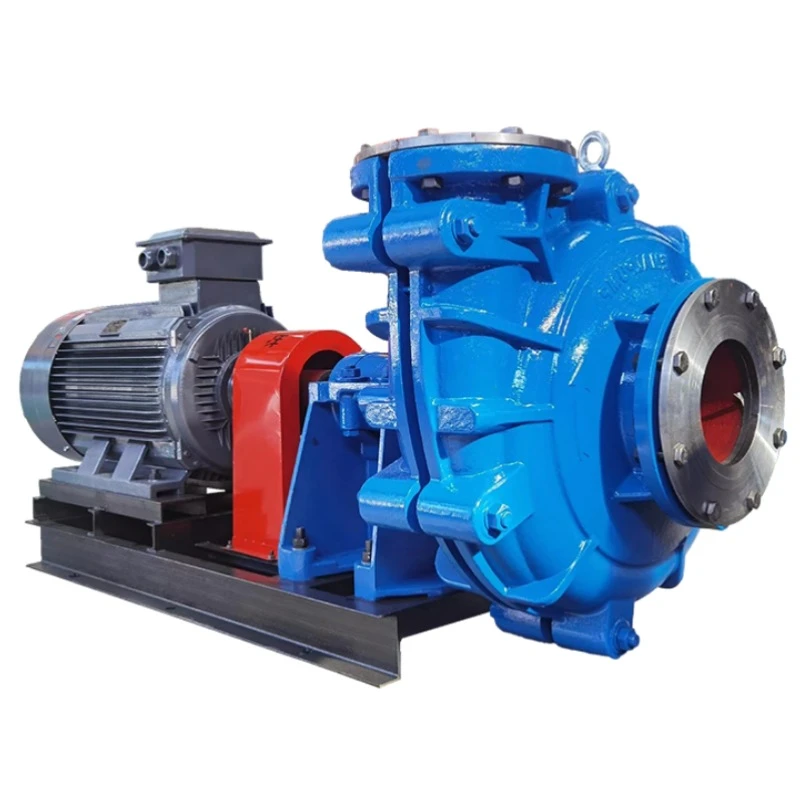
Effluent and sewage pumps are critical components in wastewater treatment infrastructure, designed for the reliable and efficient transfer of liquids containing solids. These pumps differ significantly from clean water pumps due to the abrasive and corrosive nature of the fluids they handle. Their technical position within the wastewater treatment chain is essential, serving as the driving force for moving raw sewage, screened effluent, sludge, and processed wastewater through various stages – from collection and preliminary treatment to advanced treatment and final discharge. Core performance characteristics are defined by flow rate (m³/hr), head (meters), solids handling capability (mm), pump efficiency (%), and material compatibility with the conveyed medium. Addressing the industry’s pain points – clogging, corrosion, wear, and energy consumption – is paramount in pump selection and operation. The selection process focuses on lifecycle cost, reliability, and adherence to stringent environmental regulations.
Material Science & Manufacturing
The construction of effluent and sewage pumps necessitates materials with exceptional resistance to corrosion and abrasion. Pump casings are frequently manufactured from ductile iron (ASTM A536 Grade 65-45-12) due to its strength, ductility, and relatively low cost. However, for particularly aggressive effluents, stainless steel alloys (316L, duplex stainless steel) or specialized polymers (HDPE, PP) are employed. Impeller materials vary based on abrasive content; high-chrome iron alloys (typically containing 15-28% chromium) provide superior wear resistance. Shafts are generally constructed from stainless steel (410, 420) for corrosion resistance and tensile strength. Mechanical seals are critical and utilize materials like silicon carbide (SiC) faces, Viton (fluoroelastomer) elastomers, and PTFE (polytetrafluoroethylene) for sealing performance and chemical compatibility. Manufacturing processes include centrifugal casting for casings, investment casting for impellers, and precision machining for shafts and seals. Welding, when required, adheres to AWS D1.1 standards, utilizing shielded metal arc welding (SMAW) or gas tungsten arc welding (GTAW) with appropriate filler metals. Critical parameter control during manufacturing involves dimensional accuracy (ISO 2768-mK), surface roughness (ISO 4287), and non-destructive testing (NDT) – including radiographic testing (RT) and ultrasonic testing (UT) – to ensure structural integrity.
Performance & Engineering
Performance engineering for these pumps focuses on hydraulic design and motor selection to optimize efficiency and minimize clogging. Impeller geometry (vane angle, number of vanes, and impeller diameter) significantly affects head and flow rate. Computational Fluid Dynamics (CFD) analysis is routinely used to model fluid flow and identify potential areas of cavitation or solids accumulation. Pump curves, generated through hydraulic testing (ISO 9906), illustrate the relationship between head, flow rate, and efficiency. Motor selection depends on the required power output, speed, and environmental conditions. Typically, induction motors (NEMA standards) are utilized, often with variable frequency drives (VFDs) to control pump speed and optimize energy consumption. Force analysis considers radial and axial thrust loads on the shaft, which are mitigated through bearing selection and design (SKF, NSK). Environmental resistance is addressed through pump housing and motor enclosure design (IP65, IP68 ratings) to prevent ingress of water, dust, and corrosive gases. Compliance requirements include adherence to local and national environmental regulations regarding discharge limits and noise pollution (EPA standards, EU directives).
Technical Specifications
| Pump Type | Maximum Flow Rate (m³/hr) | Maximum Head (m) | Solids Handling Capability (mm) |
|---|---|---|---|
| Centrifugal (Submersible) | 50-1500 | 5-60 | 50 |
| Centrifugal (Surface Mounted) | 20-800 | 10-100 | 30 |
| Positive Displacement (Progressive Cavity) | 5-200 | 20-150 | 75 |
| Chopper Pump | 30-500 | 15-70 | 40 |
| Vortex Pump | 40-1200 | 8-50 | 65 |
| Diaphragm Pump | 1-50 | 5-30 | 25 |
Failure Mode & Maintenance
Common failure modes in effluent and sewage pumps include impeller wear, bearing failure, seal leakage, and motor winding burnout. Impeller wear is caused by abrasive solids, leading to reduced pump efficiency and head. Bearing failure results from overload, improper lubrication, or corrosion. Seal leakage is often due to seal wear, chemical incompatibility, or shaft misalignment. Motor winding burnout can occur due to overheating, voltage fluctuations, or moisture ingress. Failure analysis techniques such as visual inspection, metallurgical analysis, and vibration analysis are employed to determine the root cause of failures. Preventive maintenance practices include regular lubrication of bearings, inspection of seals, monitoring of motor current, and cleaning of pump impellers. Scheduled overhauls, typically every 1-3 years, involve replacing worn components and performing comprehensive testing. Corrective maintenance addresses unexpected failures and may require pump disassembly, repair, or replacement. Implementing a condition monitoring system (CMS) with sensors to track vibration, temperature, and motor current can enable predictive maintenance and minimize downtime.
Industry FAQ
Q: What is the primary difference between a submersible pump and a surface-mounted pump for sewage applications?
A: Submersible pumps are designed to operate fully submerged in the sewage, eliminating the need for priming and reducing noise. They are typically more efficient for deep lift applications. Surface-mounted pumps, however, are easier to access for maintenance and are suitable for applications where the pump can be located above the liquid level. The choice depends heavily on the installation depth, accessibility, and overall system design.
Q: How do you mitigate the risk of clogging in a sewage pump?
A: Mitigation strategies include utilizing pumps with open or recessed impeller designs, incorporating inlet screens or strainers, employing chopper pumps to macerate solids, and implementing regular pump cleaning and inspection schedules. Furthermore, optimizing the upstream collection system to remove large debris before it reaches the pump is critical.
Q: What material selection considerations are crucial for handling corrosive effluents?
A: Selecting materials resistant to the specific chemicals present in the effluent is paramount. Stainless steel alloys (316L, duplex) and specialized polymers (HDPE, PP, PVDF) are commonly used. Consider the pH, concentration of corrosive agents (sulfides, chlorides), and temperature when making material selections. Regular corrosion monitoring is also recommended.
Q: What are the key metrics for evaluating pump efficiency and energy consumption?
A: Key metrics include pump efficiency (%), hydraulic efficiency (%), and specific energy consumption (kWh/m³). Analyzing pump curves and conducting energy audits can identify opportunities for optimization. Implementing variable frequency drives (VFDs) to control pump speed and match flow rate to demand is a significant energy-saving measure.
Q: What are the common causes of premature mechanical seal failure in sewage pumps?
A: Common causes include abrasive particles causing seal face wear, chemical attack on seal elastomers, dry running leading to overheating, shaft misalignment causing excessive vibration, and improper seal installation. Regular seal inspection, proper lubrication, and maintaining shaft alignment are crucial for extending seal life.
Conclusion
Effluent and sewage pump selection and operation require a thorough understanding of material science, hydraulic principles, and operational constraints. Addressing the inherent challenges of handling abrasive and corrosive fluids through appropriate material selection, proactive maintenance, and performance monitoring is essential for ensuring reliable and cost-effective wastewater treatment. Optimizing pump efficiency and minimizing energy consumption are critical factors in reducing operational costs and environmental impact.
Future trends in this field will likely focus on the development of more durable and energy-efficient pump designs, the integration of smart sensors and data analytics for predictive maintenance, and the adoption of advanced materials with enhanced corrosion and wear resistance. Continued innovation in pump technology will play a vital role in addressing the growing global challenges of wastewater management and environmental protection.
-
sewage pump for basement Performance and Engineering
News2026-05-28
-
Sewage Pump Companies Performance Analysis
News2026-05-28
-
Sewage Pit and Pump Performance Analysis
News2026-05-28
-
Sewage Lift Pumps Material Science
News2026-05-28
-
Sewage Ejector Tank Material Science and Manufacturing
News2026-05-28
-
sewage effluent pumps Material Science Manufacturing
News2026-05-27
-
septic tank effluent pump Performance Analysis
News2026-05-27
-
Septic Sewer Pump Performance Analysis
News2026-05-27
-
septic sewage pumps Performance Analysis
News2026-05-27
-
septic sewage pump Material Science and Manufacturing
News2026-05-27
-
residential sewage pumps Material Science and Manufacturing
News2026-05-26
-
residential sewage lift pump Performance Analysis
News2026-05-26
-
high head sump pump Performance and Engineering
News2026-05-26
-
effluent pump for septic tank Material Science Manufacturing
News2026-05-26
-
effluent and sewage pumps Material Science Manufacturing
News2026-05-26




