English
- Afrikaans
- Albanian
- Amharic
- Arabic
- Armenian
- Azerbaijani
- Basque
- Belarusian
- Bengali
- Bosnian
- Bulgarian
- Catalan
- Cebuano
- Corsican
- Croatian
- Czech
- Danish
- Dutch
- English
- Esperanto
- Estonian
- Finnish
- French
- Frisian
- Galician
- Georgian
- German
- Greek
- Gujarati
- Haitian Creole
- hausa
- hawaiian
- Hebrew
- Hindi
- Miao
- Hungarian
- Icelandic
- igbo
- Indonesian
- irish
- Italian
- Japanese
- Javanese
- Kannada
- kazakh
- Khmer
- Rwandese
- Korean
- Kurdish
- Kyrgyz
- Lao
- Latin
- Latvian
- Lithuanian
- Luxembourgish
- Macedonian
- Malgashi
- Malay
- Malayalam
- Maltese
- Maori
- Marathi
- Mongolian
- Myanmar
- Nepali
- Norwegian
- Norwegian
- Occitan
- Pashto
- Persian
- Polish
- Portuguese
- Punjabi
- Romanian
- Russian
- Samoan
- Scottish Gaelic
- Serbian
- Sesotho
- Shona
- Sindhi
- Sinhala
- Slovak
- Slovenian
- Somali
- Spanish
- Sundanese
- Swahili
- Swedish
- Tagalog
- Tajik
- Tamil
- Tatar
- Telugu
- Thai
- Turkish
- Turkmen
- Ukrainian
- Urdu
- Uighur
- Uzbek
- Vietnamese
- Welsh
- Bantu
- Yiddish
- Yoruba
- Zulu

Telephone: +86 13120555503
Email: frank@cypump.com


Apr . 01, 2024 17:55 Back to list
efficient slurry pump with highquality impeller for enhanced performance analysis
Introduction
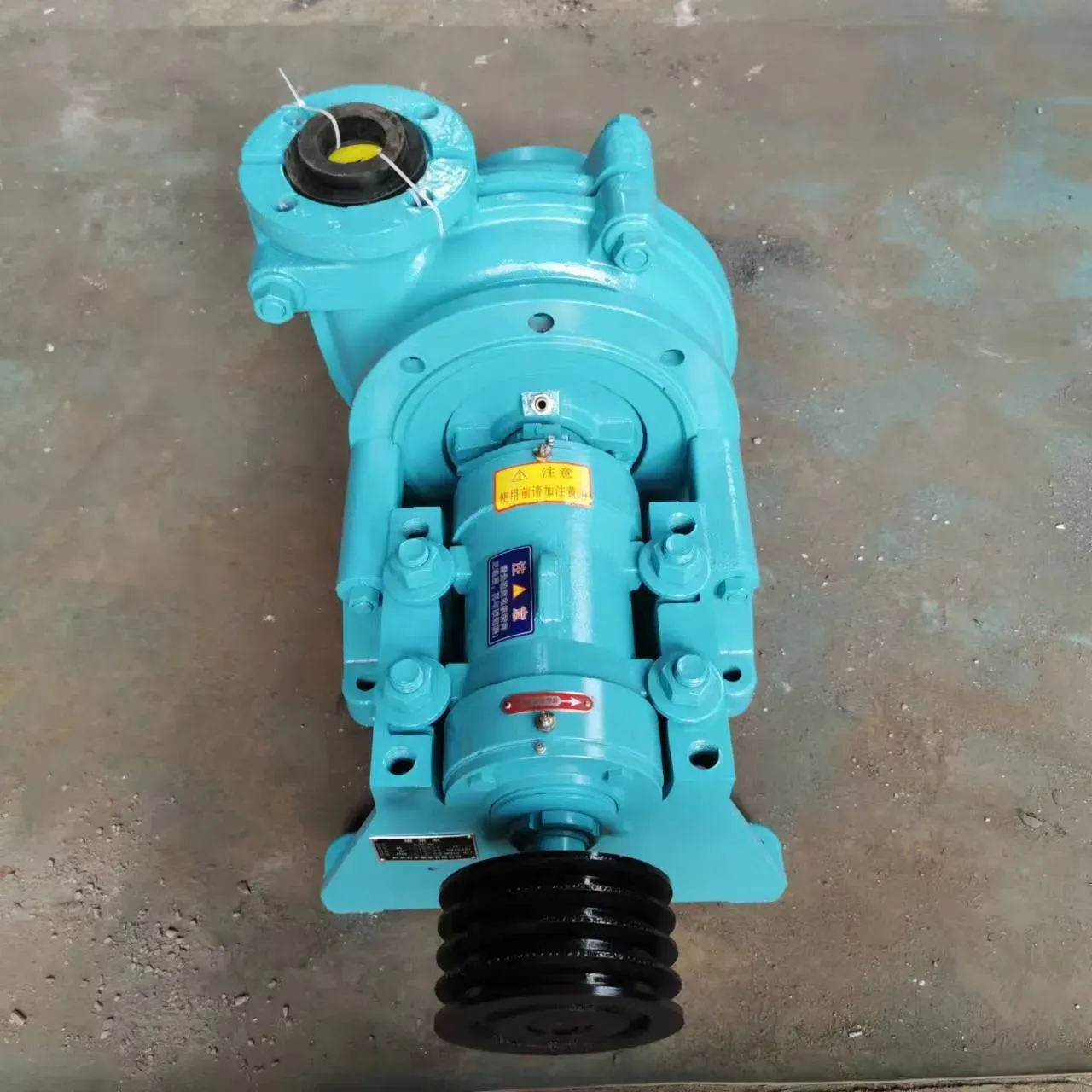
Efficient slurry pumps, specifically those incorporating high-quality impellers, represent a critical component within numerous industrial processes handling abrasive or dense fluids. These pumps are employed across sectors including mining, wastewater treatment, dredging, chemical processing, and oil & gas, facilitating the transportation of slurries—mixtures of solid particles suspended in liquid. The efficiency of these pumps directly impacts operational costs, throughput, and overall system reliability. The impeller, as the primary energy transfer device, dictates hydraulic performance and susceptibility to wear. Modern impeller designs emphasize cavitation resistance, abrasion resistance, and optimized hydraulic profiles to maximize efficiency and minimize downtime. This guide will provide a detailed technical overview of slurry pump technology, focusing on material science, manufacturing processes, performance characteristics, failure modes, and relevant industry standards, ultimately focusing on the crucial role of a high-quality impeller in maximizing performance and longevity.
Material Science & Manufacturing
Slurry pump construction demands materials capable of withstanding severe abrasive wear, corrosion, and high impact forces. Pump casings are commonly manufactured from high-chrome cast iron (typically 15-28% chromium), offering excellent abrasion resistance at a relatively moderate cost. Alternative materials include nickel-hard iron, which provides superior resistance to both abrasion and corrosion, but at a higher price point. For highly corrosive environments, stainless steels (316, 904L) and specialized alloys (Hastelloy, duplex stainless steel) are employed. However, stainless steels are generally less abrasion resistant than cast irons. The impeller, being the most stressed component, often utilizes materials mirroring the casing but with stricter quality control. Impellers can also be constructed from rubber-lined steel or polyurethane, especially for handling highly abrasive slurries with lower corrosion potential.
Manufacturing processes vary based on impeller design and material. Cast iron impellers are produced using sand casting or investment casting, with investment casting yielding tighter tolerances and smoother surface finishes. Welded fabrication is common for larger impellers, employing automated welding techniques to ensure consistent weld quality and minimize distortion. Rubber-lined impellers involve bonding a rubber layer onto a steel shell using vulcanization processes. Key manufacturing parameters include mold quality, casting temperature, cooling rate, and heat treatment schedules (for cast iron impellers) to achieve desired hardness and microstructure. Post-processing operations such as machining, grinding, and polishing are crucial for achieving precise impeller geometry and hydraulic performance. Surface treatments like hardfacing with tungsten carbide or chromium carbide are applied to enhance abrasion resistance in high-wear areas. Non-destructive testing (NDT) methods – radiographic inspection, ultrasonic testing, and liquid penetrant testing – are employed to detect internal flaws and surface defects.
Performance & Engineering
The performance of a slurry pump is characterized by its head-capacity curve, efficiency curve, and Net Positive Suction Head Required (NPSHr). Head (expressed in meters or feet) represents the pressure the pump can generate, while capacity (expressed in m³/hr or gpm) defines the volumetric flow rate. Efficiency is the ratio of hydraulic power output to shaft power input. NPSHr is a critical parameter dictating the minimum suction pressure required to prevent cavitation—the formation and collapse of vapor bubbles, which can cause significant impeller damage.
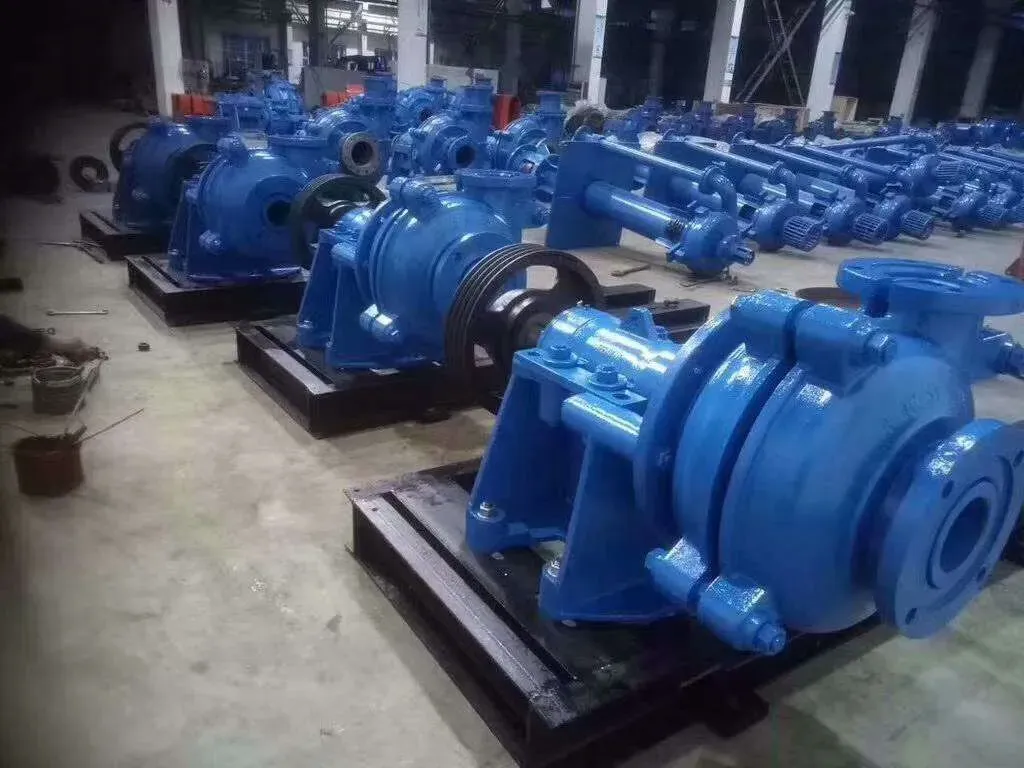
Impeller design plays a pivotal role in determining these performance characteristics. Impeller geometry (blade angle, blade shape, impeller diameter) influences the flow pattern and energy transfer. Radial impellers are suitable for high-head, low-capacity applications, while axial flow impellers are better suited for low-head, high-capacity applications. Mixed-flow impellers offer a compromise between these two extremes. Hydraulic modeling (Computational Fluid Dynamics – CFD) is extensively used to optimize impeller design and predict performance.
Force analysis focuses on stresses induced by centrifugal forces, hydraulic pressure, and particle impact. Impellers are subjected to significant tensile and shear stresses, particularly at the impeller eye and blade tips. Finite Element Analysis (FEA) is employed to assess stress distribution and identify potential failure points. Environmental resistance considerations include erosion-corrosion, where the abrasive action of particles removes the protective corrosion-resistant layer, accelerating material loss. Pump selection must account for slurry density, particle size distribution, flow velocity, and temperature to ensure reliable operation and prevent premature failure. Compliance requirements vary depending on the application, encompassing standards related to pump efficiency (e.g., ISO 9906), safety (e.g., ATEX for potentially explosive atmospheres), and environmental protection.
Technical Specifications
| Parameter | Unit | Typical Range (Medium Duty) | Typical Range (Heavy Duty) |
|---|---|---|---|
| Flow Rate (Capacity) | m³/hr | 10 - 100 | 50 - 500 |
| Head | m | 10 - 50 | 30 - 150 |
| Impeller Diameter | mm | 150 - 400 | 250 - 800 |
| Pump Speed | RPM | 500 - 2000 | 500 - 3000 |
| Maximum Solids Content | % by weight | 20-30 | 30-70 |
| Maximum Particle Size | mm | 25 | 75 |
Failure Mode & Maintenance
Slurry pump failures often stem from abrasive wear, erosion-corrosion, cavitation, and mechanical fatigue. Abrasive wear, the most common failure mode, occurs when solid particles impact and erode the impeller and casing surfaces. Erosion-corrosion accelerates this process in corrosive environments. Cavitation, as previously mentioned, damages the impeller due to vapor bubble collapse. Mechanical fatigue can lead to impeller cracking due to cyclical loading. Specific failure modes include impeller blade breakage, casing wear, seal failure, and bearing failure.
Failure analysis techniques involve visual inspection, metallographic examination, and Non-Destructive Testing (NDT). Metallographic analysis reveals the microstructure and wear patterns on impeller surfaces. NDT methods (ultrasonic testing, radiography) detect internal cracks and flaws.
Preventative maintenance is crucial for extending pump life. Regular inspections are vital for identifying early signs of wear or damage. Impeller replacement is often necessary based on wear rate and performance degradation. Proper lubrication of bearings and seals is essential. Monitoring slurry properties (particle size distribution, solids concentration) and adjusting pump operating parameters accordingly can minimize wear. Implementing a robust wear protection strategy, such as using hardfacing or replaceable wear plates, can significantly reduce maintenance costs and downtime. Vibration analysis can detect bearing wear or impeller imbalance before catastrophic failure occurs. Regular performance monitoring (head-capacity curve verification) can identify efficiency losses indicating internal wear or damage.
Industry FAQ
Q: What material selection criteria are most important for a slurry pump impeller handling a highly abrasive silica slurry?
A: For highly abrasive silica slurries, abrasion resistance is paramount. High-chrome cast iron is a common choice, but consider nickel-hard iron for extended service life. Rubber-lined impellers can also be effective, particularly if corrosion isn't a significant factor. Hardfacing with tungsten carbide or chromium carbide is recommended for high-wear areas, and a detailed wear rate analysis should be conducted to determine optimal material and replacement schedules.
Q: How does impeller geometry affect the NPSHr of a slurry pump?
A: Impeller geometry significantly influences NPSHr. A larger impeller eye and lower blade angles generally reduce NPSHr, making the pump less susceptible to cavitation. However, these design choices may impact efficiency and head. CFD modeling is crucial for optimizing impeller geometry to balance NPSHr requirements with hydraulic performance.
Q: What are the key indicators of impeller wear in a slurry pump?
A: Key indicators include a decrease in pump head and capacity, increased power consumption, increased vibration levels, and visible wear on the impeller blades. Regularly monitoring pump performance parameters and conducting visual inspections during scheduled maintenance are crucial for detecting wear early on.
Q: What is the role of a wear plate in extending impeller life?
A: Wear plates, strategically positioned within the pump casing, protect the casing and impeller from direct impact by abrasive particles. They act as sacrificial components, absorbing the majority of the wear and extending the lifespan of more expensive components like the impeller. Regular inspection and replacement of wear plates are essential for maintaining optimal pump performance.
Q: How does the solids concentration in the slurry affect impeller selection and pump performance?
A: Higher solids concentrations increase the abrasive wear rate and require impellers designed with larger flow passages to prevent clogging. The pump’s head-capacity curve will also be affected; higher solids concentrations generally lead to reduced head and capacity. Impeller material selection and pump operating parameters must be carefully considered based on the specific solids concentration and particle size distribution.
Conclusion
Efficient slurry pump operation, particularly when coupled with a high-quality impeller, is fundamentally tied to a deep understanding of material science, hydraulic principles, and wear mechanisms. Proper material selection—considering abrasion, corrosion, and impact resistance—is paramount. Utilizing advanced manufacturing techniques and comprehensive quality control processes ensures impeller integrity and optimal performance. Continuous monitoring of pump parameters, coupled with proactive maintenance strategies, are essential for maximizing uptime and minimizing life-cycle costs.
Looking ahead, advancements in impeller design, such as the integration of novel materials and optimized hydraulic profiles through CFD modeling, will continue to improve pump efficiency and reliability. Predictive maintenance techniques, leveraging sensor data and machine learning algorithms, will enable more accurate forecasting of impeller wear and proactive replacement scheduling. Ultimately, a holistic approach—encompassing informed material selection, meticulous manufacturing, rigorous performance monitoring, and proactive maintenance—is crucial for achieving optimal performance and longevity in slurry pump applications.
-
Precision at the Pump: How Better Machining Protects Flow and Uptime
News2026-11-20
-
Why Pump Reliability Begins Before the First Drop of Fluid
News2026-11-20
-
Beyond the Pump: Designing Safer Access Around Critical Water Infrastructure
News2026-11-20
-
Why Pumping Stations Depend on the Infrastructure Beneath the Pumps
News2026-11-20
-
Beyond the Pump Room: How Smarter Loading Protects Industrial Equipment
News2026-11-19
-
When Pumps Stop: Designing More Resilient Power for Critical Pumping Systems
News2026-11-19
-
The Hidden Role of Dust and Gas Monitoring in Reliable Pump Operations
News2026-11-19
-
The Hidden Role of Mineral Compounds in Extending Industrial Pump Lifespan
News2026-10-12
-
Why Pump System Reliability Depends on Precision Hose Assembly Methods
News2026-09-15
-
How Advanced Imaging Films Are Transforming Pump Component Quality Control
News2026-08-25
-
How Advanced Filtration Protects Pump Systems from Premature Wear and Costly Downtime
News2026-08-25
-
How Steel Material Selection Drives Pump Reliability in Heavy-Duty Systems
News2026-08-25
-
Ensuring Pump System Efficiency: The Role of High-Quality Pipe Fittings and Tubing
News2026-08-24
-
Optimizing Fluid Dynamics and Material Consistency in Industrial Processing
News2026-08-18
-
Innovations and Challenges in Hydraulic Systems for Heavy Machinery
News2026-08-13




