English
- Afrikaans
- Albanian
- Amharic
- Arabic
- Armenian
- Azerbaijani
- Basque
- Belarusian
- Bengali
- Bosnian
- Bulgarian
- Catalan
- Cebuano
- Corsican
- Croatian
- Czech
- Danish
- Dutch
- English
- Esperanto
- Estonian
- Finnish
- French
- Frisian
- Galician
- Georgian
- German
- Greek
- Gujarati
- Haitian Creole
- hausa
- hawaiian
- Hebrew
- Hindi
- Miao
- Hungarian
- Icelandic
- igbo
- Indonesian
- irish
- Italian
- Japanese
- Javanese
- Kannada
- kazakh
- Khmer
- Rwandese
- Korean
- Kurdish
- Kyrgyz
- Lao
- Latin
- Latvian
- Lithuanian
- Luxembourgish
- Macedonian
- Malgashi
- Malay
- Malayalam
- Maltese
- Maori
- Marathi
- Mongolian
- Myanmar
- Nepali
- Norwegian
- Norwegian
- Occitan
- Pashto
- Persian
- Polish
- Portuguese
- Punjabi
- Romanian
- Russian
- Samoan
- Scottish Gaelic
- Serbian
- Sesotho
- Shona
- Sindhi
- Sinhala
- Slovak
- Slovenian
- Somali
- Spanish
- Sundanese
- Swahili
- Swedish
- Tagalog
- Tajik
- Tamil
- Tatar
- Telugu
- Thai
- Turkish
- Turkmen
- Ukrainian
- Urdu
- Uighur
- Uzbek
- Vietnamese
- Welsh
- Bantu
- Yiddish
- Yoruba
- Zulu

Telephone: +86 13120555503
Email: frank@cypump.com


Apr . 01, 2024 17:55 Back to list
durable heavyduty slurry pump designed for oem applications Performance Analysis

Introduction
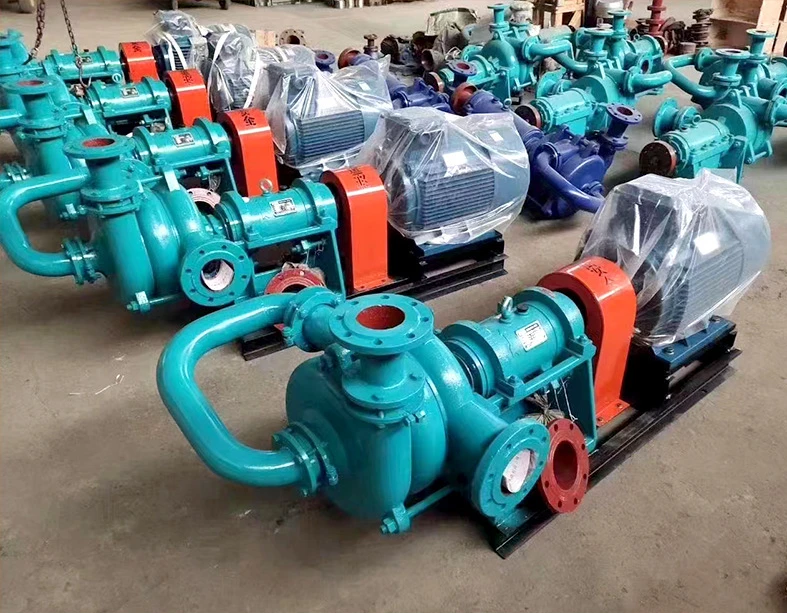
Heavy-duty slurry pumps are critical components in numerous industrial processes, including mining, wastewater treatment, dredging, and chemical processing. These pumps are engineered to transport abrasive and erosive fluids, commonly containing solids, over varying distances and elevations. This technical guide focuses on durable, heavy-duty slurry pumps specifically designed for Original Equipment Manufacturers (OEMs), outlining material science, manufacturing considerations, performance characteristics, potential failure modes, and relevant industry standards. A primary pain point in slurry pump applications is premature wear and failure due to the aggressive nature of the transported media. This often leads to significant downtime and maintenance costs. OEMs require pumps that offer extended service life, reduced lifecycle costs, and consistent performance under demanding operating conditions. This guide addresses these needs through a detailed examination of the underlying engineering principles and best practices.
Material Science & Manufacturing
The longevity and efficiency of a slurry pump are fundamentally dependent on the materials used in its construction. Key components – the impeller, casing, volute liner, and shaft – are subject to intense abrasive and corrosive attack. Impellers are commonly manufactured from high-chrome cast iron (typically 27-30% chromium), offering exceptional abrasion resistance. Casing materials often include ductile iron with rubber or ceramic linings for enhanced corrosion and erosion protection. High-density polyethylene (HDPE) and polyurethane elastomers are increasingly used as liner materials, particularly for handling highly corrosive slurries. Shafts are generally constructed from alloy steels (e.g., 4140 or 4340) with hardening treatments to maximize tensile strength and resistance to torsional stress. The manufacturing process for pump casings typically involves sand casting, followed by meticulous heat treatment and surface preparation. Impellers are manufactured using investment casting or centrifugal casting to achieve precise geometries and minimize porosity. Welding procedures, where applicable, must adhere to stringent quality control standards (e.g., AWS D1.1) to ensure weld integrity and prevent cracking. Critical parameters during manufacturing include material composition verification, hardness testing, dimensional accuracy, and non-destructive testing (NDT) methods such as liquid penetrant inspection (LPI) and radiographic testing (RT) to detect any internal flaws. The selection of rubber lining compounds necessitates careful consideration of chemical compatibility with the slurry being pumped; improper selection can lead to swelling, degradation, and premature failure.
Performance & Engineering
Slurry pump performance is governed by hydraulic principles, specifically the relationship between flow rate, head, and power consumption. Pump curves, generated through rigorous testing, are essential for selecting the appropriate pump size for a given application. Key performance parameters include the pump's capacity (volume of slurry delivered per unit time), total dynamic head (the total pressure the pump must overcome), and net positive suction head required (NPSHr – the minimum pressure required at the pump suction to prevent cavitation). Cavitation, the formation and collapse of vapor bubbles within the pump, is a significant concern as it can cause severe erosion of the impeller and casing. Proper pump selection and system design must ensure that the available NPSH (NPSHa) exceeds the NPSHr. Force analysis is critical in slurry pump design, particularly concerning the impeller and shaft. Impellers experience radial and axial forces due to the pressure differential across the blades and the momentum of the slurry. Shaft stresses are induced by these forces, as well as by bending moments and torsional loads. Finite element analysis (FEA) is commonly employed to optimize impeller and shaft geometry, minimizing stress concentrations and maximizing fatigue life. Environmental resistance is also paramount; pumps operating in corrosive environments require appropriate material selection and protective coatings. Compliance requirements, such as those mandated by API 610 (Centrifugal Pumps) and ISO 13709 (Slurry Pumps), dictate design standards, material specifications, and testing procedures.
Technical Specifications
| Parameter | Unit | Value (Typical Range) | Testing Standard |
|---|---|---|---|
| Maximum Flow Rate | m³/hr | 50 - 1500 | ISO 9906:2012 |
| Maximum Head | m | 10 - 100 | ISO 9906:2012 |
| Slurry Concentration (Solids by Volume) | % | Up to 70 | In-house testing |
| Maximum Particle Size | mm | Up to 100 | In-house testing |
| Pump Casing Material | - | Ductile Iron (ASTM A536 65-45-12) with Rubber Lining | ASTM A536 |
| Impeller Material | - | High Chrome Cast Iron (27-30% Cr) | ASTM A532 |
Failure Mode & Maintenance
Slurry pump failures can arise from several mechanisms. Abrasive wear is the most common, leading to erosion of the impeller, casing, and liner. Corrosion, particularly in acidic or alkaline slurries, can weaken pump components and accelerate failure. Fatigue cracking can occur in the shaft and impeller due to cyclic loading. Cavitation, as previously mentioned, causes localized erosion. Mechanical failures, such as bearing failures and seal failures, are also frequent. Proactive maintenance is crucial for maximizing pump uptime and minimizing costs. Regular inspections should include visual checks for wear, leak detection, vibration analysis, and oil analysis. Impeller and casing replacements are inevitable, with the frequency depending on the abrasiveness of the slurry. Proper lubrication of bearings and seals is essential. Shaft alignment should be checked and corrected periodically. Preventative maintenance schedules should be tailored to the specific application and operating conditions. Consideration should be given to implementing wear-resistant coatings (e.g., tungsten carbide) on critical components to extend their service life. Failure analysis, involving metallurgical examination of failed components, can help identify root causes and prevent recurrence.
Industry FAQ
Q: What is the impact of slurry particle size distribution on pump selection and wear rates?
A: Particle size distribution significantly affects pump performance and wear. Larger particles cause greater abrasive wear, while a wider distribution increases the risk of clogging and reduced efficiency. Pumps should be selected with impeller designs optimized for the specific particle size range. Wear rates generally increase exponentially with particle size.
Q: How does the chemical composition of the slurry influence material selection for pump components?
A: The slurry's chemical composition dictates the required corrosion resistance of pump materials. Acidic slurries demand stainless steels or specialized alloys, while alkaline slurries may require rubber or plastic linings. Compatibility charts should be consulted to ensure the selected materials are resistant to the specific chemicals present in the slurry.
Q: What are the key considerations for minimizing cavitation in slurry pump systems?
A: Minimizing cavitation requires ensuring sufficient NPSHa. This can be achieved by lowering the pump, increasing the suction pipe diameter, reducing suction line losses, and controlling the slurry temperature. Careful system design and pump selection are critical.
Q: What are the advantages and disadvantages of using rubber linings versus ceramic linings in slurry pump casings?
A: Rubber linings offer excellent impact resistance and are more cost-effective. However, they have limited chemical resistance and are susceptible to degradation over time. Ceramic linings provide superior corrosion resistance and hardness but are more brittle and expensive.
Q: How can vibration analysis be used to diagnose potential pump failures?
A: Vibration analysis can detect imbalances, misalignment, bearing defects, and cavitation. Changes in vibration patterns can indicate developing problems, allowing for proactive maintenance and preventing catastrophic failures.
Conclusion
Durable, heavy-duty slurry pumps are essential for numerous industrial applications, but their reliable operation relies heavily on informed material selection, robust manufacturing processes, and diligent maintenance practices. Understanding the interplay between slurry characteristics, pump design, and operational parameters is critical for maximizing pump life and minimizing lifecycle costs. OEMs providing these pumps must prioritize material quality, adherence to industry standards, and comprehensive testing procedures to ensure consistent performance and customer satisfaction.
Future advancements in slurry pump technology will likely focus on the development of more wear-resistant materials, improved impeller designs, and advanced monitoring systems. The integration of predictive maintenance techniques, utilizing data analytics and machine learning, will enable proactive identification of potential failures and optimized maintenance scheduling, further reducing downtime and improving operational efficiency.
-
Precision at the Pump: How Better Machining Protects Flow and Uptime
News2026-11-20
-
Why Pump Reliability Begins Before the First Drop of Fluid
News2026-11-20
-
Beyond the Pump: Designing Safer Access Around Critical Water Infrastructure
News2026-11-20
-
Why Pumping Stations Depend on the Infrastructure Beneath the Pumps
News2026-11-20
-
Beyond the Pump Room: How Smarter Loading Protects Industrial Equipment
News2026-11-19
-
When Pumps Stop: Designing More Resilient Power for Critical Pumping Systems
News2026-11-19
-
The Hidden Role of Dust and Gas Monitoring in Reliable Pump Operations
News2026-11-19
-
The Hidden Role of Mineral Compounds in Extending Industrial Pump Lifespan
News2026-10-12
-
Why Pump System Reliability Depends on Precision Hose Assembly Methods
News2026-09-15
-
How Advanced Imaging Films Are Transforming Pump Component Quality Control
News2026-08-25
-
How Advanced Filtration Protects Pump Systems from Premature Wear and Costly Downtime
News2026-08-25
-
How Steel Material Selection Drives Pump Reliability in Heavy-Duty Systems
News2026-08-25
-
Ensuring Pump System Efficiency: The Role of High-Quality Pipe Fittings and Tubing
News2026-08-24
-
Optimizing Fluid Dynamics and Material Consistency in Industrial Processing
News2026-08-18
-
Innovations and Challenges in Hydraulic Systems for Heavy Machinery
News2026-08-13




