English
- Afrikaans
- Albanian
- Amharic
- Arabic
- Armenian
- Azerbaijani
- Basque
- Belarusian
- Bengali
- Bosnian
- Bulgarian
- Catalan
- Cebuano
- Corsican
- Croatian
- Czech
- Danish
- Dutch
- English
- Esperanto
- Estonian
- Finnish
- French
- Frisian
- Galician
- Georgian
- German
- Greek
- Gujarati
- Haitian Creole
- hausa
- hawaiian
- Hebrew
- Hindi
- Miao
- Hungarian
- Icelandic
- igbo
- Indonesian
- irish
- Italian
- Japanese
- Javanese
- Kannada
- kazakh
- Khmer
- Rwandese
- Korean
- Kurdish
- Kyrgyz
- Lao
- Latin
- Latvian
- Lithuanian
- Luxembourgish
- Macedonian
- Malgashi
- Malay
- Malayalam
- Maltese
- Maori
- Marathi
- Mongolian
- Myanmar
- Nepali
- Norwegian
- Norwegian
- Occitan
- Pashto
- Persian
- Polish
- Portuguese
- Punjabi
- Romanian
- Russian
- Samoan
- Scottish Gaelic
- Serbian
- Sesotho
- Shona
- Sindhi
- Sinhala
- Slovak
- Slovenian
- Somali
- Spanish
- Sundanese
- Swahili
- Swedish
- Tagalog
- Tajik
- Tamil
- Tatar
- Telugu
- Thai
- Turkish
- Turkmen
- Ukrainian
- Urdu
- Uighur
- Uzbek
- Vietnamese
- Welsh
- Bantu
- Yiddish
- Yoruba
- Zulu

Telephone: +86 13120555503
Email: frank@cypump.com


Apr . 01, 2024 17:55 Back to list
double suction water pump Performance Analysis
Introduction
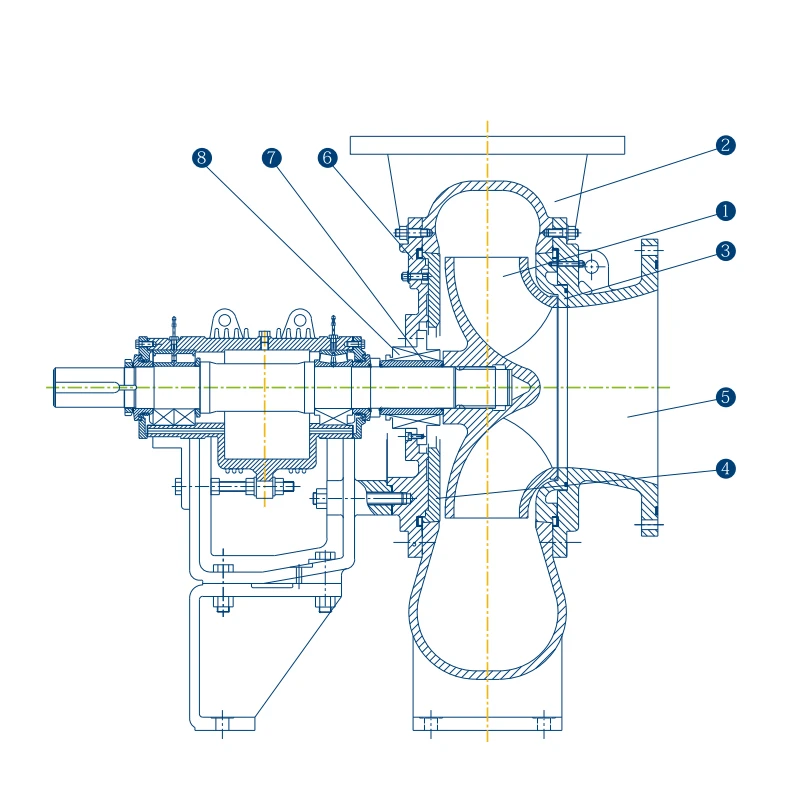
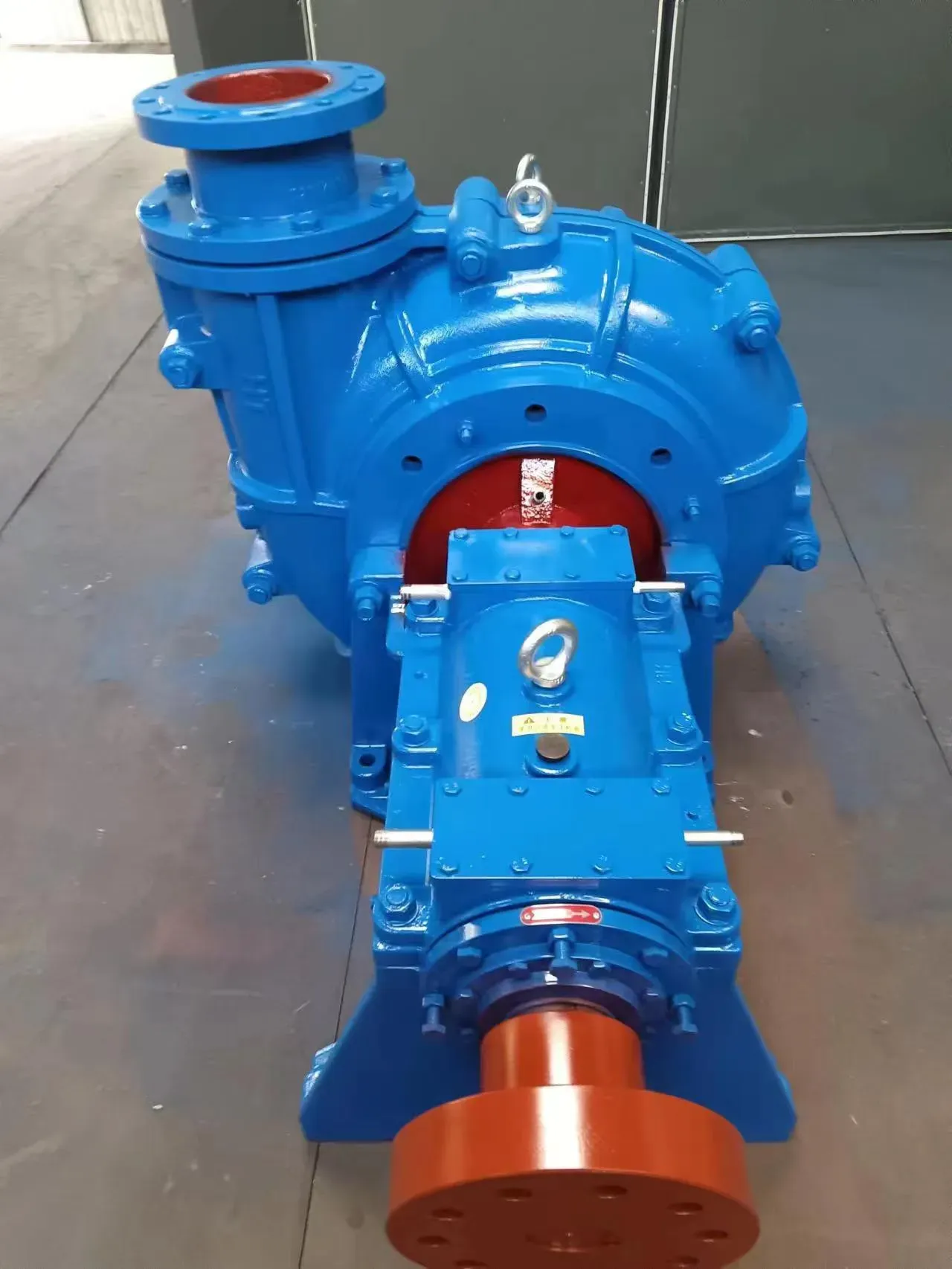
The double suction water pump is a centrifugal pump designed to move liquids by converting rotational kinetic energy to the hydrodynamic energy of the fluid flow. Distinguished by its intake on both sides of the impeller, it offers higher flow rates and reduced axial thrust compared to single-suction pumps. This pump occupies a crucial position in numerous industrial applications, ranging from water supply and drainage to irrigation, firefighting, and power plant cooling. Core performance characteristics include flow rate, head (pressure), efficiency, and Net Positive Suction Head Required (NPSHr). The industry currently faces challenges relating to increased demands for energy efficiency, material durability in corrosive environments, and reducing maintenance downtime. This guide provides an in-depth technical examination of double suction water pumps, encompassing material science, manufacturing processes, performance analysis, failure modes, and relevant industry standards.
Material Science & Manufacturing
The primary materials employed in double suction water pump construction are cast iron (typically gray iron ASTM A48 Class 30), ductile iron (ASTM A536 Grade 65-45-12), stainless steel (304, 316 – ASTM A743), and various polymer composites for seals and wear rings. Cast iron is favored for its cost-effectiveness and damping properties, but its limited tensile strength and susceptibility to corrosion necessitate protective coatings (epoxy, rubber lining). Ductile iron provides enhanced tensile strength and impact resistance. Stainless steel is crucial for handling corrosive fluids, minimizing galvanic corrosion, and increasing service life. Impellers are often manufactured using investment casting or sand casting followed by precision machining to ensure accurate blade profiles and smooth surface finishes, minimizing cavitation. Pump casings are typically produced via sand casting or shell molding, requiring stringent quality control to prevent porosity and ensure dimensional accuracy. Shafts are forged from alloy steel (e.g., 4140 – ASTM A297) and undergo heat treatment (hardening and tempering) to achieve the required yield strength and fatigue resistance. Manufacturing processes include: 1) Patternmaking, 2) Moldmaking, 3) Casting, 4) Machining (CNC milling, turning), 5) Welding (for specific casing configurations), 6) Surface Treatment (coating, painting), 7) Assembly and 8) Hydrostatic testing to verify structural integrity and leak-tightness. Key parameter control involves precise alloy composition, controlled cooling rates during casting to minimize residual stresses, and accurate machining tolerances to maintain hydraulic performance. Proper balancing of the impeller is critical to reduce vibration and extend bearing life.
Performance & Engineering
Double suction pump performance is governed by the affinity laws, relating flow rate, head, power, and speed. Force analysis involves calculating radial and axial thrust loads on the impeller shaft. Axial thrust is minimized by the symmetrical suction arrangement and the use of wear rings to maintain close clearances. Hydraulic Institute (HI) standards provide guidelines for pump selection and system design to optimize efficiency and prevent cavitation. Cavitation, a primary concern, occurs when the absolute pressure at the impeller inlet falls below the vapor pressure of the liquid, forming vapor bubbles that collapse and damage the impeller. NPSHr, determined through rigorous testing, must be lower than the NPSHa (Net Positive Suction Head Available) provided by the system to avoid cavitation. Environmental resistance considerations include temperature extremes, humidity, and exposure to corrosive atmospheres. Proper material selection and protective coatings are essential. Compliance requirements vary by region and application. For potable water applications, materials must comply with NSF/ANSI 61 standards. For hazardous environments, pumps must be certified to ATEX or IECEx standards for explosion protection. Furthermore, hydraulic efficiency is paramount and impacted by impeller design, casing volute geometry, and surface finish. Finite Element Analysis (FEA) is routinely employed to optimize impeller design, minimize stress concentrations, and predict pump performance under various operating conditions.
Technical Specifications
| Parameter | Unit | Typical Value (Range) | Testing Standard |
|---|---|---|---|
| Flow Rate | m³/h | 50 - 5000 | ISO 9906 |
| Head | m | 10 - 150 | ISO 9906 |
| Power | kW | 3 - 500 | IEC 60034 |
| Impeller Diameter | mm | 200 - 800 | Internal QC |
| Suction Pipe Diameter | mm | 100 - 600 | System Design |
| Discharge Pipe Diameter | mm | 80 - 500 | System Design |
Failure Mode & Maintenance
Common failure modes in double suction water pumps include impeller cavitation, bearing failure, seal leakage, casing corrosion, and shaft misalignment. Cavitation erodes the impeller material, reducing pump efficiency and eventually leading to impeller failure. Bearing failure often results from improper lubrication, contamination, or excessive loads. Seal leakage can occur due to wear, corrosion, or improper installation. Casing corrosion, particularly in pumps handling corrosive fluids, weakens the casing and can lead to catastrophic failure. Shaft misalignment induces excessive stress on bearings and seals, accelerating wear. Failure analysis techniques include visual inspection, non-destructive testing (NDT) such as ultrasonic testing (UT) and radiographic testing (RT), and metallurgical analysis of failed components. Preventative maintenance measures include regular lubrication of bearings, inspection and replacement of seals and wear rings, monitoring vibration levels, and periodic corrosion inspections. Alignment checks should be performed using laser alignment tools. Impeller balancing should be re-checked periodically. Proper system operation, including maintaining adequate NPSHa and avoiding dry running, is crucial to extend pump life. Scheduled maintenance programs, guided by manufacturer recommendations and operational experience, are essential for minimizing downtime and maximizing reliability.
Industry FAQ
Q: What is the impact of impeller trim on pump efficiency and NPSHr?
A: Impeller trimming reduces the impeller diameter, decreasing the flow rate and head. While it can optimize performance for specific duty points, excessive trimming significantly reduces efficiency and increases NPSHr, making the pump more susceptible to cavitation. A thorough hydraulic analysis should be performed before any impeller trimming.
Q: How does material selection affect the long-term reliability of a double suction pump handling seawater?
A: Seawater is highly corrosive due to its chloride content. Stainless steel alloys (316, duplex stainless steel) and specialized coatings (epoxy, rubber lining) are essential to prevent corrosion. Galvanic corrosion between dissimilar metals must also be addressed through proper insulation or material compatibility.
Q: What are the key considerations for selecting a variable frequency drive (VFD) for a double suction pump?
A: VFD selection requires careful consideration of motor compatibility, harmonic distortion, and cooling requirements. Ensure the VFD is rated for the pump's horsepower and voltage. Implement harmonic filters to mitigate electrical interference. Provide adequate ventilation to prevent overheating.
Q: What are the best practices for minimizing vibration in a double suction pump installation?
A: Proper alignment of the pump and motor is paramount. Install flexible couplings to absorb minor misalignments. Ensure the pump base is rigid and properly anchored. Perform impeller balancing and regularly monitor vibration levels using vibration analysis equipment.
Q: How does the specific gravity of the pumped fluid affect pump performance?
A: Pump performance is inversely proportional to the specific gravity of the fluid. Higher specific gravity fluids require more power to pump and result in lower flow rates and head. Pump curves are typically based on water (specific gravity = 1), and performance must be corrected for fluids with different specific gravities.
Conclusion
The double suction water pump remains a cornerstone of fluid handling systems across diverse industries, owing to its robust design, high flow capabilities, and relative efficiency. A comprehensive understanding of the material science, manufacturing processes, and performance characteristics is critical for selecting, operating, and maintaining these pumps effectively. Addressing potential failure modes through preventative maintenance and rigorous failure analysis ensures prolonged operational life and minimizes costly downtime.
Future advancements in double suction pump technology will likely focus on further improving hydraulic efficiency through optimized impeller designs and advanced computational fluid dynamics (CFD) analysis, exploring the use of more corrosion-resistant materials, and integrating smart monitoring systems for predictive maintenance. Compliance with evolving environmental regulations and the demand for energy-efficient solutions will continue to drive innovation in this field.
-
basement bathroom sewage pump Material Science Manufacturing
News2026-05-21
-
wastewater treatment plant pumps Material Science Manufacturing
News2026-05-21
-
waste water pump for basement Material Science Manufacturing
News2026-05-21
-
sump pump sewage Performance Analysis
News2026-05-21
-
sump pump for sewage Material Science and Manufacturing
News2026-05-21
-
sump pump for septic systems Material Science Manufacturing
News2026-05-20
-
sump pump and ejector pump Material Science Manufacturing
News2026-05-20
-
sewage treatment plant pumps Performance Analysis
News2026-05-20
-
sewage tank pump Material Science and Manufacturing
News2026-05-20
-
sewage pump for septic tank Performance Analysis
News2026-05-20
-
Sewage Pump and Tank Performance Analysis
News2026-05-19
-
Sewage Ejector Pump Replacement Performance Analysis
News2026-05-19
-
sewage ejector pump for basement bathroom Material Science Manufacturing
News2026-05-19
-
sewage ejection pump Material Science and Manufacturing
News2026-05-19
-
in line sewage pump Performance Analysis
News2026-05-19




