English
- Afrikaans
- Albanian
- Amharic
- Arabic
- Armenian
- Azerbaijani
- Basque
- Belarusian
- Bengali
- Bosnian
- Bulgarian
- Catalan
- Cebuano
- Corsican
- Croatian
- Czech
- Danish
- Dutch
- English
- Esperanto
- Estonian
- Finnish
- French
- Frisian
- Galician
- Georgian
- German
- Greek
- Gujarati
- Haitian Creole
- hausa
- hawaiian
- Hebrew
- Hindi
- Miao
- Hungarian
- Icelandic
- igbo
- Indonesian
- irish
- Italian
- Japanese
- Javanese
- Kannada
- kazakh
- Khmer
- Rwandese
- Korean
- Kurdish
- Kyrgyz
- Lao
- Latin
- Latvian
- Lithuanian
- Luxembourgish
- Macedonian
- Malgashi
- Malay
- Malayalam
- Maltese
- Maori
- Marathi
- Mongolian
- Myanmar
- Nepali
- Norwegian
- Norwegian
- Occitan
- Pashto
- Persian
- Polish
- Portuguese
- Punjabi
- Romanian
- Russian
- Samoan
- Scottish Gaelic
- Serbian
- Sesotho
- Shona
- Sindhi
- Sinhala
- Slovak
- Slovenian
- Somali
- Spanish
- Sundanese
- Swahili
- Swedish
- Tagalog
- Tajik
- Tamil
- Tatar
- Telugu
- Thai
- Turkish
- Turkmen
- Ukrainian
- Urdu
- Uighur
- Uzbek
- Vietnamese
- Welsh
- Bantu
- Yiddish
- Yoruba
- Zulu

Telephone: +86 13120555503
Email: frank@cypump.com


Apr . 01, 2024 17:55 Back to list
double suction sludge water pump price Performance Analysis
Introduction
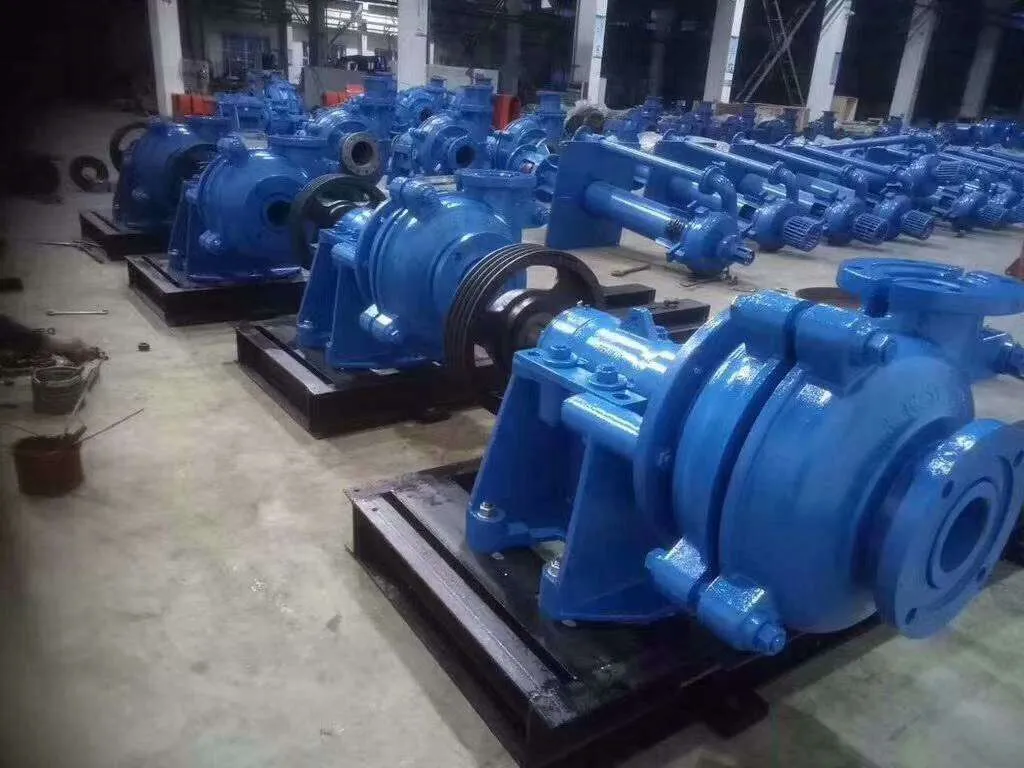
Double suction sludge water pumps are centrifugal pumps specifically engineered for handling abrasive, viscous, and solid-laden fluids commonly found in wastewater treatment, industrial effluent, and mining applications. Unlike standard centrifugal pumps, these are designed to minimize wear and clogging when pumping slurries containing solids. The ‘double suction’ design, incorporating impellers that draw fluid from both sides, enhances efficiency and reduces radial thrust on the shaft, allowing for larger flow rates and handling of higher solids concentrations. The price of these pumps varies considerably based on several critical parameters: material of construction, impeller design (open, semi-open, closed), motor power and speed, casing material, and adherence to specific industry standards regarding abrasion resistance and seal integrity. Understanding these factors is crucial for accurate cost evaluation and ensuring optimal performance within a given application. The market for these pumps is driven by increasingly stringent environmental regulations and the growing need for efficient wastewater management solutions.
Material Science & Manufacturing
The core materials for double suction sludge pumps are selected based on resistance to abrasion and corrosion. Pump casings are commonly constructed from cast iron (ASTM A48 Class 30), ductile iron (ASTM A536 Grade 65-45-12), or specialized alloys like high-chrome cast iron (containing 15-30% chromium) for exceptional abrasion resistance. Impellers are similarly constructed, with high-chrome iron being favored for its hardness and ability to withstand particle impact. Shafts typically utilize alloy steel (ASTM A36 or 4140) hardened and tempered to ensure torsional strength and resistance to bending. Seals are critical; mechanical seals using silicon carbide faces (versus traditional carbon faces) are frequently employed for superior resistance to abrasive slurries. Manufacturing processes involve sand casting for the pump casing and impeller, followed by machining to precise tolerances. Welding processes, adhering to AWS D1.1 standards, are used for joining components. Impeller balancing is paramount, performed per ISO 1940-1 to minimize vibration and extend bearing life. Surface treatments, such as coating with epoxy or polyurethane, enhance corrosion resistance and reduce the build-up of solids within the pump.
Performance & Engineering
The performance of a double suction sludge pump is governed by several key engineering principles. Hydraulic design focuses on minimizing velocity within the pump casing to reduce abrasion. Impeller geometry, particularly vane angle and number, impacts flow rate and head. The Net Positive Suction Head Required (NPSHr), calculated according to Hydraulic Institute standards, is critical to prevent cavitation, which dramatically reduces pump efficiency and causes erosion. Force analysis considers radial and axial thrust on the shaft, mitigated by bearing selection (deep groove ball bearings or tapered roller bearings) and the double suction impeller design. Environmental resistance is paramount; pumps operating outdoors require considerations for temperature extremes, humidity, and potential exposure to corrosive chemicals. Compliance requirements necessitate adherence to API 610 standards for centrifugal pumps, ensuring safety and reliability. Pump curves, generated through standardized testing (ISO 9906), provide crucial data for system matching, ensuring the pump operates efficiently within the desired operating range. Proper pipe support and alignment, per ASME B31.3, are vital to minimize vibration and extend pump life.
Technical Specifications
| Parameter | Unit | Typical Range | Material |
|---|---|---|---|
| Flow Rate | m³/h | 50 – 1500 | Cast Iron/Ductile Iron |
| Head | m | 10 – 80 | Cast Iron/Ductile Iron |
| Solids Handling Capacity | mm | Up to 75 | High Chrome Iron |
| Motor Power | kW | 1.5 – 150 | Cast Iron/Steel |
| Seal Type | - | Mechanical Seal (SiC/SiC) | Silicon Carbide/Silicon Carbide |
| Casing Pressure | Bar | Up to 10 | Cast Iron/Ductile Iron |
Failure Mode & Maintenance
Common failure modes in double suction sludge pumps include impeller wear due to abrasive particles, mechanical seal failure from slurry ingress, bearing failure caused by misalignment or excessive vibration, and casing corrosion. Failure analysis often reveals that premature wear is directly correlated with improper pump selection for the application – insufficient solids handling capacity or inadequate material selection. Fatigue cracking can occur in the impeller or casing due to cyclical loading and stress concentrations. Delamination of protective coatings compromises corrosion resistance. Oxidation and erosion contribute to the degradation of impeller vanes. Preventative maintenance is critical. This includes regular inspection of mechanical seals, lubrication of bearings (following manufacturer’s specifications), vibration analysis (ISO 10816) to detect imbalances, and visual inspection for casing corrosion or wear. Scheduled impeller replacement is necessary based on operational hours and slurry abrasiveness. Periodic flushing of the pump casing removes accumulated solids. Correct alignment of the pump and motor, verified with laser alignment tools, prevents bearing failure and extends seal life. Proper strainer installation upstream of the pump protects against large debris.
Industry FAQ
Q: What is the impact of solids concentration on pump selection and price?
A: Higher solids concentrations necessitate pumps with larger impeller clearances, more robust materials of construction (typically high-chrome iron), and potentially specialized impeller designs (e.g., vortex impellers). This leads to increased manufacturing costs and, consequently, a higher pump price. Furthermore, selecting a pump undersized for the solids load will dramatically shorten its lifespan, leading to more frequent and costly repairs.
Q: How does the material of construction affect the overall life cycle cost?
A: While pumps with casings and impellers made from high-chrome iron have a higher initial cost, they offer significantly longer service life when handling abrasive slurries. A lower-cost pump made from standard cast iron may fail prematurely, requiring frequent replacements, leading to higher long-term costs. Life cycle cost analysis, considering initial purchase price, maintenance, and replacement frequency, is crucial for informed decision-making.
Q: What is the significance of NPSHr and how can it be mitigated?
A: Net Positive Suction Head Required (NPSHr) is the minimum pressure required at the pump suction to prevent cavitation. Insufficient NPSHa (Available) leads to cavitation, causing noise, vibration, and rapid impeller erosion. Mitigation strategies include lowering the pump elevation, increasing the suction pipe diameter, reducing flow velocity in the suction piping, and cooling the fluid to reduce vapor pressure.
Q: What are the benefits of using mechanical seals versus packing glands in sludge applications?
A: Mechanical seals offer superior sealing performance and reduced leakage compared to packing glands, particularly when handling abrasive slurries. While more expensive initially, they require less maintenance and minimize product loss. Silicon carbide seal faces are essential for long-term reliability in these demanding applications.
Q: What maintenance practices are critical for extending the life of a double suction sludge pump?
A: Regular lubrication of bearings, vibration analysis, inspection of mechanical seals, and periodic flushing of the pump casing are essential. Implementing a preventative maintenance schedule based on operating hours and slurry characteristics is paramount. Correct alignment of the pump and motor, and regular monitoring of pump performance, can also significantly extend the pump’s lifespan.
Conclusion
The selection and procurement of a double suction sludge water pump necessitate a comprehensive understanding of material science, hydraulic engineering, and application-specific requirements. The ‘price’ is not merely a number, but a reflection of the pump’s ability to withstand the rigors of slurry handling. A seemingly cheaper pump can quickly become expensive through premature failure and downtime. Prioritizing abrasion resistance, proper NPSH calculations, and adherence to relevant industry standards are critical for ensuring long-term performance and minimizing life cycle costs.
Future trends in double suction sludge pump technology focus on improved impeller designs for higher efficiency, advanced materials with enhanced abrasion resistance, and the integration of smart sensors for predictive maintenance. The adoption of variable frequency drives (VFDs) allows for optimized pump operation and energy savings. Continued advancements in sealing technology will further reduce leakage and environmental impact. Careful consideration of these factors will be crucial for selecting pumps that meet the evolving demands of wastewater treatment and industrial processing applications.
-
Sewage Pump Company Performance and Engineering
News2026-05-24
-
sewage pump 1/2 hp Performance Analysis
News2026-05-24
-
Sewage Ejector Systems Performance Analysis
News2026-05-24
-
Sewage Ejection System Material Science and Manufacturing
News2026-05-24
-
sewage and effluent pumps Performance Engineering
News2026-05-24
-
pump for sewage water Performance Analysis
News2026-05-23
-
plumbing sewage ejector pump Performance Engineering
News2026-05-23
-
home sewer pump station Performance and Engineering
News2026-05-23
-
high pressure sump pump Performance Analysis
News2026-05-23
-
high head effluent pump Performance Analysis
News2026-05-23
-
Effluent vs Sump Pump Performance Analysis
News2026-05-22
-
effluent septic pump Performance Engineering
News2026-05-22
-
best sewer pumps Performance Engineering
News2026-05-22
-
best sewer pump Performance Analysis
News2026-05-22
-
best sewage pumps Performance Engineering
News2026-05-22




