English
- Afrikaans
- Albanian
- Amharic
- Arabic
- Armenian
- Azerbaijani
- Basque
- Belarusian
- Bengali
- Bosnian
- Bulgarian
- Catalan
- Cebuano
- Corsican
- Croatian
- Czech
- Danish
- Dutch
- English
- Esperanto
- Estonian
- Finnish
- French
- Frisian
- Galician
- Georgian
- German
- Greek
- Gujarati
- Haitian Creole
- hausa
- hawaiian
- Hebrew
- Hindi
- Miao
- Hungarian
- Icelandic
- igbo
- Indonesian
- irish
- Italian
- Japanese
- Javanese
- Kannada
- kazakh
- Khmer
- Rwandese
- Korean
- Kurdish
- Kyrgyz
- Lao
- Latin
- Latvian
- Lithuanian
- Luxembourgish
- Macedonian
- Malgashi
- Malay
- Malayalam
- Maltese
- Maori
- Marathi
- Mongolian
- Myanmar
- Nepali
- Norwegian
- Norwegian
- Occitan
- Pashto
- Persian
- Polish
- Portuguese
- Punjabi
- Romanian
- Russian
- Samoan
- Scottish Gaelic
- Serbian
- Sesotho
- Shona
- Sindhi
- Sinhala
- Slovak
- Slovenian
- Somali
- Spanish
- Sundanese
- Swahili
- Swedish
- Tagalog
- Tajik
- Tamil
- Tatar
- Telugu
- Thai
- Turkish
- Turkmen
- Ukrainian
- Urdu
- Uighur
- Uzbek
- Vietnamese
- Welsh
- Bantu
- Yiddish
- Yoruba
- Zulu

Telephone: +86 13120555503
Email: frank@cypump.com


Apr . 01, 2024 17:55 Back to list
double suction impeller pump Performance Analysis
Introduction
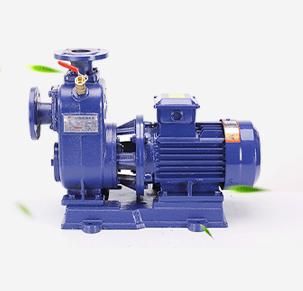
Double suction impeller pumps are a critical component in numerous industrial fluid transfer applications, operating as centrifugal pumps designed to move liquids by converting rotational kinetic energy to hydrodynamic energy. Their defining characteristic – intake from both sides of the impeller – distinguishes them from single-suction designs, significantly enhancing suction performance and reducing the risk of cavitation, particularly in low Net Positive Suction Head Available (NPSHa) scenarios. These pumps find extensive use in water supply, wastewater treatment, power generation, irrigation, and large-scale industrial processes. Performance is quantified by flow rate (typically in m³/hr or GPM), head (in meters or feet), and efficiency. The selection of a double suction pump is dictated by system demands for large flow rates, stable operation under varying suction conditions, and long-term reliability. Addressing core industry pain points like energy consumption, maintenance downtime, and handling abrasive fluids is paramount in modern double suction pump design and material selection.
Material Science & Manufacturing
The materials used in double suction impeller pumps are dictated by the fluid being pumped and the operating environment. Impellers are frequently constructed from cast iron (ASTM A48 Class 30), stainless steel (304, 316 – ASTM A743), or bronze (ASTM B148). Cast iron provides cost-effectiveness and good wear resistance for clean water applications, but is susceptible to corrosion. Stainless steel offers superior corrosion resistance for aggressive fluids and saline environments. Pump casings are commonly made from cast iron, ductile iron (ASTM A536), or steel. Shafts are generally manufactured from high-strength alloy steel (e.g., 4140 – ASTM A276) and hardened for torsional strength and wear resistance. Seals are critical, utilizing materials like Viton (fluoroelastomer), EPDM (ethylene propylene diene monomer), or PTFE (polytetrafluoroethylene) for compatibility with the pumped media. Manufacturing processes begin with casting or forging of the impeller and casing. Impellers undergo precision machining, including balancing to minimize vibration. Casings are subjected to sandblasting and coating (epoxy or fusion-bonded epoxy) for corrosion protection. Welding processes (SMAW, GTAW) are employed for joining components, requiring stringent quality control to ensure structural integrity. Parameter control during casting (cooling rates, mold materials) directly influences the microstructure and mechanical properties of the castings, impacting resistance to fatigue and cavitation erosion.
Performance & Engineering
Performance analysis of double suction impeller pumps centers around hydraulic efficiency, NPSH requirements, and vibration characteristics. The pump's performance curve, depicting head vs. flow rate, is crucial for system matching. Hydraulic losses are minimized through optimized impeller blade design and casing volute geometry. Cavitation – the formation of vapor bubbles due to low pressure – is a major concern. The NPSHa (Net Positive Suction Head Available) must exceed the NPSHr (Net Positive Suction Head Required) by a sufficient margin to prevent cavitation. Engineering considerations involve stress analysis of the impeller and casing under operating pressures. Finite Element Analysis (FEA) is commonly used to identify stress concentrations and optimize component geometry. Force analysis includes hydraulic thrust balancing, achieved through opposed impeller vanes or balance drums. Environmental resistance is assessed through corrosion testing (salt spray testing – ASTM B117) and coating performance evaluation. Compliance requirements vary by region but often include adherence to hydraulic institute standards (HI) and relevant safety regulations (e.g., ATEX for potentially explosive atmospheres).
Technical Specifications
| Parameter | Typical Value (Example) | Unit | Standard/Reference |
|---|---|---|---|
| Flow Rate | 500 | m³/hr | ISO 9906 |
| Head | 30 | meters | HI 1.6 |
| Impeller Diameter | 400 | mm | Manufacturer Specification |
| Pump Speed | 1450 | RPM | IEC 60034-1 |
| Power | 75 | kW | IEC 60034-1 |
| NPSHr (at max flow) | 4.5 | meters | ISO 9906 |
Failure Mode & Maintenance
Common failure modes in double suction impeller pumps include cavitation erosion, impeller cracking due to fatigue, seal failure, bearing failure, and corrosion-induced degradation. Cavitation erosion manifests as pitting on the impeller blades, significantly reducing performance. Fatigue cracking typically occurs at the impeller eye or blade root due to cyclic stress. Seal failure leads to leakage and reduced efficiency. Bearing failure results from inadequate lubrication, contamination, or excessive load. Corrosion affects cast iron components, weakening the material and leading to failure. Preventive maintenance is crucial and includes regular vibration analysis (ISO 10816), lubrication of bearings, inspection of seals, and monitoring of pump performance parameters (flow rate, head, power consumption). Impeller balancing is essential to minimize vibration. When corrosion is present, coatings should be reapplied or components replaced. For seal failures, proper seal selection and installation are vital. Failure analysis techniques such as visual inspection, non-destructive testing (NDT) – including ultrasonic testing (UT) and radiographic testing (RT) – and metallurgical analysis (ASTM E384) are used to determine the root cause of failures and prevent recurrence.
Industry FAQ
Q: What is the impact of impeller trim on pump efficiency and NPSHr?
A: Impeller trimming – reducing the impeller diameter – is often done to match pump performance to system requirements. However, it reduces pump efficiency and increases NPSHr. While it lowers the head and flow rate, it alters the hydraulic profile, making the pump more susceptible to cavitation. A thorough hydraulic analysis should be conducted before trimming to ensure stable operation and acceptable efficiency.
Q: How does the fluid viscosity affect pump performance?
A: Increased fluid viscosity significantly reduces pump efficiency and flow rate. Higher viscosity increases frictional losses within the pump and requires more power to drive. Pump manufacturers provide performance curves for water-like fluids; corrections factors must be applied for viscous fluids, often requiring a larger motor to compensate for the increased power demand.
Q: What are the key considerations when selecting a pump for handling abrasive slurries?
A: When handling abrasive slurries, material selection is paramount. Hard materials like high-chromium cast iron or ceramic linings are necessary to resist wear. Larger impeller clearances are required to accommodate the abrasive particles, but this reduces efficiency. Flushing the pump seals with clean fluid is crucial to prevent abrasive particles from entering the seal and causing premature failure.
Q: How can I minimize vibration in a double suction pump installation?
A: Minimizing vibration requires proper alignment of the pump and motor, a stable foundation, and balanced rotating components. Regular vibration analysis can detect imbalances or misalignment. Flexible couplings can help absorb vibration. Pipe supports should be properly designed to prevent stress on the pump casing.
Q: What is the role of the minimum flow rate in pump operation?
A: Operating a pump below its minimum flow rate can lead to several problems, including overheating, increased vibration, and cavitation. This is because the internal recirculation within the pump increases significantly, generating heat and reducing efficiency. A bypass line is sometimes used to maintain a minimum flow when the system demand is low.
Conclusion
Double suction impeller pumps represent a robust and efficient solution for high-flow rate fluid transfer applications. The selection process demands a comprehensive understanding of fluid properties, system requirements (NPSHa, head, flow), and material compatibility to mitigate potential failure modes such as cavitation and corrosion. Proper maintenance, including regular vibration analysis and seal inspections, is vital to maximizing operational lifespan and minimizing downtime.
Advancements in pump design, including computational fluid dynamics (CFD) modeling and the use of more durable materials, are continually improving pump efficiency and reliability. Future trends will likely focus on smart pump technologies incorporating sensors and data analytics to optimize performance and predict maintenance needs, aligning with the growing demand for Industry 4.0 integration and predictive maintenance strategies.
-
Effluent vs Sump Pump Performance Analysis
News2026-05-22
-
effluent septic pump Performance Engineering
News2026-05-22
-
best sewer pumps Performance Engineering
News2026-05-22
-
best sewer pump Performance Analysis
News2026-05-22
-
best sewage pumps Performance Engineering
News2026-05-22
-
basement bathroom sewage pump Material Science Manufacturing
News2026-05-21
-
wastewater treatment plant pumps Material Science Manufacturing
News2026-05-21
-
waste water pump for basement Material Science Manufacturing
News2026-05-21
-
sump pump sewage Performance Analysis
News2026-05-21
-
sump pump for sewage Material Science and Manufacturing
News2026-05-21
-
sump pump for septic systems Material Science Manufacturing
News2026-05-20
-
sump pump and ejector pump Material Science Manufacturing
News2026-05-20
-
sewage treatment plant pumps Performance Analysis
News2026-05-20
-
sewage tank pump Material Science and Manufacturing
News2026-05-20
-
sewage pump for septic tank Performance Analysis
News2026-05-20




