English
- Afrikaans
- Albanian
- Amharic
- Arabic
- Armenian
- Azerbaijani
- Basque
- Belarusian
- Bengali
- Bosnian
- Bulgarian
- Catalan
- Cebuano
- Corsican
- Croatian
- Czech
- Danish
- Dutch
- English
- Esperanto
- Estonian
- Finnish
- French
- Frisian
- Galician
- Georgian
- German
- Greek
- Gujarati
- Haitian Creole
- hausa
- hawaiian
- Hebrew
- Hindi
- Miao
- Hungarian
- Icelandic
- igbo
- Indonesian
- irish
- Italian
- Japanese
- Javanese
- Kannada
- kazakh
- Khmer
- Rwandese
- Korean
- Kurdish
- Kyrgyz
- Lao
- Latin
- Latvian
- Lithuanian
- Luxembourgish
- Macedonian
- Malgashi
- Malay
- Malayalam
- Maltese
- Maori
- Marathi
- Mongolian
- Myanmar
- Nepali
- Norwegian
- Norwegian
- Occitan
- Pashto
- Persian
- Polish
- Portuguese
- Punjabi
- Romanian
- Russian
- Samoan
- Scottish Gaelic
- Serbian
- Sesotho
- Shona
- Sindhi
- Sinhala
- Slovak
- Slovenian
- Somali
- Spanish
- Sundanese
- Swahili
- Swedish
- Tagalog
- Tajik
- Tamil
- Tatar
- Telugu
- Thai
- Turkish
- Turkmen
- Ukrainian
- Urdu
- Uighur
- Uzbek
- Vietnamese
- Welsh
- Bantu
- Yiddish
- Yoruba
- Zulu

Telephone: +86 13120555503
Email: frank@cypump.com


Apr . 01, 2024 17:55 Back to list
double suction fire pump price Performance Analysis
Introduction
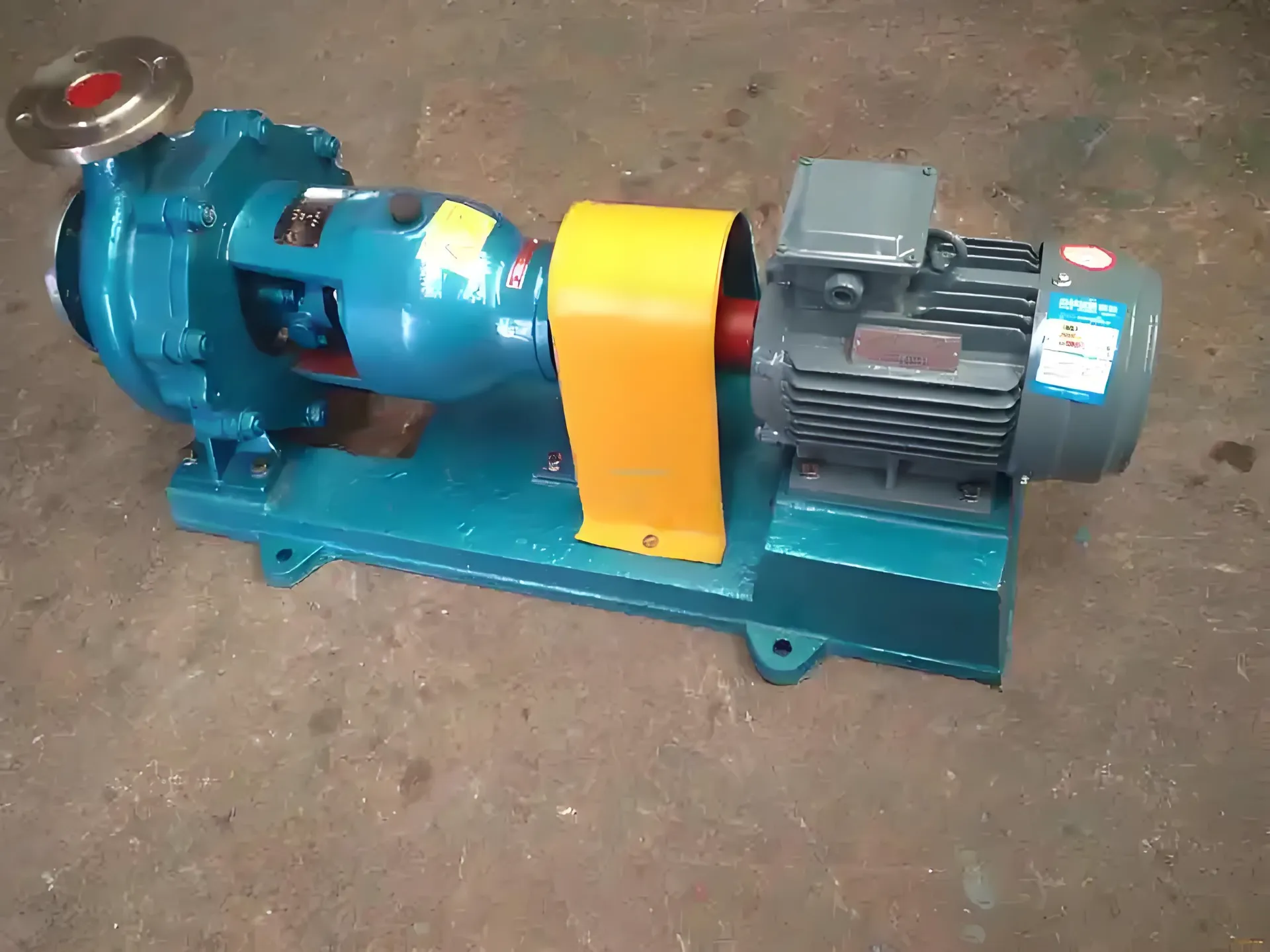
Double suction fire pumps are centrifugal pumps specifically designed for fire protection systems, delivering high volumes of water at required pressures. Their core function is to supply water to sprinkler systems, fire hoses, and other firefighting equipment. Positioned within the broader industrial pump market, they represent a specialized segment addressing critical life safety needs. The 'price' of these pumps is heavily influenced by factors including flow rate (GPM), pressure head (PSI), motor power (HP), material of construction, and adherence to stringent industry certifications. Core performance parameters include reliable operation under varying water conditions, minimal maintenance requirements, and compliance with national and international fire safety standards. A significant industry pain point is the balancing of initial cost versus long-term reliability and lifecycle costs, compounded by varying interpretations of regulatory compliance.
Material Science & Manufacturing
The construction of double suction fire pumps involves several key materials. Pump casings are frequently manufactured from cast iron (ASTM A126 Grade B, offering good tensile strength and machinability) or ductile iron (ASTM A536 65-45-12, improving impact resistance and ductility). Impellers are typically cast bronze (ASTM B148 Alloy 844, chosen for its corrosion resistance in water applications) or stainless steel (316, providing superior resistance to chloride-induced pitting). Shafts utilize high-strength alloy steel (AISI 4140, heat-treated for optimal tensile strength and fatigue resistance). Seals often employ mechanical seals utilizing silicon carbide faces (for abrasion resistance) and elastomers like Viton or EPDM (for chemical compatibility).
Manufacturing involves several critical processes. Casing production utilizes sand casting, requiring precise mold creation and controlled cooling rates to minimize residual stresses. Impeller manufacturing utilizes investment casting for complex geometries and tight tolerances. Welding (SMAW or GTAW) is employed for joining specific components, requiring qualified welders and adherence to AWS D1.1 standards. Machining operations (CNC milling and turning) ensure dimensional accuracy and smooth surface finishes. Balancing of the impeller is crucial to minimize vibration and ensure smooth operation. Key parameter control involves monitoring molten metal temperatures, sand moisture content, welding parameters (voltage, amperage, travel speed), and machining tolerances. Non-destructive testing (NDT) like radiographic inspection and ultrasonic testing is essential for verifying weld integrity and detecting internal flaws.
Performance & Engineering
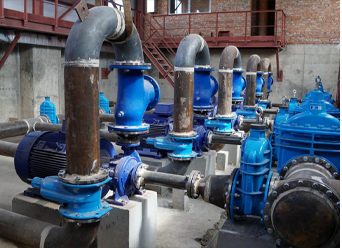
Performance is dictated by hydraulic design and motor characteristics. Force analysis focuses on stresses induced by water pressure, impeller centrifugal forces, and bearing loads. Pump curves (head-capacity curves) are generated through rigorous testing (ANSI/HI 1.6) detailing the pump's performance across a range of flow rates and heads. Cavitation, a major concern, is prevented through proper Net Positive Suction Head Available (NPSHA) calculations and pump selection. Environmental resistance is achieved through protective coatings (epoxy or polyurethane) applied to the casing and external components to mitigate corrosion. Compliance with NFPA 20 (Standard for the Installation of Stationary Pumps for Fire Protection) is paramount, dictating requirements for pump performance, reliability, and testing. The pump’s suction and discharge piping must be designed to minimize headloss and ensure adequate flow. Bearing selection is critical to handle radial and axial loads and is governed by ISO 28186. Furthermore, motor selection must align with the pump’s hydraulic power requirements and operate safely in potentially wet environments – typically NEMA-rated for appropriate environmental protection (e.g., TEFC - Totally Enclosed Fan Cooled).
Technical Specifications
| Parameter | Unit | Typical Range (Horizontal Split Case) | Typical Range (Vertical Inline) |
|---|---|---|---|
| Flow Rate | GPM (Gallons Per Minute) | 500 – 5000 | 250 – 2000 |
| Pressure Head | PSI (Pounds per Square Inch) | 40 – 250 | 60 – 300 |
| Motor Power | HP (Horsepower) | 25 – 200 | 10 – 100 |
| Casing Material | - | Cast Iron (A126 B), Ductile Iron (A536 65-45-12) | Cast Iron (A126 B), Stainless Steel (304/316) |
| Impeller Material | - | Bronze (B148 Alloy 844), Stainless Steel (316) | Bronze (B148 Alloy 844), Stainless Steel (316) |
| Seal Type | - | Mechanical Seal (Silicon Carbide/Viton/EPDM) | Mechanical Seal (Silicon Carbide/Viton/EPDM) |
Failure Mode & Maintenance
Common failure modes include cavitation (leading to impeller erosion), bearing failure (due to improper lubrication or overload), seal failure (caused by abrasive particles or chemical incompatibility), and casing cracking (resulting from thermal stress or corrosion). Fatigue cracking can occur in the impeller or shaft under cyclic loading. Delamination of protective coatings exposes the underlying metal to corrosion. Oxidation and corrosion of metallic components reduce pump efficiency and can lead to catastrophic failure.
Preventive maintenance is crucial. Regular lubrication of bearings (following manufacturer's recommendations) is essential. Periodic inspection of seals for leaks or wear is necessary. Monitoring vibration levels (ISO 10816) can detect bearing or impeller imbalances. Flushing the pump casing to remove debris and scale prevents cavitation and seal damage. Regularly testing the pump against its performance curve (ANSI/HI 1.6) identifies performance degradation. For seal failures, proper selection of seal materials compatible with the pumped fluid is vital. In case of cavitation, reducing suction lift or increasing pipe diameter can be implemented. Casing cracks often require repair welding or replacement.
Industry FAQ
Q: What is the impact of NPSH on pump performance, and how do I ensure adequate NPSHA?
A: Net Positive Suction Head Available (NPSHA) is crucial. Insufficient NPSHA leads to cavitation, damaging the impeller and reducing pump efficiency. Ensure adequate NPSHA by minimizing suction lift, increasing pipe diameter, lowering water temperature, and ensuring the pump is located as close to the water source as possible. Calculate NPSHA accurately based on system parameters and compare it to the pump’s NPSH Required (NPSHR) as specified by the manufacturer.
Q: How does the material of construction affect the long-term cost of ownership?
A: Material selection significantly impacts lifecycle costs. While cast iron offers a lower initial cost, it's susceptible to corrosion, requiring more frequent maintenance and potentially shorter lifespan. Ductile iron and stainless steel offer superior corrosion resistance, reducing maintenance and extending service life, but at a higher initial price. Consider the water chemistry and operating environment when selecting materials to minimize long-term costs.
Q: What are the key considerations when specifying a motor for a fire pump?
A: Motor selection must account for the pump’s hydraulic power requirements and the operating environment. NEMA standards dictate motor enclosures suitable for potentially wet or hazardous locations. Ensure the motor is properly sized to handle the pump’s load and has adequate overload protection. Consider motor efficiency to minimize energy consumption and operating costs. Verify compliance with relevant electrical codes.
Q: What testing and certification are required for fire pumps?
A: Fire pumps must comply with NFPA 20 and undergo rigorous testing. This includes hydrostatic testing, performance testing (head-capacity curves), and motor performance testing. UL (Underwriters Laboratories) and FM (Factory Mutual) listing are often required by insurance companies and regulatory authorities, demonstrating compliance with safety and performance standards. Hydrostatic testing verifies casing integrity, while performance testing validates pump output.
Q: What are the common causes of mechanical seal failure, and how can they be prevented?
A: Common causes include abrasive particles, chemical incompatibility, dry running, and improper installation. Prevent seal failure by filtering the pumped fluid, selecting seal materials compatible with the fluid’s chemistry, ensuring adequate lubrication, and following the manufacturer’s installation instructions meticulously. Regular inspection and timely replacement of worn seals are also crucial.
Conclusion
Double suction fire pumps are critical components of fire protection systems, demanding careful consideration of material selection, manufacturing processes, and performance characteristics. The 'price' of a pump is not solely a function of initial cost but must be evaluated in the context of lifecycle costs, reliability, and compliance with stringent safety standards. Proper design, installation, and preventative maintenance are paramount to ensuring dependable operation during emergency situations.
Future developments will likely focus on improved pump efficiency through advanced hydraulic designs, integration of smart monitoring systems for predictive maintenance, and the use of more corrosion-resistant materials. Adherence to evolving industry standards and regulatory requirements will continue to drive innovation in fire pump technology, prioritizing safety and reliability. Furthermore, enhanced diagnostic capabilities will enable quicker identification of potential failures, minimizing downtime and enhancing system resilience.
-
Sewage Pump Company Performance and Engineering
News2026-05-24
-
sewage pump 1/2 hp Performance Analysis
News2026-05-24
-
Sewage Ejector Systems Performance Analysis
News2026-05-24
-
Sewage Ejection System Material Science and Manufacturing
News2026-05-24
-
sewage and effluent pumps Performance Engineering
News2026-05-24
-
pump for sewage water Performance Analysis
News2026-05-23
-
plumbing sewage ejector pump Performance Engineering
News2026-05-23
-
home sewer pump station Performance and Engineering
News2026-05-23
-
high pressure sump pump Performance Analysis
News2026-05-23
-
high head effluent pump Performance Analysis
News2026-05-23
-
Effluent vs Sump Pump Performance Analysis
News2026-05-22
-
effluent septic pump Performance Engineering
News2026-05-22
-
best sewer pumps Performance Engineering
News2026-05-22
-
best sewer pump Performance Analysis
News2026-05-22
-
best sewage pumps Performance Engineering
News2026-05-22




