English
- Afrikaans
- Albanian
- Amharic
- Arabic
- Armenian
- Azerbaijani
- Basque
- Belarusian
- Bengali
- Bosnian
- Bulgarian
- Catalan
- Cebuano
- Corsican
- Croatian
- Czech
- Danish
- Dutch
- English
- Esperanto
- Estonian
- Finnish
- French
- Frisian
- Galician
- Georgian
- German
- Greek
- Gujarati
- Haitian Creole
- hausa
- hawaiian
- Hebrew
- Hindi
- Miao
- Hungarian
- Icelandic
- igbo
- Indonesian
- irish
- Italian
- Japanese
- Javanese
- Kannada
- kazakh
- Khmer
- Rwandese
- Korean
- Kurdish
- Kyrgyz
- Lao
- Latin
- Latvian
- Lithuanian
- Luxembourgish
- Macedonian
- Malgashi
- Malay
- Malayalam
- Maltese
- Maori
- Marathi
- Mongolian
- Myanmar
- Nepali
- Norwegian
- Norwegian
- Occitan
- Pashto
- Persian
- Polish
- Portuguese
- Punjabi
- Romanian
- Russian
- Samoan
- Scottish Gaelic
- Serbian
- Sesotho
- Shona
- Sindhi
- Sinhala
- Slovak
- Slovenian
- Somali
- Spanish
- Sundanese
- Swahili
- Swedish
- Tagalog
- Tajik
- Tamil
- Tatar
- Telugu
- Thai
- Turkish
- Turkmen
- Ukrainian
- Urdu
- Uighur
- Uzbek
- Vietnamese
- Welsh
- Bantu
- Yiddish
- Yoruba
- Zulu

Telephone: +86 13120555503
Email: frank@cypump.com


Apr . 01, 2024 17:55 Back to list
Double Suction Centrifugal Pump Animation Performance Analysis
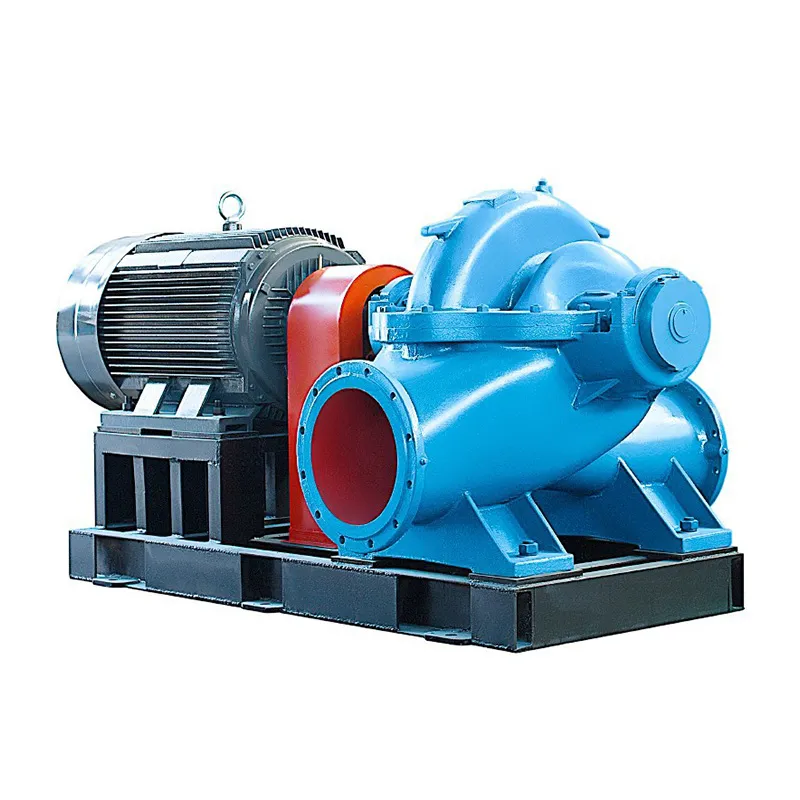
Introduction
Double suction centrifugal pumps represent a critical component in numerous industrial fluid transfer applications. This guide details the technical aspects of their design, materials, manufacturing, performance characteristics, potential failure modes, and relevant industry standards. These pumps, characterized by impellers receiving fluid flow from both sides, are favored for their increased capacity and reduced axial thrust compared to single-suction designs. Their primary application lies in large-volume water transfer, cooling water circulation, irrigation, and industrial processing. Animation of their operational principles, like the one provided, is crucial for understanding internal flow dynamics and diagnostic procedures. The core performance parameters include flow rate, head, power consumption, and Net Positive Suction Head Required (NPSHr). Understanding these parameters is paramount to efficient and reliable system design and operation. A significant pain point within the industry stems from cavitation damage, material selection for corrosive fluids, and optimizing impeller design for specific fluid viscosities. This guide aims to address these challenges with an in-depth technical analysis.
Material Science & Manufacturing
The construction of a double suction centrifugal pump involves several key materials, each selected for specific performance characteristics. Pump casings are commonly manufactured from cast iron (ASTM A48 Class 30), ductile iron (ASTM A536 Grade 65-45-12), or stainless steel (304/316 – ASTM A743). Cast iron provides cost-effectiveness and good machinability but exhibits limited corrosion resistance. Ductile iron offers improved tensile strength and shock resistance, while stainless steel provides superior corrosion resistance, essential for handling aggressive fluids. Impellers are typically cast from bronze (ASTM B148), stainless steel (CF8, CF8M), or engineered polymers. Bronze is favored for its corrosion resistance in seawater applications, while stainless steel provides high strength and corrosion resistance. Polymers are used in applications requiring lightweight components and resistance to specific chemicals. Shafts are usually constructed from high-strength carbon steel (AISI 1045) and undergo heat treatment for increased hardness and wear resistance. Seals employ materials like silicon carbide (SiC) or tungsten carbide (WC) against various elastomers (Viton, EPDM) to ensure effective sealing. Manufacturing processes include sand casting for casings and impellers, investment casting for complex impeller geometries, and precision machining for shafts and wearing rings. Welding processes (SMAW, GTAW) are utilized for casing assembly, requiring strict adherence to ASME Section IX standards for weld quality and integrity. Critical parameters during manufacturing include impeller balancing to minimize vibration, surface finish of internal passages to reduce friction losses, and dimensional accuracy to ensure proper clearances. Material traceability and non-destructive testing (NDT) via methods like ultrasonic testing (UT) and radiographic testing (RT) are essential quality control measures.
Performance & Engineering
The performance of a double suction centrifugal pump is governed by fundamental hydraulic principles. Force analysis centers on balancing the radial and axial thrusts generated by the impeller. The double-suction design inherently reduces axial thrust, minimizing bearing loads and extending pump life. Hydraulic Institute (HI) standards provide guidelines for performance testing and reporting. Pump efficiency is a critical metric, calculated as the ratio of hydraulic power output to shaft power input. Factors affecting efficiency include impeller geometry, internal clearances, fluid viscosity, and operating speed. Environmental resistance is a key consideration. Pumps operating in corrosive environments require materials selection based on chemical compatibility charts (e.g., those provided by NACE International). Operating temperature significantly affects material properties and seal performance. Compliance requirements vary based on the application. For potable water applications, pumps must meet NSF/ANSI 61 standards for lead content and material safety. For hazardous area applications, pumps must comply with ATEX or IECEx standards for explosion protection. Functional implementation requires careful consideration of system head loss, NPSHr requirements, and pump affinity laws. Pump affinity laws relate changes in flow rate, head, and power consumption to changes in speed and impeller diameter. Proper pump selection and system design are crucial to prevent cavitation, which occurs when the absolute pressure at the impeller inlet falls below the vapor pressure of the fluid, leading to bubble formation and erosion of pump components. Vibration analysis, utilizing ISO 10816 standards, is critical for identifying potential mechanical issues and maintaining pump reliability.
Technical Specifications
| Parameter | Unit | Typical Value (DN 200, 18.5kW) | Typical Value (DN 300, 55kW) |
|---|---|---|---|
| Flow Rate | m³/h | 300 - 600 | 600 - 1200 |
| Head | m | 20 - 40 | 30 - 60 |
| Power | kW | 18.5 | 55 |
| Speed | RPM | 1450 – 3600 | 1450 – 3600 |
| NPSHr | m | 2.5 – 4.0 | 3.0 – 5.0 |
| Casing Material | - | Cast Iron (ASTM A48 Class 30) | Ductile Iron (ASTM A536 Grade 65-45-12) |
Failure Mode & Maintenance
Double suction centrifugal pumps are susceptible to several failure modes. Cavitation, as previously mentioned, causes impeller erosion and reduced pump performance. Fatigue cracking can occur in the impeller or shaft due to cyclic loading and stress concentration, particularly near keyways or fillets. Bearing failure results from inadequate lubrication, misalignment, or excessive loads, leading to increased vibration and eventual pump seizure. Seal failure allows fluid leakage and can be caused by abrasive particles, dry running, or incompatibility with the pumped fluid. Corrosion and erosion damage impellers and casings, particularly when handling abrasive or corrosive fluids. Proper maintenance is crucial for preventing these failures. Regular vibration monitoring (ISO 10816) detects bearing wear and misalignment. Periodic impeller inspection reveals cavitation damage and erosion. Seal replacement prevents leakage and maintains pump efficiency. Lubrication analysis identifies contaminants and ensures adequate lubricant properties. Alignment checks minimize bearing loads and vibration. Flushing of pump internals removes debris and prevents clogging. A preventative maintenance schedule based on operating hours and fluid characteristics is essential for maximizing pump life and minimizing downtime. Failure analysis techniques, including fractography and metallography, can pinpoint root causes of failures and guide corrective actions. Consider utilizing online monitoring systems for critical parameters such as bearing temperature, vibration levels, and seal leakage.
Industry FAQ
Q: What are the key differences between a double suction and single suction centrifugal pump, and when would I choose one over the other?
A: Double suction pumps offer higher flow rates and reduced axial thrust compared to single suction pumps. Select a double suction pump for applications requiring large volumes of fluid transfer, such as municipal water supply or large-scale cooling systems. Single suction pumps are more suitable for lower flow rate applications and are generally more cost-effective for smaller systems.
Q: How do I calculate the Net Positive Suction Head Required (NPSHr) and ensure I’m avoiding cavitation?
A: NPSHr is provided by the pump manufacturer. It represents the minimum absolute pressure required at the pump inlet to prevent cavitation. You need to calculate the Net Positive Suction Head Available (NPSHa) in your system, considering the static head, vapor pressure of the fluid, and friction losses. Ensure NPSHa is always greater than NPSHr with a safety margin of at least 0.5-1 meter.
Q: What material should I choose for the pump casing and impeller when handling a corrosive fluid like sulfuric acid?
A: For sulfuric acid, stainless steel alloys like 316L or duplex stainless steel (e.g., 2205) are commonly used. Consult a chemical compatibility chart (e.g., those provided by NACE) to verify the material's resistance to the specific concentration and temperature of the acid. Consider using PTFE or other polymer linings for added protection.
Q: What are the common causes of pump vibration, and how can I diagnose them?
A: Common causes include impeller imbalance, misalignment, bearing wear, cavitation, and resonance. Diagnose vibration using a vibration analyzer conforming to ISO 10816. Analyze the frequency spectrum to identify the source of the vibration – for instance, bearing faults often manifest as specific frequency components.
Q: What maintenance practices are critical for extending the life of a double suction centrifugal pump?
A: Critical practices include regular lubrication of bearings, periodic seal inspection and replacement, impeller cleaning and inspection for cavitation damage, alignment checks, and vibration monitoring. Implementing a preventative maintenance schedule tailored to your specific operating conditions is essential.
Conclusion
Double suction centrifugal pumps are complex machines demanding a thorough understanding of their operational principles, material science, and potential failure modes. Proper selection, installation, and maintenance are crucial for maximizing performance and reliability. The inherent advantages of double-suction designs – high flow rates and reduced axial thrust – make them indispensable in a wide range of industrial applications.
Future advancements will likely focus on improved impeller designs utilizing computational fluid dynamics (CFD) for enhanced efficiency, the integration of smart sensors for predictive maintenance, and the development of more corrosion-resistant materials. A proactive approach to maintenance, coupled with a deep understanding of the technical considerations outlined in this guide, will ensure the long-term, efficient operation of these critical pumps.
-
Comprehensive Guide to Waterproof ORings for Optimal Sealing Solutions
News2026-06-09
-
Septic Pump System Performance Analysis
News2026-06-08
-
pump for septic Material Science
News2026-06-08
-
basement sewer pump Performance Analysis
News2026-06-08
-
submerged pump Performance Engineering
News2026-06-08
-
Septic System Pumps Performance Analysis
News2026-06-08
-
septic system pump Material Science and Manufacturing
News2026-06-07
-
pump for septic tank Material Science Manufacturing
News2026-06-07
-
submersible sewage pump Material Science
News2026-06-07
-
Sewage Ejector Material Science and Manufacturing
News2026-06-07
-
Ejection Pump Material Science
News2026-06-07
-
pump submersible Performance Analysis
News2026-06-06
-
ejector pumps Performance Engineering
News2026-06-06
-
basement ejector pump Material Science Manufacturing
News2026-06-06
-
Septic Tanks Pumping Performance Analysis
News2026-06-06




