English
- Afrikaans
- Albanian
- Amharic
- Arabic
- Armenian
- Azerbaijani
- Basque
- Belarusian
- Bengali
- Bosnian
- Bulgarian
- Catalan
- Cebuano
- Corsican
- Croatian
- Czech
- Danish
- Dutch
- English
- Esperanto
- Estonian
- Finnish
- French
- Frisian
- Galician
- Georgian
- German
- Greek
- Gujarati
- Haitian Creole
- hausa
- hawaiian
- Hebrew
- Hindi
- Miao
- Hungarian
- Icelandic
- igbo
- Indonesian
- irish
- Italian
- Japanese
- Javanese
- Kannada
- kazakh
- Khmer
- Rwandese
- Korean
- Kurdish
- Kyrgyz
- Lao
- Latin
- Latvian
- Lithuanian
- Luxembourgish
- Macedonian
- Malgashi
- Malay
- Malayalam
- Maltese
- Maori
- Marathi
- Mongolian
- Myanmar
- Nepali
- Norwegian
- Norwegian
- Occitan
- Pashto
- Persian
- Polish
- Portuguese
- Punjabi
- Romanian
- Russian
- Samoan
- Scottish Gaelic
- Serbian
- Sesotho
- Shona
- Sindhi
- Sinhala
- Slovak
- Slovenian
- Somali
- Spanish
- Sundanese
- Swahili
- Swedish
- Tagalog
- Tajik
- Tamil
- Tatar
- Telugu
- Thai
- Turkish
- Turkmen
- Ukrainian
- Urdu
- Uighur
- Uzbek
- Vietnamese
- Welsh
- Bantu
- Yiddish
- Yoruba
- Zulu

Telephone: +86 13120555503
Email: frank@cypump.com


Apr . 01, 2024 17:55 Back to list
Double Diaphragm Pump Suction Lift Performance Analysis
Introduction
Double diaphragm pumps, specifically those employed in suction lift applications, represent a critical component in numerous industrial processes. These pumps are categorized as positive displacement pumps, utilizing two flexible diaphragms driven by a central shaft. Their inherent design allows for the transfer of a wide range of fluids, from viscous slurries to highly corrosive chemicals, without the need for rotating parts in contact with the pumped medium. In the industrial chain, they bridge the gap between storage/source and process, frequently replacing older technologies like piston pumps or peristaltic pumps due to improved reliability, lower maintenance, and greater fluid compatibility. Core performance characteristics are defined by flow rate (typically measured in gallons per minute or liters per hour), maximum suction lift (the vertical distance the pump can draw fluid), maximum discharge pressure (pounds per square inch or bar), and materials of construction, directly influencing its suitability for specific applications and fluid chemistries. The key advantage of suction lift capability is enabling fluid transfer from below pump level, vital in tank farms, sumps, and remote source locations.
Material Science & Manufacturing
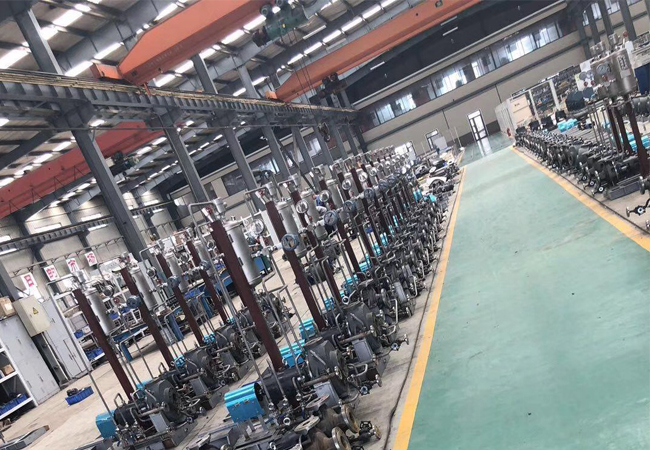
The performance and longevity of a double diaphragm pump are intrinsically linked to its material composition and manufacturing process. Diaphragms themselves are commonly constructed from elastomers like Nitrile (NBR), Viton (FKM), Teflon (PTFE), or Santoprene (EPDM), each offering varying degrees of chemical resistance and temperature tolerance. NBR is cost-effective for petroleum-based fluids, while Viton provides superior resistance to aggressive chemicals and high temperatures. PTFE is ideal for highly corrosive environments but often requires a backing material due to its lack of tensile strength. Pump bodies, manifolds, and wet parts are typically fabricated from materials such as Polypropylene (PP), Polyvinyl Chloride (PVC), Aluminum, Stainless Steel (316L being common for corrosion resistance), or Cast Iron. Material selection is dictated by fluid compatibility; for example, stainless steel is essential when pumping chlorides to avoid pitting corrosion.
Manufacturing processes are equally critical. The diaphragm forming process, typically involving compression molding or injection molding, must ensure consistent thickness and absence of defects to prevent premature failure. Manifold casting or machining must provide smooth fluid pathways to minimize pressure drop and cavitation. The shaft assembly, connecting the diaphragms, requires precise alignment and bearing selection to minimize friction and wear. Air distribution systems – pneumatic or mechanical – must be engineered for leak-free operation and precise timing to ensure balanced diaphragm movement. Critical parameter control includes resin viscosity during diaphragm molding, precise machining tolerances for wetted parts, and rigorous quality control checks for material integrity and dimensional accuracy, often utilizing non-destructive testing (NDT) methods like ultrasonic inspection.
Performance & Engineering
The performance of a double diaphragm pump in a suction lift configuration is governed by several engineering principles. Net Positive Suction Head Available (NPSHa) is a crucial parameter; it must exceed the Net Positive Suction Head Required (NPSHr) by the pump to prevent cavitation. Cavitation, the formation and collapse of vapor bubbles, can severely damage the diaphragms and reduce pump efficiency. Suction lift capability is limited by atmospheric pressure and fluid vapor pressure. At higher altitudes, reduced atmospheric pressure limits the maximum suction lift.
Force analysis focuses on the stresses acting on the diaphragms during operation. These stresses are a function of discharge pressure, diaphragm area, and the material’s tensile strength. Fatigue failure is a significant concern, requiring careful selection of diaphragm materials and operating within the pump’s specified pressure and cycle limits. Environmental resistance is paramount. Exposure to UV radiation, extreme temperatures, and corrosive atmospheres can degrade diaphragm materials, leading to leaks and pump failure. Compliance requirements, such as ATEX certification for potentially explosive environments and FDA approval for food and beverage applications, dictate material selection and design considerations. Functional implementation involves correct piping configuration (minimizing suction line length and bends) and appropriate air supply regulation (ensuring consistent pressure and flow) for optimal performance.
Technical Specifications
| Parameter | Unit | Typical Range (Polypropylene Body, Viton Diaphragms) | Notes |
|---|---|---|---|
| Maximum Flow Rate | GPM (LPM) | 0-300 (0-1136) | Varies with air pressure and fluid viscosity. |
| Maximum Suction Lift | ft (m) | 25 (7.6) | Dependent on atmospheric pressure and fluid properties. |
| Maximum Discharge Pressure | PSI (Bar) | 100 (6.9) | Material limitations dictate maximum pressure. |
| Air Inlet Pressure | PSI (Bar) | 20-100 (1.4 - 6.9) | Control pressure for flow rate adjustment. |
| Solids Handling Capability | in (mm) | Up to 1.5 (38) | Dependent on diaphragm material and pump size. |
| Operating Temperature Range | °F (°C) | -40 to 175 (-40 to 79) | Viton diaphragm limits. Other materials may vary. |
Failure Mode & Maintenance
Double diaphragm pumps, while robust, are susceptible to specific failure modes. Diaphragm rupture is a common failure, often caused by overpressure, chemical attack, or fatigue cracking due to excessive cycling. Fatigue cracking initiates at stress concentration points, such as diaphragm bolt holes or areas of high flexure. Valve ball or seat wear leads to reduced pumping efficiency and eventually complete failure. This is accelerated by abrasive fluids. Air distribution system leaks reduce pump output and can cause unbalanced diaphragm operation. Shaft seal failure allows air to enter the fluid path, creating intermittent flow and potentially damaging the diaphragms. Corrosion of pump body or manifold components weakens the structure and can lead to leaks.
Preventive maintenance is crucial. Regular inspection of diaphragms for cracks or swelling is essential. Valve balls and seats should be replaced proactively based on service hours and fluid characteristics. Air lines and fittings should be checked for leaks and tightened or replaced as needed. Lubrication of the shaft bearings extends their lifespan. For critical applications, implementing a predictive maintenance program utilizing vibration analysis or thermal imaging can identify potential failures before they occur. Flushing the pump with a compatible solvent before prolonged storage prevents buildup of hardened fluids that can damage the diaphragms and valves. Correctly specifying the diaphragm material for the application is paramount to prevent chemical incompatibility and premature failure.
Industry FAQ
Q: What is the primary benefit of using a double diaphragm pump for suction lift compared to a centrifugal pump?
A: Centrifugal pumps are generally not self-priming and struggle with suction lift, especially with viscous fluids. Double diaphragm pumps excel at self-priming and maintaining suction lift, even with challenging fluids, making them ideal for applications where the fluid source is below the pump’s inlet. Additionally, double diaphragm pumps handle solids better and provide more consistent flow rates regardless of pressure variations.
Q: How do I determine the appropriate diaphragm material for a specific chemical application?
A: Chemical compatibility charts are crucial. Consult these charts (available from pump manufacturers and chemical suppliers) to verify the diaphragm material’s resistance to the specific fluid being pumped. Consider not only the primary chemical but also any potential contaminants or mixtures. Testing a small diaphragm sample with the fluid before full-scale implementation is recommended.
Q: What are the common causes of reduced flow rate in a double diaphragm pump?
A: Reduced flow rate can stem from several issues: worn valve balls or seats, diaphragm rupture or degradation, air leaks in the distribution system, insufficient air supply pressure, clogged suction lines, or a buildup of solids within the pump. A systematic troubleshooting process, starting with a visual inspection, is necessary to pinpoint the root cause.
Q: How does altitude affect the suction lift capability of a double diaphragm pump?
A: As altitude increases, atmospheric pressure decreases. Since suction lift is directly related to atmospheric pressure, the maximum achievable suction lift decreases with altitude. Calculations must account for the reduced atmospheric pressure at the pump's operating elevation.
Q: What is the recommended maintenance schedule for a double diaphragm pump in continuous operation?
A: A typical maintenance schedule includes daily visual inspections for leaks, weekly checks of air lines and connections, monthly diaphragm inspection (especially in aggressive applications), and annual replacement of valve balls and seats. Implementing a logbook to track maintenance activities and fluid pumped can help identify trends and predict potential failures.
Conclusion
Double diaphragm pumps with suction lift capabilities are indispensable tools across diverse industries due to their robustness, chemical compatibility, and ability to handle challenging fluids. Understanding the interplay between material science, manufacturing precision, and engineering principles—specifically NPSH requirements and diaphragm stress analysis—is vital for selecting the right pump for a given application and maximizing its operational lifespan. Properly addressing potential failure modes through preventative maintenance and proactive component replacement is equally critical.
Future developments in this technology are focused on enhancing diaphragm materials for greater chemical resistance and longevity, improving air distribution systems for more precise control and reduced energy consumption, and integrating smart sensors for real-time performance monitoring and predictive maintenance. These advancements will solidify the position of double diaphragm pumps as a cornerstone of fluid transfer solutions in industrial environments.
-
Comprehensive Guide to Waterproof ORings for Optimal Sealing Solutions
News2026-06-09
-
Septic Pump System Performance Analysis
News2026-06-08
-
pump for septic Material Science
News2026-06-08
-
basement sewer pump Performance Analysis
News2026-06-08
-
submerged pump Performance Engineering
News2026-06-08
-
Septic System Pumps Performance Analysis
News2026-06-08
-
septic system pump Material Science and Manufacturing
News2026-06-07
-
pump for septic tank Material Science Manufacturing
News2026-06-07
-
submersible sewage pump Material Science
News2026-06-07
-
Sewage Ejector Material Science and Manufacturing
News2026-06-07
-
Ejection Pump Material Science
News2026-06-07
-
pump submersible Performance Analysis
News2026-06-06
-
ejector pumps Performance Engineering
News2026-06-06
-
basement ejector pump Material Science Manufacturing
News2026-06-06
-
Septic Tanks Pumping Performance Analysis
News2026-06-06




