English
- Afrikaans
- Albanian
- Amharic
- Arabic
- Armenian
- Azerbaijani
- Basque
- Belarusian
- Bengali
- Bosnian
- Bulgarian
- Catalan
- Cebuano
- Corsican
- Croatian
- Czech
- Danish
- Dutch
- English
- Esperanto
- Estonian
- Finnish
- French
- Frisian
- Galician
- Georgian
- German
- Greek
- Gujarati
- Haitian Creole
- hausa
- hawaiian
- Hebrew
- Hindi
- Miao
- Hungarian
- Icelandic
- igbo
- Indonesian
- irish
- Italian
- Japanese
- Javanese
- Kannada
- kazakh
- Khmer
- Rwandese
- Korean
- Kurdish
- Kyrgyz
- Lao
- Latin
- Latvian
- Lithuanian
- Luxembourgish
- Macedonian
- Malgashi
- Malay
- Malayalam
- Maltese
- Maori
- Marathi
- Mongolian
- Myanmar
- Nepali
- Norwegian
- Norwegian
- Occitan
- Pashto
- Persian
- Polish
- Portuguese
- Punjabi
- Romanian
- Russian
- Samoan
- Scottish Gaelic
- Serbian
- Sesotho
- Shona
- Sindhi
- Sinhala
- Slovak
- Slovenian
- Somali
- Spanish
- Sundanese
- Swahili
- Swedish
- Tagalog
- Tajik
- Tamil
- Tatar
- Telugu
- Thai
- Turkish
- Turkmen
- Ukrainian
- Urdu
- Uighur
- Uzbek
- Vietnamese
- Welsh
- Bantu
- Yiddish
- Yoruba
- Zulu

Telephone: +86 13120555503
Email: frank@cypump.com


Apr . 01, 2024 17:55 Back to list
Double Action Suction Pump design and functionality of a double action suction pump for Industrial Applications
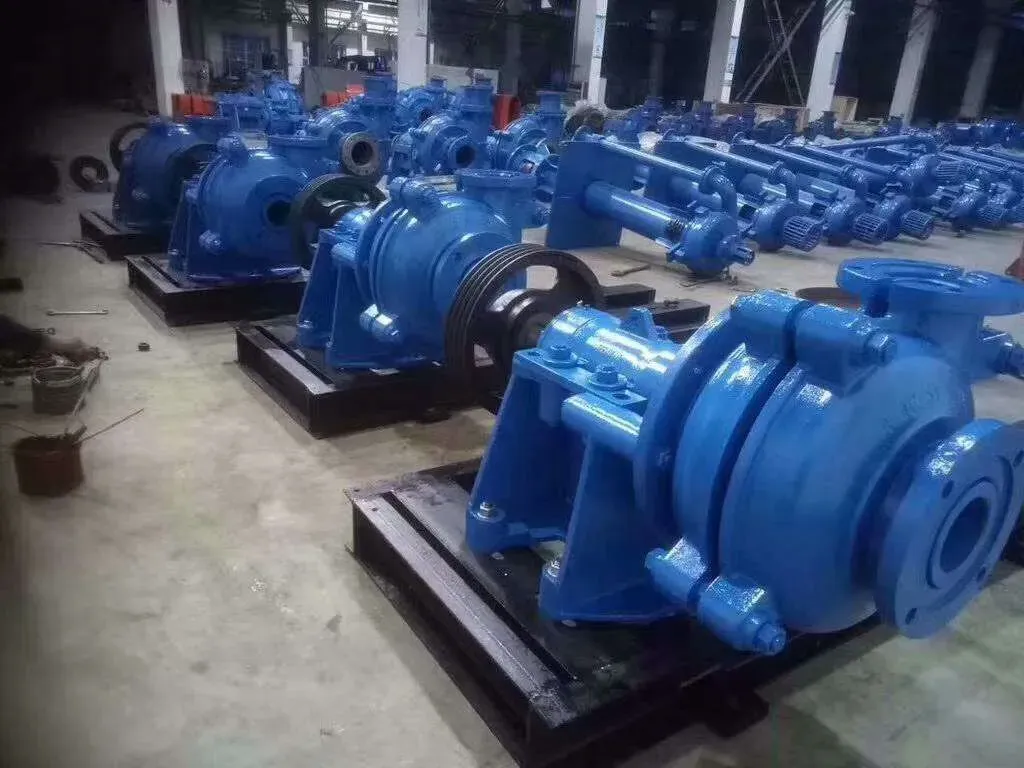
Introduction
A double-action suction pump is a positive displacement pump employed across a wide spectrum of industrial applications, fundamentally used to transfer fluids by repeatedly creating and releasing partial vacuum. Its position within the industrial chain is crucial, serving as a foundational component in processes ranging from chemical processing and wastewater treatment to oil & gas extraction and agricultural irrigation. Unlike single-action pumps which operate on only one stroke of the piston, the double-action design allows for fluid intake and discharge on both the forward and backward strokes, significantly increasing pumping efficiency and flow rate. Core performance characteristics include volumetric efficiency, suction lift capability, flow rate (typically measured in gallons per minute or liters per minute), and discharge pressure (measured in PSI or Bar). This guide provides an in-depth analysis of the design, materials, manufacturing, performance, potential failure modes, and maintenance procedures related to double-action suction pumps.
Material Science & Manufacturing
The construction of a double-action suction pump necessitates careful material selection based on the fluid being handled and the operating environment. Commonly employed materials include cast iron (for housings due to its vibration damping properties and cost-effectiveness), stainless steel (specifically 304 and 316 for components exposed to corrosive fluids), and elastomers like nitrile rubber (NBR) or Viton (FKM) for seals and diaphragms. The piston itself is typically manufactured from hardened steel, often coated with chrome for enhanced wear resistance. Manufacturing processes vary depending on the component. Pump housings are often created via sand casting, followed by machining for precise dimensional accuracy and surface finish. Pistons are produced via forging or machining from bar stock. Seals are generally manufactured using injection molding of elastomers. Key parameter control during manufacturing focuses on maintaining tight tolerances on piston-cylinder clearances to minimize leakage and maximize volumetric efficiency. Critical welding processes, if applicable (e.g., for certain housing designs), require strict adherence to AWS D1.1 standards to ensure structural integrity and prevent weld defects such as porosity and cracking. Surface treatments like shot peening are applied to pistons and connecting rods to improve fatigue life. The material compatibility charts are meticulously reviewed during the design phase to prevent galvanic corrosion or chemical degradation of pump components.
Performance & Engineering
Performance analysis of a double-action suction pump centers on understanding the interplay between fluid dynamics and mechanical stresses. Force analysis must consider the inertial forces acting on the piston, the fluid pressure forces, and the friction forces within the cylinder. Environmental resistance is paramount; pumps operating in harsh environments require materials resistant to temperature extremes, UV radiation, and chemical attack. Compliance requirements vary by industry. For example, pumps used in the food and beverage industry must meet 3-A Sanitary Standards, while pumps used in hazardous locations (e.g., oil refineries) must comply with ATEX or IECEx standards. The volumetric efficiency of the pump (the ratio of actual flow rate to theoretical flow rate) is a critical performance metric. This efficiency is affected by factors such as piston-cylinder clearance, seal leakage, and fluid viscosity. Suction lift capability is limited by atmospheric pressure and fluid vapor pressure; calculations must account for these factors to prevent cavitation. Fatigue life is evaluated using S-N curves (stress-amplitude versus number of cycles to failure), taking into account the cyclic loading experienced by the piston and connecting rod. Proper pump sizing requires accurate assessment of system head (the total pressure the pump must overcome) and flow rate requirements.
Technical Specifications
| Parameter | Unit | Typical Value (Small Pump) | Typical Value (Large Pump) |
|---|---|---|---|
| Flow Rate | GPM (Gallons per Minute) | 5 - 20 | 50 - 200 |
| Maximum Discharge Pressure | PSI (Pounds per Square Inch) | 50 - 150 | 200 - 500 |
| Suction Lift | Feet | 15 - 25 | 20 - 35 |
| Piston Diameter | Inches | 1 - 2 | 3 - 6 |
| Stroke Length | Inches | 2 - 4 | 4 - 8 |
| Volumetric Efficiency | % | 85 - 90 | 80 - 88 |
Failure Mode & Maintenance
Common failure modes in double-action suction pumps include piston wear, seal failure, cylinder scoring, and corrosion. Fatigue cracking can occur in the piston rod or connecting rod due to cyclic loading. Delamination of the cylinder liner can result from inadequate lubrication or abrasive particles in the fluid. Degradation of elastomer seals can be caused by chemical incompatibility or high temperatures. Oxidation of metallic components can occur in corrosive environments. Regular maintenance is crucial for preventing these failures. This includes periodic inspection of seals for wear and tear, lubrication of moving parts, and monitoring of pump performance (flow rate and pressure). Preventive maintenance schedules should dictate the frequency of these tasks. If cavitation is suspected (indicated by excessive noise and reduced performance), the suction line should be checked for restrictions and the pump speed adjusted. In the event of a piston failure, a thorough root cause analysis should be conducted to determine the cause of the failure (e.g., excessive wear, fatigue, or material defect). Replacement parts should always meet original equipment manufacturer (OEM) specifications. Regular monitoring of vibration levels can also help identify potential bearing failures or imbalances.
Industry FAQ
Q: What is the primary advantage of a double-action pump compared to a single-action pump?
A: The key advantage is increased flow rate and smoother delivery. A double-action pump effectively delivers fluid on both the forward and backward strokes of the piston, doubling the pumping frequency and reducing pulsations compared to a single-action design. This results in more consistent fluid delivery and improved efficiency.
Q: How does fluid viscosity affect the performance of a double-action suction pump?
A: Higher viscosity fluids increase frictional losses within the pump, reducing volumetric efficiency and overall flow rate. They also require more power to pump. Pump selection and sizing must consider the fluid's viscosity; a larger pump or a pump with a higher motor horsepower may be necessary for highly viscous fluids.
Q: What are the implications of cavitation, and how can it be prevented?
A: Cavitation occurs when the absolute pressure within the pump falls below the vapor pressure of the fluid, causing vapor bubbles to form and collapse violently. This can damage the pump impeller and reduce performance. Prevention involves ensuring adequate suction head, minimizing suction line restrictions, and controlling fluid temperature.
Q: What materials are best suited for pumps handling aggressive chemicals?
A: For highly corrosive chemicals, materials like stainless steel (316 is preferred over 304), Teflon (PTFE), and certain high-performance polymers are recommended. Material selection requires careful consideration of the chemical's concentration, temperature, and flow rate. Compatibility charts are essential for ensuring long-term reliability.
Q: What is the role of NPSH (Net Positive Suction Head) in pump operation?
A: NPSH is the absolute pressure at the suction port of the pump minus the vapor pressure of the liquid. Adequate NPSH is crucial to prevent cavitation. The pump's NPSH requirement (NPSHr) must be less than the NPSH available (NPSHa) in the system to ensure reliable operation.
Conclusion
Double-action suction pumps represent a robust and versatile technology for fluid transfer across numerous industrial sectors. Their efficiency gains over single-action designs, coupled with advancements in material science and manufacturing techniques, make them a vital component in complex process systems. Understanding the fundamental principles of operation, material compatibility, potential failure modes, and adherence to relevant industry standards are paramount for ensuring optimal performance and longevity.
Future developments will likely focus on improved pump efficiency through optimized hydraulic designs, the integration of smart sensors for predictive maintenance, and the use of advanced materials offering enhanced corrosion resistance and wear properties. Furthermore, the adoption of variable frequency drives (VFDs) will allow for precise flow control and energy savings. Continued research and development in these areas will solidify the double-action suction pump's position as a cornerstone of industrial fluid handling.
-
Precision at the Pump: How Better Machining Protects Flow and Uptime
News2026-11-20
-
Why Pump Reliability Begins Before the First Drop of Fluid
News2026-11-20
-
Beyond the Pump: Designing Safer Access Around Critical Water Infrastructure
News2026-11-20
-
Why Pumping Stations Depend on the Infrastructure Beneath the Pumps
News2026-11-20
-
Beyond the Pump Room: How Smarter Loading Protects Industrial Equipment
News2026-11-19
-
When Pumps Stop: Designing More Resilient Power for Critical Pumping Systems
News2026-11-19
-
The Hidden Role of Dust and Gas Monitoring in Reliable Pump Operations
News2026-11-19
-
The Hidden Role of Mineral Compounds in Extending Industrial Pump Lifespan
News2026-10-12
-
Why Pump System Reliability Depends on Precision Hose Assembly Methods
News2026-09-15
-
How Advanced Imaging Films Are Transforming Pump Component Quality Control
News2026-08-25
-
How Advanced Filtration Protects Pump Systems from Premature Wear and Costly Downtime
News2026-08-25
-
How Steel Material Selection Drives Pump Reliability in Heavy-Duty Systems
News2026-08-25
-
Ensuring Pump System Efficiency: The Role of High-Quality Pipe Fittings and Tubing
News2026-08-24
-
Optimizing Fluid Dynamics and Material Consistency in Industrial Processing
News2026-08-18
-
Innovations and Challenges in Hydraulic Systems for Heavy Machinery
News2026-08-13




