English
- Afrikaans
- Albanian
- Amharic
- Arabic
- Armenian
- Azerbaijani
- Basque
- Belarusian
- Bengali
- Bosnian
- Bulgarian
- Catalan
- Cebuano
- Corsican
- Croatian
- Czech
- Danish
- Dutch
- English
- Esperanto
- Estonian
- Finnish
- French
- Frisian
- Galician
- Georgian
- German
- Greek
- Gujarati
- Haitian Creole
- hausa
- hawaiian
- Hebrew
- Hindi
- Miao
- Hungarian
- Icelandic
- igbo
- Indonesian
- irish
- Italian
- Japanese
- Javanese
- Kannada
- kazakh
- Khmer
- Rwandese
- Korean
- Kurdish
- Kyrgyz
- Lao
- Latin
- Latvian
- Lithuanian
- Luxembourgish
- Macedonian
- Malgashi
- Malay
- Malayalam
- Maltese
- Maori
- Marathi
- Mongolian
- Myanmar
- Nepali
- Norwegian
- Norwegian
- Occitan
- Pashto
- Persian
- Polish
- Portuguese
- Punjabi
- Romanian
- Russian
- Samoan
- Scottish Gaelic
- Serbian
- Sesotho
- Shona
- Sindhi
- Sinhala
- Slovak
- Slovenian
- Somali
- Spanish
- Sundanese
- Swahili
- Swedish
- Tagalog
- Tajik
- Tamil
- Tatar
- Telugu
- Thai
- Turkish
- Turkmen
- Ukrainian
- Urdu
- Uighur
- Uzbek
- Vietnamese
- Welsh
- Bantu
- Yiddish
- Yoruba
- Zulu

Telephone: +86 13120555503
Email: frank@cypump.com


Apr . 01, 2024 17:55 Back to list
China Buccaneer exploring the efficiency and design of china buccaneer lifting devices
Introduction
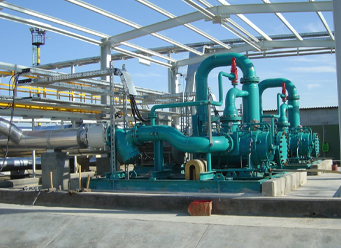
China buccaneer, commonly referred to as large-diameter steel pipe piles, are foundational elements in modern civil engineering, particularly in deep foundation applications for marine structures, bridges, and high-rise buildings. Their technical position lies within the broader steel manufacturing and construction materials supply chain, acting as a critical interface between geotechnical engineering demands and structural load-bearing capabilities. These piles, typically ranging from 600mm to 2000mm in diameter and possessing substantial wall thicknesses, are manufactured through longitudinal and circumferential welding of steel plates. Core performance characteristics revolve around axial load capacity (both compressive and tensile), bending resistance, corrosion resistance, and drivability – the ease with which the pile can be installed to the required depth. The increasing demand for infrastructure development, coupled with challenging soil conditions in coastal regions and riverbeds, drives the need for continuous improvements in buccaneer design and manufacturing techniques. A key industry pain point concerns the accurate prediction of pile drivability, which directly impacts project timelines and costs. Another is the long-term corrosion performance in aggressive marine environments, demanding advanced coating systems and material selection. Finally, quality control during the welding process is paramount to prevent defects that compromise structural integrity.
Material Science & Manufacturing
The primary raw material for china buccaneer is high-strength low-alloy (HSLA) steel, typically conforming to grades like Q345, Q370, or Q420 under Chinese GB standards. These steels are characterized by their increased yield strength and tensile strength compared to standard carbon steels, achieved through controlled additions of alloying elements such as manganese, niobium, vanadium, and titanium. The chemical composition critically impacts weldability and corrosion resistance. Manufacturing begins with the procurement of steel plates, which undergo rigorous inspection for thickness, flatness, and surface defects. The plates are then rolled into cylindrical shapes using specialized rolling machines. Longitudinal seam welding, often employing submerged arc welding (SAW), is performed first, followed by circumferential welding to create the complete pile shell. SAW is favored for its high deposition rates, deep penetration, and minimal spatter. Critical process parameters include welding current, voltage, travel speed, and heat input. Precise control of these parameters is vital to minimize residual stresses and prevent distortion. Non-destructive testing (NDT) methods such as ultrasonic testing (UT), radiographic testing (RT), and magnetic particle inspection (MPI) are employed to detect weld defects like porosity, cracks, and lack of fusion. Post-welding heat treatment (PWHT) may be applied to relieve residual stresses and improve mechanical properties. Coating application, typically involving multiple layers of epoxy, polyurethane, or fusion-bonded epoxy (FBE), provides corrosion protection. The thickness and adhesion of the coating are crucial for long-term performance.
Performance & Engineering
The performance of china buccaneer is fundamentally governed by the principles of structural mechanics and soil-structure interaction. Axial load capacity is determined by the pile’s cross-sectional area, steel grade, and the soil resistance along its shaft and at its tip. Soil resistance is calculated using empirical methods based on soil parameters like undrained shear strength, friction angle, and unit weight. Bending resistance is influenced by the pile’s wall thickness, diameter, and the bending moment induced by lateral loads (e.g., wind, wave, seismic forces). Buckling analysis is critical for slender piles subjected to compressive loads. Environmental resistance, particularly corrosion, is a major design consideration. Marine environments present a high risk of chloride-induced corrosion, which can lead to pitting and stress corrosion cracking. Coating systems are designed to provide a barrier against chloride ingress. Cathodic protection systems may also be employed in aggressive environments. Compliance requirements are dictated by national and international standards, including those related to material properties, welding quality, and structural design. Pile installation methods (e.g., impact driving, vibratory driving, static pushing) significantly affect pile performance. Impact driving induces dynamic stresses in the pile, which must be accounted for in the design. Vibratory driving is generally less damaging but may be less effective in dense soils. Detailed geotechnical investigations are essential to characterize soil conditions and optimize pile design and installation procedures.
Technical Specifications
| Diameter (mm) | Wall Thickness (mm) | Steel Grade (GB) | Yield Strength (MPa) | Tensile Strength (MPa) | Coating System |
|---|---|---|---|---|---|
| 600 | 12 | Q345 | 345 | 490 | 3-Layer Epoxy |
| 800 | 16 | Q370 | 370 | 530 | FBE + Polyurethane |
| 1000 | 20 | Q420 | 420 | 630 | 3-Layer Epoxy + UV Protection |
| 1200 | 25 | Q345 | 345 | 490 | FBE |
| 1400 | 30 | Q370 | 370 | 530 | 3-Layer Epoxy |
| 2000 | 40 | Q420 | 420 | 630 | FBE + Polyurethane |
Failure Mode & Maintenance
Failure modes in china buccaneer can be broadly categorized into those related to structural overload, corrosion, and fabrication defects. Fatigue cracking, induced by cyclic loading from wave action or traffic, is a common failure mode, particularly in welded joints. Corrosion, as previously discussed, can lead to localized wall thinning and pitting, reducing the pile’s load-carrying capacity. Delamination of the coating system compromises corrosion protection. Fabrication defects, such as incomplete weld penetration or porosity, can act as stress concentrators and initiate crack propagation. Oxidation of the steel surface, especially in tidal zones, contributes to material degradation. Maintenance typically involves periodic inspections to assess the condition of the coating system and detect signs of corrosion. Repair procedures may include localized coating repairs, application of corrosion inhibitors, or, in severe cases, structural strengthening using composite materials or additional piles. Regular ultrasonic testing (UT) can detect internal corrosion or crack growth. Preventive maintenance, such as applying sacrificial anodes or implementing cathodic protection systems, can significantly extend the service life of the piles. Early detection and timely repair are crucial to prevent catastrophic failures and ensure the long-term integrity of the structure.
Industry FAQ
Q: What is the primary factor influencing the axial load capacity of a china buccaneer?
A: The primary factor is the combined effect of the pile’s cross-sectional area, the steel grade (yield strength), and the soil resistance developed along the pile shaft and at the pile tip. Accurate geotechnical investigation to determine soil parameters is therefore crucial.
Q: What welding process is most commonly used in the manufacturing of large-diameter steel piles, and why?
A: Submerged Arc Welding (SAW) is the most common process. This is because it offers high deposition rates, deep penetration, minimal spatter, and is well-suited for automated welding of thick steel plates.
Q: How does the choice of coating system impact the long-term performance of a china buccaneer in a marine environment?
A: The coating system acts as the primary barrier against chloride ingress, preventing corrosion. The thickness, adhesion, and durability of the coating directly affect the rate of corrosion and the pile’s service life. Multi-layer systems, like epoxy and polyurethane, offer enhanced protection.
Q: What non-destructive testing (NDT) methods are essential for quality control during buccaneer manufacturing?
A: Ultrasonic Testing (UT), Radiographic Testing (RT), and Magnetic Particle Inspection (MPI) are essential. UT detects internal flaws, RT provides a visual inspection of the weld, and MPI identifies surface and near-surface cracks.
Q: What are the key considerations when selecting a pile installation method (e.g., impact driving, vibratory driving)?
A: Soil conditions, pile dimensions, environmental constraints, and potential damage to the pile are key considerations. Impact driving can induce dynamic stresses, while vibratory driving is less damaging but may be less effective in dense soils.
Conclusion
China buccaneer represent a critical component in modern infrastructure, demanding a thorough understanding of material science, manufacturing processes, and geotechnical engineering principles. Optimizing their design and ensuring long-term durability requires meticulous attention to detail throughout the entire lifecycle – from steel selection and welding quality to coating application and corrosion protection. The efficient and reliable performance of these piles is inextricably linked to accurate geotechnical assessments, robust quality control procedures, and adherence to stringent industry standards.
Future developments will likely focus on advanced materials, such as high-performance steels with improved corrosion resistance, and innovative coating technologies offering extended service life. Furthermore, advancements in pile driving analysis and monitoring techniques will contribute to more accurate predictions of drivability and minimize the risk of installation-related damage. Ultimately, a holistic approach that integrates engineering expertise, material innovation, and rigorous quality control will be essential to meet the growing demands for safe, sustainable, and resilient infrastructure.
-
Precision at the Pump: How Better Machining Protects Flow and Uptime
News2026-11-20
-
Why Pump Reliability Begins Before the First Drop of Fluid
News2026-11-20
-
Beyond the Pump: Designing Safer Access Around Critical Water Infrastructure
News2026-11-20
-
Why Pumping Stations Depend on the Infrastructure Beneath the Pumps
News2026-11-20
-
Beyond the Pump Room: How Smarter Loading Protects Industrial Equipment
News2026-11-19
-
When Pumps Stop: Designing More Resilient Power for Critical Pumping Systems
News2026-11-19
-
The Hidden Role of Dust and Gas Monitoring in Reliable Pump Operations
News2026-11-19
-
The Hidden Role of Mineral Compounds in Extending Industrial Pump Lifespan
News2026-10-12
-
Why Pump System Reliability Depends on Precision Hose Assembly Methods
News2026-09-15
-
How Advanced Imaging Films Are Transforming Pump Component Quality Control
News2026-08-25
-
How Advanced Filtration Protects Pump Systems from Premature Wear and Costly Downtime
News2026-08-25
-
How Steel Material Selection Drives Pump Reliability in Heavy-Duty Systems
News2026-08-25
-
Ensuring Pump System Efficiency: The Role of High-Quality Pipe Fittings and Tubing
News2026-08-24
-
Optimizing Fluid Dynamics and Material Consistency in Industrial Processing
News2026-08-18
-
Innovations and Challenges in Hydraulic Systems for Heavy Machinery
News2026-08-13




