English
- Afrikaans
- Albanian
- Amharic
- Arabic
- Armenian
- Azerbaijani
- Basque
- Belarusian
- Bengali
- Bosnian
- Bulgarian
- Catalan
- Cebuano
- Corsican
- Croatian
- Czech
- Danish
- Dutch
- English
- Esperanto
- Estonian
- Finnish
- French
- Frisian
- Galician
- Georgian
- German
- Greek
- Gujarati
- Haitian Creole
- hausa
- hawaiian
- Hebrew
- Hindi
- Miao
- Hungarian
- Icelandic
- igbo
- Indonesian
- irish
- Italian
- Japanese
- Javanese
- Kannada
- kazakh
- Khmer
- Rwandese
- Korean
- Kurdish
- Kyrgyz
- Lao
- Latin
- Latvian
- Lithuanian
- Luxembourgish
- Macedonian
- Malgashi
- Malay
- Malayalam
- Maltese
- Maori
- Marathi
- Mongolian
- Myanmar
- Nepali
- Norwegian
- Norwegian
- Occitan
- Pashto
- Persian
- Polish
- Portuguese
- Punjabi
- Romanian
- Russian
- Samoan
- Scottish Gaelic
- Serbian
- Sesotho
- Shona
- Sindhi
- Sinhala
- Slovak
- Slovenian
- Somali
- Spanish
- Sundanese
- Swahili
- Swedish
- Tagalog
- Tajik
- Tamil
- Tatar
- Telugu
- Thai
- Turkish
- Turkmen
- Ukrainian
- Urdu
- Uighur
- Uzbek
- Vietnamese
- Welsh
- Bantu
- Yiddish
- Yoruba
- Zulu

Telephone: +86 13120555503
Email: frank@cypump.com


Apr . 01, 2024 17:55 Back to list
centrifugal double suction pump Performance Analysis

Introduction
Centrifugal double suction pumps are a class of dynamic pumps commonly employed in large-scale fluid transfer applications across diverse industries, including water treatment, power generation, irrigation, and industrial processing. Distinguished by their intake configuration – featuring impellers drawing fluid from both sides – these pumps offer significant advantages in terms of reduced axial thrust, increased flow rates, and improved hydraulic efficiency compared to single-suction designs. Their positioning within the industry chain involves integration as critical components in fluid conveyance systems, often following raw water intake or process fluid collection and preceding distribution networks or treatment stages. Core performance metrics for these pumps center on achieving specified flow rates and head pressures while maintaining acceptable levels of efficiency and minimizing cavitation risk. A key industry pain point lies in the selection of appropriate materials and pump curves to effectively address variations in fluid viscosity, temperature, and the presence of suspended solids, leading to premature wear and operational inefficiencies. Addressing these challenges requires a deep understanding of pump characteristics, fluid dynamics, and material compatibility.
Material Science & Manufacturing
The construction of centrifugal double suction pumps typically involves several key materials. Pump casings are commonly manufactured from cast iron (ASTM A48 Class 30), ductile iron (ASTM A536 Grade 65-45-12), or stainless steel (304/316 for corrosive environments). Impellers are often cast from bronze (ASTM B584) for corrosion resistance and good cavitation performance, or stainless steel for demanding applications. Shafts are generally forged from medium carbon steel (AISI 1045) and undergo heat treatment for enhanced strength and wear resistance. Sealing components utilize elastomers like Viton (fluoroelastomer) or PTFE for compatibility with various fluids. Manufacturing processes begin with pattern making and sand casting for the casing and impeller. Precision machining is then used to achieve tight tolerances on critical dimensions, including impeller vane geometry and casing volute profiles. Shaft forging is followed by machining, balancing, and surface hardening. Welding processes (SMAW, GTAW) are employed for joining certain components, requiring stringent quality control to prevent defects. Key parameter control involves maintaining dimensional accuracy during casting and machining, ensuring proper heat treatment to achieve desired material properties, and verifying the surface finish to minimize friction and corrosion. Chemical compatibility between the pump materials and the transported fluid is paramount to prevent corrosion or degradation, necessitating thorough material selection based on fluid composition, pH, and temperature.
Performance & Engineering
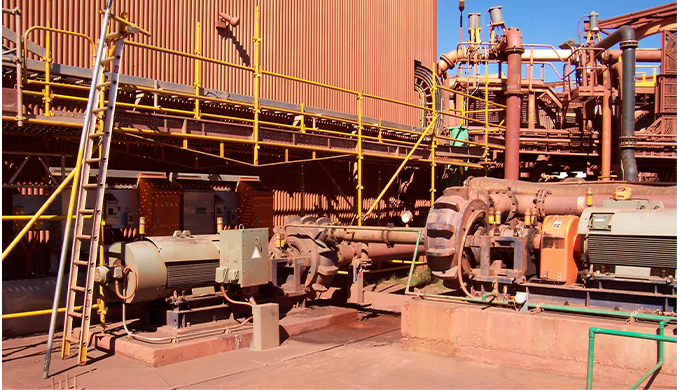
Performance analysis of centrifugal double suction pumps necessitates a comprehensive understanding of hydraulic forces and energy transfer. Force analysis centers on balancing the radial forces generated by the impeller, minimizing axial thrust via symmetrical suction, and managing hydraulic loads on the shaft and bearings. Environmental resistance is crucial; pumps operating outdoors require consideration of temperature fluctuations, humidity, and potential exposure to corrosive elements. Compliance requirements vary by region and application, often mandating adherence to standards such as ANSI/ASME B73.1 for pump dimensions and performance testing, and potentially API 610 for specific oil and gas applications. Functional implementation involves proper pump sizing based on system head loss calculations, fluid properties, and desired flow rates. Cavitation is a critical concern, demanding Net Positive Suction Head Available (NPSHA) calculations to ensure sufficient inlet pressure and prevent vapor formation within the pump. Pump curves (head-capacity, efficiency, and NPSH required) are fundamental to selecting the optimal pump for a given application. Bearing selection is also vital, considering load capacity, speed, and lubrication requirements. Proper alignment between the pump and motor is essential to minimize vibration and prolong bearing life. The double suction design inherently reduces axial thrust compared to single-suction pumps, but precise impeller balancing remains critical for smooth operation and extended lifespan.
Technical Specifications
| Parameter | Unit | Typical Value (Range) | Notes |
|---|---|---|---|
| Flow Rate | m³/h | 100 – 2000 | Dependent on impeller diameter and speed. |
| Head | m | 10 – 100 | Varies with impeller design and rotational speed. |
| Power | kW | 5.5 – 200 | Determined by flow rate, head, and efficiency. |
| Suction Pressure | MPa | -0.05 – 0.5 | Dependent on NPSHA and fluid properties. |
| Discharge Pressure | MPa | 0.5 – 2.0 | Based on system requirements and head. |
| Operating Temperature | °C | -20 – 120 | Material dependent; consider fluid temperature. |
Failure Mode & Maintenance
Centrifugal double suction pumps are susceptible to several failure modes. Fatigue cracking in the impeller vanes can occur due to cyclic stress, particularly under fluctuating flow conditions. Delamination of the impeller coating (if applicable) can lead to erosion and reduced efficiency. Cavitation erosion damages impeller surfaces, causing pitting and loss of material. Bearing failure, stemming from inadequate lubrication, misalignment, or excessive loads, is a common occurrence. Mechanical seal failure results in leakage and can be attributed to abrasive particles, improper installation, or material incompatibility. Corrosion, particularly in aggressive fluid environments, degrades pump components, reducing their structural integrity. Oxidation of metallic parts over prolonged exposure to air and moisture can also contribute to deterioration. Preventative maintenance should include regular vibration analysis to detect bearing wear or misalignment, oil analysis to monitor lubricant condition, visual inspection for corrosion or cracks, and seal replacement based on service life. Impeller balancing is crucial to minimize vibration. Proper lubrication schedules and the use of compatible lubricants are essential for bearing longevity. Routine cleaning to remove debris and solids can prevent abrasive wear. Periodic inspection of suction piping to eliminate air leaks is critical for preventing cavitation. Non-destructive testing methods (e.g., ultrasonic testing) can identify hidden cracks or flaws before they lead to catastrophic failure.
Industry FAQ
Q: What are the key considerations when selecting a double suction pump for a highly viscous fluid?
A: When dealing with highly viscous fluids, the primary considerations are increased head loss and reduced pump efficiency. You must carefully review the pump curve for the specified fluid viscosity, as performance will deviate significantly from water-based curves. Consider a pump with a larger impeller diameter and lower speed to maintain adequate flow. Ensure the pump casing and impeller materials are compatible with the fluid to prevent corrosion or swelling. Also, increase the NPSHA to account for the increased friction losses within the fluid.
Q: How does impeller trim affect the pump's performance and efficiency?
A: Impeller trimming reduces the impeller diameter, lowering both the head and power requirements of the pump. While it allows for fine-tuning to match specific system demands, excessive trimming significantly reduces pump efficiency and can increase susceptibility to cavitation. It’s crucial to consult pump performance curves and ensure the trimmed impeller operates within the recommended efficiency range.
Q: What are the best practices for mitigating cavitation in a double suction pump?
A: Mitigating cavitation involves ensuring adequate NPSHA. This requires optimizing the suction piping design to minimize head loss, maintaining sufficient liquid level in the suction tank, and reducing fluid temperature. Regularly inspect the impeller for signs of cavitation damage, and consider using cavitation-resistant impeller materials.
Q: What are the advantages of using a double suction pump over a single suction pump in a large-scale water intake application?
A: Double suction pumps offer several advantages in large-scale water intake applications. They provide higher flow rates for a given pump size, reduced axial thrust, and lower NPSH requirements, minimizing cavitation risk. The symmetrical suction design improves hydraulic efficiency and reduces the risk of impeller imbalance.
Q: What are the implications of operating a centrifugal pump outside of its BEP (Best Efficiency Point)?
A: Operating outside the BEP leads to reduced efficiency, increased energy consumption, and heightened vibration levels. Prolonged operation at significantly off-BEP conditions can accelerate wear and tear on pump components, potentially leading to premature failure. It’s crucial to select a pump that operates close to its BEP for the intended application.
Conclusion
Centrifugal double suction pumps represent a robust and efficient solution for large-scale fluid transfer, offering advantages in flow rate, axial thrust reduction, and cavitation mitigation. Their reliable performance is contingent upon careful material selection, precise manufacturing processes, and diligent maintenance practices. Understanding the intricacies of fluid dynamics, material compatibility, and potential failure modes is essential for optimizing pump selection and ensuring long-term operational integrity.
Future advancements in pump technology are focused on optimizing impeller designs for enhanced efficiency, implementing advanced monitoring systems for predictive maintenance, and developing materials with improved corrosion resistance and wear characteristics. The integration of variable frequency drives (VFDs) further enhances pump control and energy efficiency, allowing for precise adjustments to flow rate and pressure based on real-time system demands. Continued research and development will undoubtedly lead to even more reliable and efficient centrifugal double suction pumps, addressing the evolving needs of diverse industries.
-
Comprehensive Guide to Waterproof ORings for Optimal Sealing Solutions
News2026-06-09
-
Septic Pump System Performance Analysis
News2026-06-08
-
pump for septic Material Science
News2026-06-08
-
basement sewer pump Performance Analysis
News2026-06-08
-
submerged pump Performance Engineering
News2026-06-08
-
Septic System Pumps Performance Analysis
News2026-06-08
-
septic system pump Material Science and Manufacturing
News2026-06-07
-
pump for septic tank Material Science Manufacturing
News2026-06-07
-
submersible sewage pump Material Science
News2026-06-07
-
Sewage Ejector Material Science and Manufacturing
News2026-06-07
-
Ejection Pump Material Science
News2026-06-07
-
pump submersible Performance Analysis
News2026-06-06
-
ejector pumps Performance Engineering
News2026-06-06
-
basement ejector pump Material Science Manufacturing
News2026-06-06
-
Septic Tanks Pumping Performance Analysis
News2026-06-06




