English
- Afrikaans
- Albanian
- Amharic
- Arabic
- Armenian
- Azerbaijani
- Basque
- Belarusian
- Bengali
- Bosnian
- Bulgarian
- Catalan
- Cebuano
- Corsican
- Croatian
- Czech
- Danish
- Dutch
- English
- Esperanto
- Estonian
- Finnish
- French
- Frisian
- Galician
- Georgian
- German
- Greek
- Gujarati
- Haitian Creole
- hausa
- hawaiian
- Hebrew
- Hindi
- Miao
- Hungarian
- Icelandic
- igbo
- Indonesian
- irish
- Italian
- Japanese
- Javanese
- Kannada
- kazakh
- Khmer
- Rwandese
- Korean
- Kurdish
- Kyrgyz
- Lao
- Latin
- Latvian
- Lithuanian
- Luxembourgish
- Macedonian
- Malgashi
- Malay
- Malayalam
- Maltese
- Maori
- Marathi
- Mongolian
- Myanmar
- Nepali
- Norwegian
- Norwegian
- Occitan
- Pashto
- Persian
- Polish
- Portuguese
- Punjabi
- Romanian
- Russian
- Samoan
- Scottish Gaelic
- Serbian
- Sesotho
- Shona
- Sindhi
- Sinhala
- Slovak
- Slovenian
- Somali
- Spanish
- Sundanese
- Swahili
- Swedish
- Tagalog
- Tajik
- Tamil
- Tatar
- Telugu
- Thai
- Turkish
- Turkmen
- Ukrainian
- Urdu
- Uighur
- Uzbek
- Vietnamese
- Welsh
- Bantu
- Yiddish
- Yoruba
- Zulu

Telephone: +86 13120555503
Email: frank@cypump.com


Apr . 01, 2024 17:55 Back to list
casting slurry pump part vertical slurry pump Performance Engineering
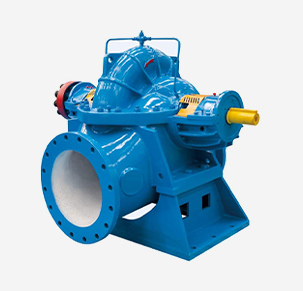
Introduction
Vertical slurry pumps are critical components in various industrial processes, including mining, wastewater treatment, chemical processing, and dredging. This technical guide focuses on the casting slurry pump part, specifically the volute casing, impeller, and liners, integral to the performance and longevity of vertical slurry pump systems. These components are engineered to handle abrasive and corrosive slurries, demanding specific material selection, manufacturing processes, and performance characteristics. Their position within the industry chain is fundamental; failure impacts entire process uptime and operational efficiency. Core performance indicators revolve around hydraulic efficiency, wear resistance, and structural integrity under varying operating conditions, often involving high solids concentrations and significant fluid velocities. The pump's vertical configuration minimizes footprint and simplifies maintenance in submerged applications, making it a favored choice in many scenarios. Understanding the nuances of these cast components is paramount for informed procurement, effective maintenance, and optimized system performance.
Material Science & Manufacturing
The primary materials for casting slurry pump parts are typically high-chromium cast irons (typically 19% to 30% Cr), nickel-hard iron alloys, and, for highly corrosive environments, specialized stainless steels (e.g., duplex stainless steel). High-chromium cast irons offer exceptional abrasion resistance due to the formation of hard chromium carbides within the matrix. Nickel-hard iron provides a balance of abrasion and impact resistance. Stainless steels, while more expensive, provide superior corrosion resistance. Raw material sourcing and quality control are vital; impurities can significantly impact casting integrity and performance.
Manufacturing primarily utilizes sand casting, though investment casting and centrifugal casting are employed for smaller, more precise components. Sand casting involves creating a mold from sand bonded with a resin system. Molten metal is poured into the mold cavity, allowed to solidify, and then the casting is extracted. Key process parameters include sand composition, binder type, pouring temperature, cooling rate, and mold rigidity. Controlling these parameters is critical to minimizing defects like porosity, shrinkage cavities, and hot tears. The impeller, requiring high accuracy and surface finish, often undergoes subsequent machining operations like balancing and surface hardening. Liners are typically manufactured with a slight interference fit for secure attachment to the pump casing. Post-casting heat treatments, such as annealing or normalizing, are applied to relieve residual stresses and improve mechanical properties. Non-destructive testing (NDT), including radiographic inspection and ultrasonic testing, are essential to detect internal flaws before service.
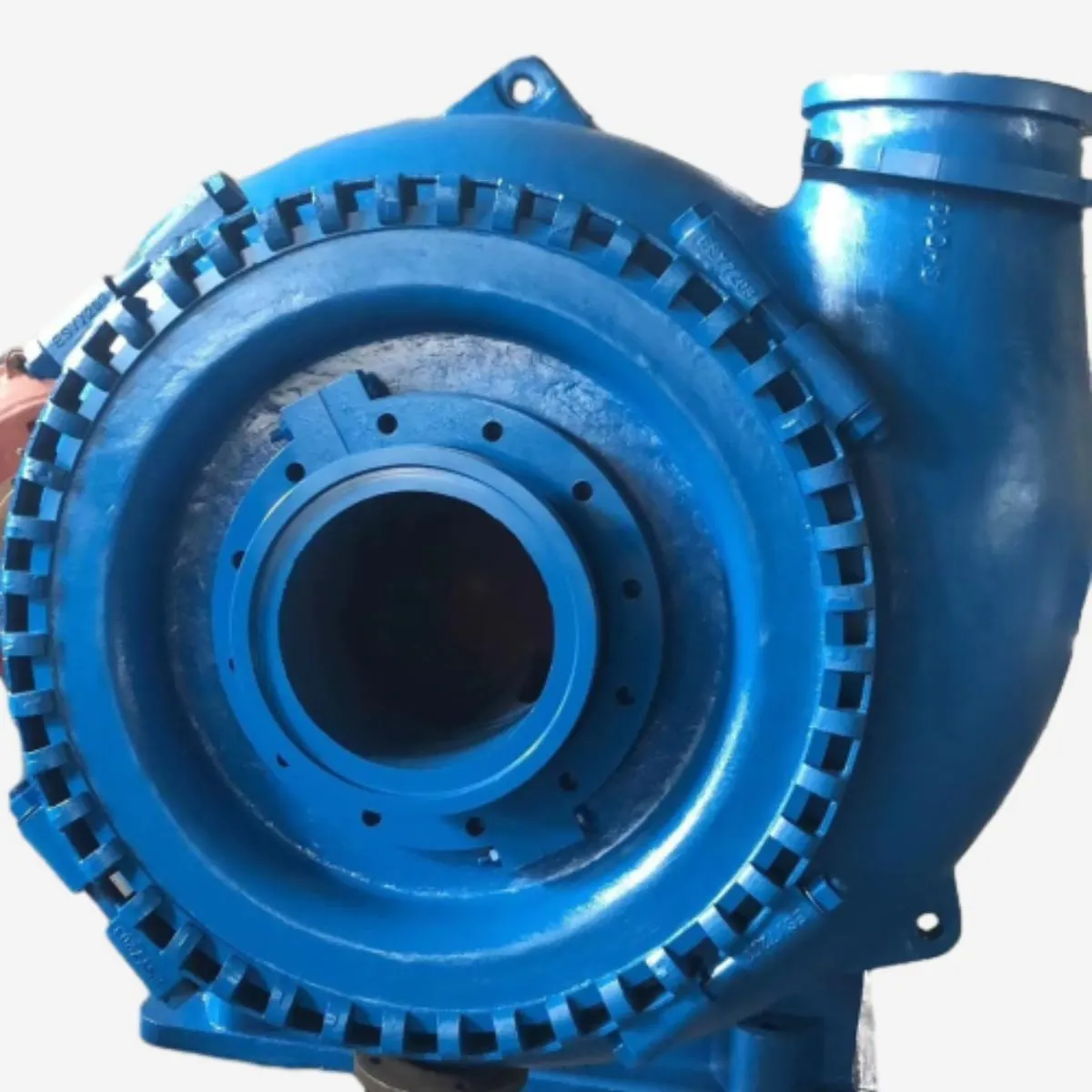
Performance & Engineering
The performance of casting slurry pump parts is governed by hydraulic forces, abrasive wear, and corrosion. Force analysis focuses on stresses induced by fluid pressure, impeller loading, and piping connections. Finite element analysis (FEA) is routinely used to optimize component geometry for maximum strength and minimize stress concentrations. Environmental resistance is paramount. Slurries containing abrasive particles cause wear on the impeller and liner surfaces, reducing pump efficiency over time. The wear rate is dependent on particle size, concentration, velocity, and material hardness. Corrosion, particularly in acidic or alkaline slurries, can lead to material degradation and structural failure.
Compliance requirements are stringent, with pumps often needing to meet standards set by organizations like Hydraulic Institute (HI) and API 610 for centrifugal pumps. Pump selection must consider the slurry’s specific gravity, viscosity, solids content, and particle size distribution. The pump’s head-capacity curve dictates its operating range, while the Net Positive Suction Head Required (NPSHr) must be matched to the available NPSHa to prevent cavitation. Pump materials must be compatible with the slurry composition to prevent premature failure. Proper impeller design maximizes hydraulic efficiency while minimizing wear. Sealing systems must prevent leakage and protect bearings from slurry contamination.
Technical Specifications
| Component | Material | Hardness (BHN) | Tensile Strength (MPa) | Elongation (%) | Typical Application |
|---|---|---|---|---|---|
| Volute Casing | High-Chromium Cast Iron (27% Cr) | 550-650 | 400-600 | 2-5 | Mining (High Abrasion) |
| Impeller | Nickel-Hard Iron | 450-550 | 500-700 | 8-12 | Gravel Pumping |
| Liner | High-Chromium Cast Iron (20% Cr) | 500-600 | 350-550 | 3-6 | Wastewater Treatment |
| Shaft Sleeve | Duplex Stainless Steel (2205) | 250-350 | 800-1000 | 15-25 | Corrosive Slurries |
| Wear Plate | High-Chromium Cast Iron (19% Cr) | 520-620 | 380-580 | 4-7 | Dredging Applications |
| Casing Flange | Carbon Steel (A105) | 150-200 | 485-655 | 20-30 | General Purpose |
Failure Mode & Maintenance
Common failure modes in casting slurry pump parts include abrasive wear, erosion-corrosion, fatigue cracking, and cavitation damage. Abrasive wear is the most prevalent, occurring due to the impact of solid particles on the impeller and liner surfaces. Erosion-corrosion is accelerated by the combined effect of abrasive wear and corrosive attack. Fatigue cracking can occur in the volute casing due to cyclic loading, particularly in areas with stress concentrations. Cavitation damage results from the formation and collapse of vapor bubbles, eroding the metal surface.
Preventative maintenance is crucial to extending component life. Regular inspections should be conducted to identify signs of wear, corrosion, or cracking. Impeller balancing is essential to minimize vibration and bearing wear. Liners should be replaced when they reach a predetermined wear limit. Lubrication of bearings must be maintained to prevent premature failure. Periodic cleaning of the pump casing and impeller removes accumulated solids and prevents clogging. Selecting the correct pump size and operating within the recommended operating parameters minimizes stress and wear. If cavitation is suspected, the system’s NPSHa should be verified and adjusted accordingly. Implementing a condition monitoring program, utilizing vibration analysis and thermal imaging, can provide early warning of potential failures.
Industry FAQ
Q: What is the optimal chromium content in a cast iron impeller for handling highly abrasive silica slurries?
A: For highly abrasive silica slurries, a chromium content of 27-30% is generally optimal. Higher chromium levels form a greater volume fraction of hard chromium carbides, enhancing abrasion resistance. However, increasing chromium beyond 30% can reduce toughness and castability. Consideration must also be given to the specific size and shape of the silica particles.
Q: How does the cooling rate during casting impact the microstructure and wear resistance of a volute casing?
A: A controlled cooling rate is critical. Rapid cooling can lead to the formation of martensite, increasing hardness but reducing toughness and potentially causing cracking. Slower cooling promotes the formation of pearlitic and ferritic structures with better ductility and impact resistance. Optimized cooling rates contribute to a more uniform distribution of chromium carbides, improving wear resistance.
Q: What are the key considerations when selecting a liner material for a pump handling a slurry containing sulfuric acid?
A: When handling sulfuric acid, corrosion resistance is paramount. High-chromium cast irons are generally unsuitable due to their susceptibility to acid attack. Duplex stainless steels (e.g., 2205) or super austenitic stainless steels offer superior resistance to sulfuric acid corrosion. Consider the concentration and temperature of the acid, as these factors significantly influence the corrosion rate. Polymer liners can also be considered in less demanding applications.
Q: What non-destructive testing (NDT) methods are most effective for detecting subsurface flaws in large cast pump components?
A: Radiographic inspection (X-ray or gamma-ray) is highly effective for detecting volumetric flaws like porosity and shrinkage cavities. Ultrasonic testing is also valuable for detecting subsurface cracks and inclusions. Liquid penetrant testing can identify surface cracks, while magnetic particle inspection is suitable for detecting surface and near-surface flaws in ferromagnetic materials.
Q: What are the best practices for impeller balancing to minimize vibration and extend bearing life?
A: Impellers should be balanced both statically and dynamically. Static balancing ensures that the impeller’s center of gravity coincides with its axis of rotation. Dynamic balancing corrects for imbalance caused by the distribution of mass around the axis of rotation. Balancing should be performed after any machining operations and whenever impeller wear is significant. Regular vibration analysis should be conducted to monitor bearing condition and detect any imbalances.
Conclusion
The selection, manufacturing, and maintenance of casting slurry pump parts are integral to the reliable operation of slurry pumping systems. High-chromium cast irons and specialized stainless steels remain the dominant materials, with material choice dictated by the slurry’s abrasive and corrosive characteristics. Precise control of manufacturing parameters, including casting techniques and heat treatments, is essential for achieving optimal mechanical properties and minimizing defects. Implementing a robust preventative maintenance program, coupled with regular condition monitoring, is paramount for maximizing component life and preventing catastrophic failures.
Future advancements in material science may lead to the development of even more wear and corrosion-resistant alloys. Improvements in casting simulation and process control will further enhance component quality and reduce manufacturing costs. The integration of sensor technologies and predictive analytics will enable proactive maintenance strategies, minimizing downtime and optimizing system performance. A comprehensive understanding of these technical considerations is vital for engineers and procurement professionals involved in slurry handling applications.
-
Precision at the Pump: How Better Machining Protects Flow and Uptime
News2026-11-20
-
Why Pump Reliability Begins Before the First Drop of Fluid
News2026-11-20
-
Beyond the Pump: Designing Safer Access Around Critical Water Infrastructure
News2026-11-20
-
Why Pumping Stations Depend on the Infrastructure Beneath the Pumps
News2026-11-20
-
Beyond the Pump Room: How Smarter Loading Protects Industrial Equipment
News2026-11-19
-
When Pumps Stop: Designing More Resilient Power for Critical Pumping Systems
News2026-11-19
-
The Hidden Role of Dust and Gas Monitoring in Reliable Pump Operations
News2026-11-19
-
The Hidden Role of Mineral Compounds in Extending Industrial Pump Lifespan
News2026-10-12
-
Why Pump System Reliability Depends on Precision Hose Assembly Methods
News2026-09-15
-
How Advanced Imaging Films Are Transforming Pump Component Quality Control
News2026-08-25
-
How Advanced Filtration Protects Pump Systems from Premature Wear and Costly Downtime
News2026-08-25
-
How Steel Material Selection Drives Pump Reliability in Heavy-Duty Systems
News2026-08-25
-
Ensuring Pump System Efficiency: The Role of High-Quality Pipe Fittings and Tubing
News2026-08-24
-
Optimizing Fluid Dynamics and Material Consistency in Industrial Processing
News2026-08-18
-
Innovations and Challenges in Hydraulic Systems for Heavy Machinery
News2026-08-13




