English
- Afrikaans
- Albanian
- Amharic
- Arabic
- Armenian
- Azerbaijani
- Basque
- Belarusian
- Bengali
- Bosnian
- Bulgarian
- Catalan
- Cebuano
- Corsican
- Croatian
- Czech
- Danish
- Dutch
- English
- Esperanto
- Estonian
- Finnish
- French
- Frisian
- Galician
- Georgian
- German
- Greek
- Gujarati
- Haitian Creole
- hausa
- hawaiian
- Hebrew
- Hindi
- Miao
- Hungarian
- Icelandic
- igbo
- Indonesian
- irish
- Italian
- Japanese
- Javanese
- Kannada
- kazakh
- Khmer
- Rwandese
- Korean
- Kurdish
- Kyrgyz
- Lao
- Latin
- Latvian
- Lithuanian
- Luxembourgish
- Macedonian
- Malgashi
- Malay
- Malayalam
- Maltese
- Maori
- Marathi
- Mongolian
- Myanmar
- Nepali
- Norwegian
- Norwegian
- Occitan
- Pashto
- Persian
- Polish
- Portuguese
- Punjabi
- Romanian
- Russian
- Samoan
- Scottish Gaelic
- Serbian
- Sesotho
- Shona
- Sindhi
- Sinhala
- Slovak
- Slovenian
- Somali
- Spanish
- Sundanese
- Swahili
- Swedish
- Tagalog
- Tajik
- Tamil
- Tatar
- Telugu
- Thai
- Turkish
- Turkmen
- Ukrainian
- Urdu
- Uighur
- Uzbek
- Vietnamese
- Welsh
- Bantu
- Yiddish
- Yoruba
- Zulu

Telephone: +86 13120555503
Email: frank@cypump.com


Apr . 01, 2024 17:55 Back to list
big capacity double suction pump Performance Engineering
Introduction
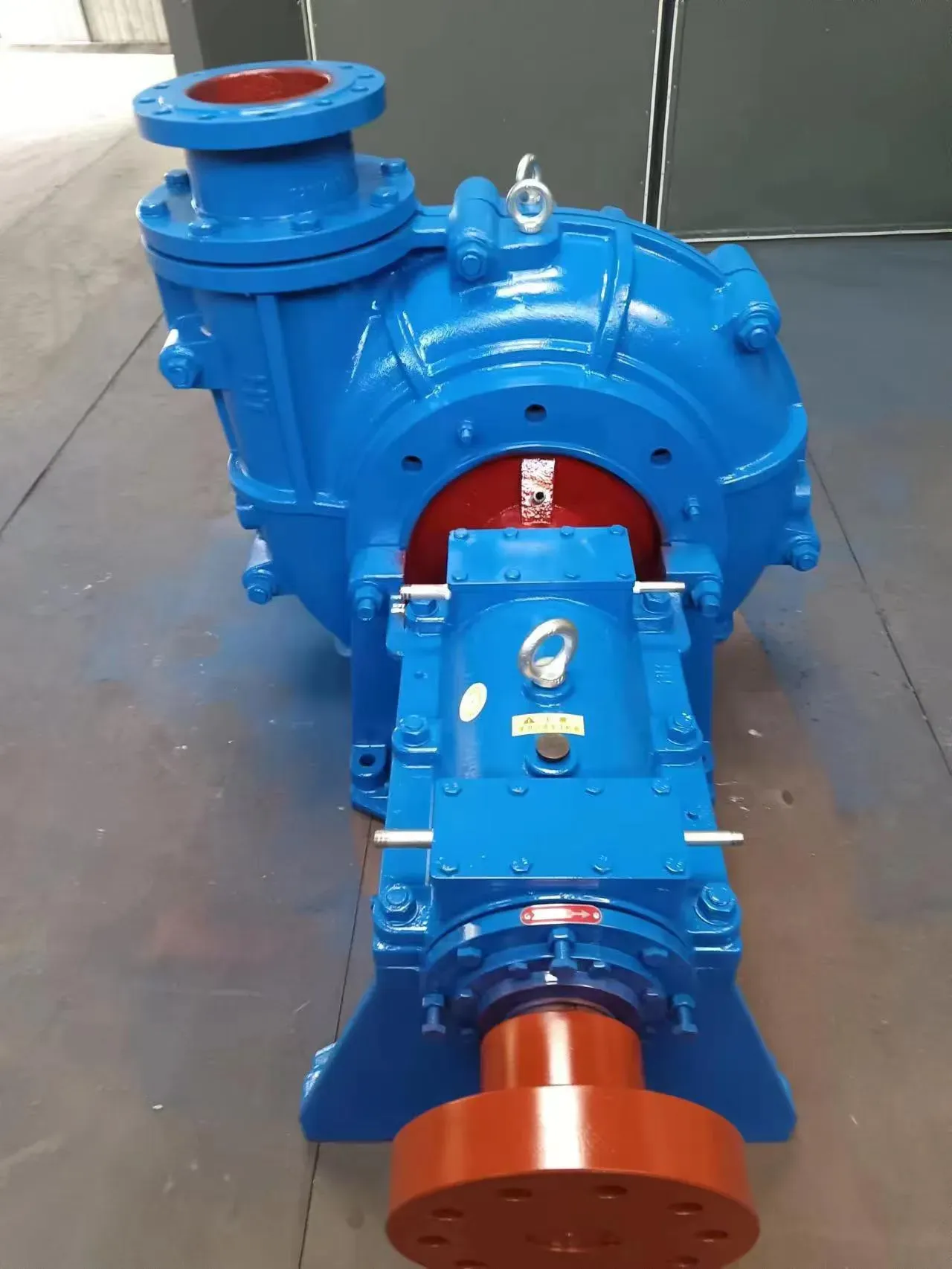
Big capacity double suction pumps are centrifugal pumps designed for high-volume fluid transfer, primarily in applications requiring substantial flow rates and moderate heads. They occupy a critical position in numerous industrial sectors, including water treatment, power generation, irrigation, and large-scale industrial processing. These pumps distinguish themselves from single-suction designs through their ability to draw fluid from both sides of the impeller, effectively doubling the inlet area and minimizing suction-related issues such as cavitation. Core performance characteristics are defined by flow rate (typically exceeding 1000 m³/hr), discharge head (ranging from 5 to 150 meters depending on impeller design and speed), and efficiency (often exceeding 80% at optimal operating points). A primary industry pain point is maintaining consistent performance and reliability in demanding conditions, specifically addressing wear from abrasive fluids, corrosion from aggressive chemicals, and the prevention of hydraulic instability.
Material Science & Manufacturing
The construction of big capacity double suction pumps necessitates careful material selection to withstand operational stresses and fluid characteristics. Pump casings are typically manufactured from cast iron (ASTM A48 Class 30 or higher for general service), ductile iron (ASTM A536 Grade 65-45-12 for improved strength and shock resistance), or stainless steel (304/316 for corrosive environments). Impellers are commonly made from cast iron, bronze (ASTM B584), or stainless steel, depending on the fluid’s erosive or corrosive properties. Shafts utilize alloy steel (e.g., 4140, quenched and tempered) for high tensile strength and fatigue resistance. Manufacturing processes begin with pattern making for the casing and impeller. Casting utilizes sand casting or investment casting for complex geometries. Impellers undergo precision machining and balancing to minimize vibration. Shafts are machined, heat-treated, and ground to tight tolerances. Key parameter control includes maintaining dimensional accuracy during casting, ensuring proper impeller blade angle and surface finish, and achieving precise shaft straightness and balance. Welding is frequently employed for casing assembly, requiring qualified welders and adherence to standards like AWS D1.1. Non-destructive testing (NDT), including radiographic testing (RT) and ultrasonic testing (UT), verifies weld integrity. Rubber lining with materials like chlorobutyl or EPDM is often applied to casings for corrosion protection.
Performance & Engineering
Performance analysis of big capacity double suction pumps centers on hydraulic design and system integration. The pump’s characteristic curves (head-flow, power-flow, efficiency-flow) are critical for selecting the optimal pump for a given application. Force analysis considers static loads (weight of the pump and fluid) and dynamic loads (hydraulic forces, impeller imbalance, and vibration). Hydraulic forces are mitigated through robust casing design and impeller balancing. Environmental resistance necessitates consideration of ambient temperature, humidity, and potential exposure to corrosive atmospheres. Sealing systems, including mechanical seals (API 682) and packing glands, are critical for preventing leakage and ensuring reliable operation. Compliance requirements vary by region and application, often involving adherence to standards like ANSI/ASME B73.1 for centrifugal pumps and API 610 for centrifugal pumps in petroleum, petrochemical, and natural gas industries. Net Positive Suction Head Required (NPSHr) is a crucial engineering parameter; insufficient NPSH can lead to cavitation, reducing pump performance and causing damage. Pump selection must account for system NPSHa (Net Positive Suction Head Available) exceeding NPSHr by a safe margin. Variable Frequency Drives (VFDs) are commonly used to control pump speed and flow rate, improving energy efficiency and process control.
Technical Specifications
| Parameter | Unit | Typical Range | Material |
|---|---|---|---|
| Flow Rate | m³/hr | 500 – 10,000 | Cast Iron, Ductile Iron, Stainless Steel |
| Discharge Head | m | 5 – 150 | Cast Iron, Ductile Iron, Stainless Steel |
| Pump Speed | RPM | 750 – 3600 | Alloy Steel |
| Power | kW | 20 – 500 | Electric Motor (IE3 or higher) |
| Suction Pipe Diameter | mm | 200 – 800 | Steel, Ductile Iron |
| Discharge Pipe Diameter | mm | 150 – 600 | Steel, Ductile Iron |
Failure Mode & Maintenance
Big capacity double suction pumps are susceptible to several failure modes. Cavitation, caused by insufficient NPSH, leads to impeller erosion and reduced performance. Fatigue cracking can occur in the pump casing and impeller due to cyclic loading. Corrosion, particularly in aggressive fluid environments, degrades pump materials, leading to leakage and failure. Bearing failure, often resulting from inadequate lubrication or contamination, causes increased vibration and potential seizure. Shaft misalignment contributes to bearing wear and seal failure. Delamination of rubber linings can expose the underlying metal to corrosion. Regular maintenance is crucial for preventing these failures. This includes periodic inspection of impellers and casings for wear and corrosion, lubrication of bearings according to manufacturer’s specifications, alignment checks of the pump and motor, and monitoring of vibration levels. Mechanical seals should be inspected and replaced as needed. Preventive maintenance programs incorporating oil analysis, thermal imaging, and vibration analysis can proactively identify potential problems before they lead to catastrophic failures. Root Cause Failure Analysis (RCFA) should be performed following any significant failure to determine the underlying cause and implement corrective actions.
Industry FAQ
Q: What are the key differences between a double suction and a single suction pump for a large-scale water intake application?
A: A double suction pump offers a significantly larger suction area, reducing the risk of cavitation, especially when dealing with long suction lines or varying water levels. This translates to higher flow rates for a given pump size and improved efficiency in large-scale intake applications. Single suction pumps are generally more cost-effective for lower flow requirements but may require larger suction piping to avoid cavitation.
Q: How does impeller trim affect the pump’s performance and efficiency?
A: Impeller trimming reduces the impeller diameter, lowering the pump’s head and flow rate. While it allows for fine-tuning the pump to a specific operating point, excessive trimming can significantly reduce pump efficiency and increase the risk of cavitation. Trimmed impellers require re-balancing to minimize vibration.
Q: What are the common causes of vibration in a double suction pump, and how can they be addressed?
A: Common causes include impeller imbalance, misalignment between the pump and motor, bearing wear, cavitation, and hydraulic instability. Addressing these issues involves dynamic balancing of the impeller, laser alignment of the pump and motor, bearing replacement, ensuring adequate NPSH, and investigating potential flow disturbances in the suction or discharge piping.
Q: What material selection considerations are crucial when pumping abrasive slurries?
A: For abrasive slurries, materials with high wear resistance are essential. This often involves using hardened cast iron alloys (e.g., HH, NI-HARD), ceramic materials, or rubber linings. Impeller and casing designs should minimize sharp corners and areas where abrasives can accumulate. Regular inspection and replacement of wear components are also critical.
Q: What role does the pump’s stuffing box play in maintaining efficiency and preventing leaks?
A: The stuffing box, or mechanical seal arrangement, provides a leak-tight seal between the rotating shaft and the pump casing. Proper seal selection and maintenance are crucial for minimizing leakage and maintaining pump efficiency. Worn or damaged seals can lead to significant fluid loss and reduced pump performance. Regular monitoring of seal performance and timely replacement are essential.
Conclusion
Big capacity double suction pumps represent a cornerstone of numerous industrial fluid transfer systems. Their superior flow handling capabilities and reduced susceptibility to cavitation make them ideal for demanding applications. However, achieving optimal performance and longevity necessitates careful material selection, precise manufacturing, and diligent maintenance practices. Understanding the core principles of hydraulic design, failure modes, and relevant industry standards is paramount for effective pump operation and lifecycle cost management.
Future trends will likely focus on enhanced monitoring capabilities through IIoT (Industrial Internet of Things) sensors, predictive maintenance algorithms, and optimized impeller designs for increased efficiency and reduced energy consumption. Furthermore, advancements in materials science will drive the development of more corrosion-resistant and wear-resistant pump components, extending service life and reducing downtime. Continual investment in these areas is crucial for maintaining the reliability and efficiency of these critical industrial assets.
-
pump for sewage water Performance Analysis
News2026-05-23
-
plumbing sewage ejector pump Performance Engineering
News2026-05-23
-
home sewer pump station Performance and Engineering
News2026-05-23
-
high pressure sump pump Performance Analysis
News2026-05-23
-
high head effluent pump Performance Analysis
News2026-05-23
-
Effluent vs Sump Pump Performance Analysis
News2026-05-22
-
effluent septic pump Performance Engineering
News2026-05-22
-
best sewer pumps Performance Engineering
News2026-05-22
-
best sewer pump Performance Analysis
News2026-05-22
-
best sewage pumps Performance Engineering
News2026-05-22
-
basement bathroom sewage pump Material Science Manufacturing
News2026-05-21
-
wastewater treatment plant pumps Material Science Manufacturing
News2026-05-21
-
waste water pump for basement Material Science Manufacturing
News2026-05-21
-
sump pump sewage Performance Analysis
News2026-05-21
-
sump pump for sewage Material Science and Manufacturing
News2026-05-21




