English
- Afrikaans
- Albanian
- Amharic
- Arabic
- Armenian
- Azerbaijani
- Basque
- Belarusian
- Bengali
- Bosnian
- Bulgarian
- Catalan
- Cebuano
- Corsican
- Croatian
- Czech
- Danish
- Dutch
- English
- Esperanto
- Estonian
- Finnish
- French
- Frisian
- Galician
- Georgian
- German
- Greek
- Gujarati
- Haitian Creole
- hausa
- hawaiian
- Hebrew
- Hindi
- Miao
- Hungarian
- Icelandic
- igbo
- Indonesian
- irish
- Italian
- Japanese
- Javanese
- Kannada
- kazakh
- Khmer
- Rwandese
- Korean
- Kurdish
- Kyrgyz
- Lao
- Latin
- Latvian
- Lithuanian
- Luxembourgish
- Macedonian
- Malgashi
- Malay
- Malayalam
- Maltese
- Maori
- Marathi
- Mongolian
- Myanmar
- Nepali
- Norwegian
- Norwegian
- Occitan
- Pashto
- Persian
- Polish
- Portuguese
- Punjabi
- Romanian
- Russian
- Samoan
- Scottish Gaelic
- Serbian
- Sesotho
- Shona
- Sindhi
- Sinhala
- Slovak
- Slovenian
- Somali
- Spanish
- Sundanese
- Swahili
- Swedish
- Tagalog
- Tajik
- Tamil
- Tatar
- Telugu
- Thai
- Turkish
- Turkmen
- Ukrainian
- Urdu
- Uighur
- Uzbek
- Vietnamese
- Welsh
- Bantu
- Yiddish
- Yoruba
- Zulu

Telephone: +86 13120555503
Email: frank@cypump.com


Apr . 01, 2024 17:55 Back to list
best sewer pumps Performance Engineering
Introduction
Submersible sewer pumps represent a critical component in wastewater management infrastructure, facilitating the efficient and reliable transfer of sewage from collection points to treatment facilities. These pumps, categorized within the broader centrifugal pump family, are specifically engineered for submerged operation in challenging environments characterized by abrasive solids, corrosive chemicals, and variable flow rates. Their technical position within the industry chain extends from raw material sourcing (cast iron, stainless steel, elastomers) through precision manufacturing, culminating in installation within municipal or industrial wastewater networks. Core performance metrics, including hydraulic efficiency, solids handling capacity, head pressure, and motor protection, dictate their suitability for diverse applications ranging from residential septic systems to large-scale municipal wastewater treatment plants. The escalating demand for robust and energy-efficient wastewater handling solutions drives continuous innovation in impeller design, motor technology, and sealing systems, addressing critical industry pain points related to pump failure, energy consumption, and maintenance downtime.
Material Science & Manufacturing
The construction of high-performance sewer pumps relies heavily on specific material properties and precisely controlled manufacturing processes. Pump housings are commonly constructed from gray cast iron (ASTM A48 Class 30) due to its inherent abrasion resistance, dampening characteristics, and cost-effectiveness. However, for highly corrosive environments, ductile iron (ASTM A536-89) or stainless steel (specifically 316L – ASTM A743) are employed, offering superior resistance to chemical attack. Impellers, the rotating components responsible for generating hydraulic head, are typically manufactured from high-chrome cast iron (ASTM A532 Grade III) to withstand the erosive impact of solids. Shafts utilize alloy steel (AISI 4140) heat-treated for high tensile strength and torsional rigidity. Seals are critical, utilizing elastomers like Viton (fluoroelastomer) or EPDM (ethylene propylene diene monomer) for chemical compatibility and wear resistance. Manufacturing processes include sand casting for housings, investment casting for impellers (offering tighter tolerances and smoother surface finishes), and CNC machining for critical components like shafts and wear plates. Welding processes, such as submerged arc welding (SAW), are employed for joining larger components, requiring strict adherence to AWS D1.1 structural welding code. Key parameter control during manufacturing includes dimensional accuracy (verified via Coordinate Measuring Machines - CMM), surface roughness (Ra values), and material hardness (Rockwell testing). Proper heat treatment processes are essential for achieving the desired mechanical properties in cast iron and steel components, mitigating the risk of premature failure.
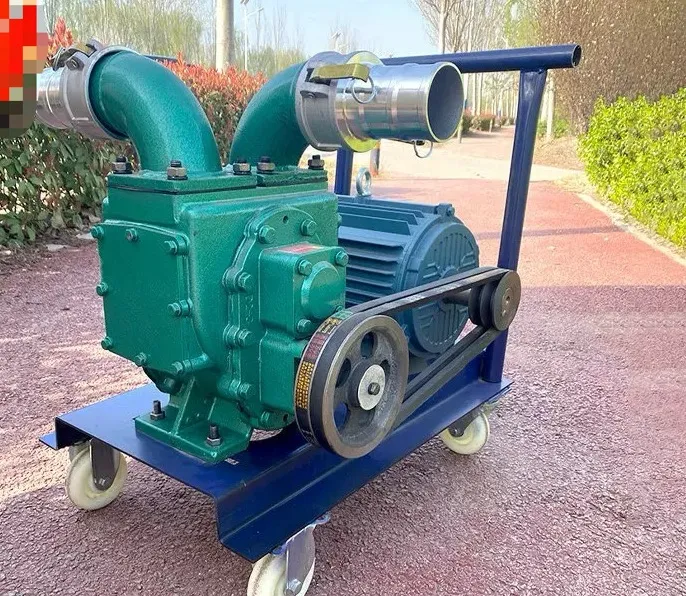
Performance & Engineering
Sewer pump performance is fundamentally governed by hydraulic principles, specifically the relationship between flow rate, head pressure, and power consumption. Force analysis considers both static and dynamic loads, including the weight of the fluid column, frictional losses within the piping system, and the impeller's rotational forces. Environmental resistance is paramount; pumps must withstand continuous submersion, fluctuating temperatures, and potential exposure to aggressive chemicals. Motor selection (typically NEMA standards) is critical, ensuring adequate power and protection against overload, overheating, and moisture ingress (IP68 rating is standard). Pump curves, generated through rigorous hydraulic testing (based on ANSI/HI standards), illustrate the pump’s performance characteristics across a range of operating conditions. Compliance requirements dictate adherence to stringent safety standards (UL 508A for electrical components) and environmental regulations (EPA guidelines for wastewater discharge). Specific engineering details include impeller design (radial, mixed-flow, or axial) optimized for solids handling, volute casing geometry for efficient fluid collection, and sealing configurations (mechanical seals with ceramic faces) to prevent leakage. System-level engineering considers pump selection based on Total Dynamic Head (TDH) calculations, accounting for static lift, friction losses, and desired flow rates. Variable Frequency Drives (VFDs) are increasingly integrated to optimize energy consumption by matching pump speed to fluctuating demand.
Technical Specifications
| Parameter | Units | Typical Range (Residential) | Typical Range (Municipal) |
|---|---|---|---|
| Flow Rate | Gallons Per Minute (GPM) | 20-50 | 100-1000+ |
| Total Dynamic Head (TDH) | Feet | 10-30 | 50-200+ |
| Motor Horsepower | HP | 1/2 - 1 | 5 - 100+ |
| Solids Handling Capacity | Inches | Up to 1 | Up to 4+ |
| Impeller Material | - | High-Chrome Cast Iron | Stainless Steel (316L) or High-Chrome Cast Iron |
| Housing Material | - | Cast Iron (A48 Class 30) | Ductile Iron (A536-89) or Stainless Steel (316L) |
Failure Mode & Maintenance
Sewer pump failure can arise from several distinct modes, significantly impacting operational uptime and cost. Fatigue cracking in the impeller, often initiated by cavitation erosion or stress concentrations, is a common occurrence. Delamination of the pump housing, particularly in cast iron components, can occur due to corrosion or thermal stress. Mechanical seal failure, resulting in leakage, stems from abrasion by solids, chemical attack, or improper installation. Motor failure can be caused by overheating (due to inadequate cooling or overload), winding insulation breakdown (due to moisture ingress), or bearing failure. Oxidation of metallic components leads to corrosion, especially in aggressive wastewater environments. Preventive maintenance is crucial. Regular inspections should include visual checks for leaks, abnormal noise, or vibration. Seal replacement should be performed on a scheduled basis (typically annually or bi-annually, depending on usage). Motor windings should be periodically tested for insulation resistance. Impellers should be inspected for wear and erosion, with replacement considered when significant material loss is detected. Proper lubrication of bearings is essential. Regular flushing of the pump and wet well helps prevent solids buildup and reduces the risk of clogging. Condition monitoring techniques, such as vibration analysis and oil analysis, can provide early warning signs of impending failure, enabling proactive maintenance interventions.
Industry FAQ
Q: What is the optimal impeller material for a system consistently handling abrasive grit and sand?
A: For systems consistently exposed to abrasive solids, a high-chrome cast iron impeller (ASTM A532 Grade III) is the most cost-effective solution. The high chromium content significantly enhances abrasion resistance compared to standard cast iron. While stainless steel offers superior corrosion resistance, it is generally less resistant to abrasive wear. Regular inspection and replacement of the impeller will still be necessary, but the service life will be maximized with the correct material selection.
Q: How does VFD integration impact the total cost of ownership of a sewer pump system?
A: While the initial investment for a VFD is higher, the long-term benefits typically outweigh the cost. VFDs allow the pump speed to be adjusted to match actual flow demand, reducing energy consumption significantly. Reduced mechanical stress on the pump components also extends their lifespan, lowering maintenance costs. Demand-based control also minimizes water hammer and surge pressures, protecting the entire piping system.
Q: What are the key considerations when specifying a mechanical seal for a corrosive wastewater environment?
A: Material compatibility is paramount. Viton (fluoroelastomer) is generally suitable for a wide range of chemicals, but specific wastewater composition must be considered. For highly aggressive environments, materials like Kalrez (perfluoroelastomer) may be necessary. The seal face material should also be chosen carefully; silicon carbide is often preferred for its hardness and chemical resistance. Proper seal installation and lubrication are critical to prevent premature failure.
Q: What is the significance of the IP68 ingress protection rating for submersible sewer pumps?
A: IP68 signifies that the pump is completely dust-tight and can withstand continuous submersion in water at a depth exceeding 1 meter. This is crucial for sewer pump applications, as pumps are constantly exposed to water and potential contaminants. The '8' indicates the depth and duration of submersion the pump can reliably endure, ensuring long-term operational reliability.
Q: How do I determine the appropriate pump size (flow rate and head) for a new wastewater collection system?
A: Accurate sizing requires a thorough hydraulic analysis. This includes determining the peak flow rate, calculating the Total Dynamic Head (TDH – accounting for static lift, friction losses in the piping, and pressure at the discharge point), and considering future growth. Consulting with a qualified pump engineer is recommended to ensure optimal system performance and energy efficiency. Utilizing pump curves and system resistance curves to determine the duty point is essential.
Conclusion
Sewer pump technology is a sophisticated field demanding a comprehensive understanding of material science, hydraulic principles, and stringent industry standards. Selecting the appropriate pump requires careful consideration of the specific application, wastewater characteristics, and operating conditions. Prioritizing robust materials, precise manufacturing processes, and proactive maintenance strategies is essential for maximizing pump reliability, minimizing downtime, and ensuring long-term operational efficiency within wastewater management infrastructure.
Future advancements in sewer pump technology will likely focus on improved energy efficiency through optimized impeller designs and intelligent control systems, increased solids handling capacity to reduce clogging, and the integration of remote monitoring and diagnostics for predictive maintenance. A continued emphasis on corrosion resistance and environmental sustainability will drive innovation in material selection and pump design, addressing the evolving challenges faced by the wastewater industry.
-
Effluent vs Sump Pump Performance Analysis
News2026-05-22
-
effluent septic pump Performance Engineering
News2026-05-22
-
best sewer pumps Performance Engineering
News2026-05-22
-
best sewer pump Performance Analysis
News2026-05-22
-
best sewage pumps Performance Engineering
News2026-05-22
-
basement bathroom sewage pump Material Science Manufacturing
News2026-05-21
-
wastewater treatment plant pumps Material Science Manufacturing
News2026-05-21
-
waste water pump for basement Material Science Manufacturing
News2026-05-21
-
sump pump sewage Performance Analysis
News2026-05-21
-
sump pump for sewage Material Science and Manufacturing
News2026-05-21
-
sump pump for septic systems Material Science Manufacturing
News2026-05-20
-
sump pump and ejector pump Material Science Manufacturing
News2026-05-20
-
sewage treatment plant pumps Performance Analysis
News2026-05-20
-
sewage tank pump Material Science and Manufacturing
News2026-05-20
-
sewage pump for septic tank Performance Analysis
News2026-05-20




