English
- Afrikaans
- Albanian
- Amharic
- Arabic
- Armenian
- Azerbaijani
- Basque
- Belarusian
- Bengali
- Bosnian
- Bulgarian
- Catalan
- Cebuano
- Corsican
- Croatian
- Czech
- Danish
- Dutch
- English
- Esperanto
- Estonian
- Finnish
- French
- Frisian
- Galician
- Georgian
- German
- Greek
- Gujarati
- Haitian Creole
- hausa
- hawaiian
- Hebrew
- Hindi
- Miao
- Hungarian
- Icelandic
- igbo
- Indonesian
- irish
- Italian
- Japanese
- Javanese
- Kannada
- kazakh
- Khmer
- Rwandese
- Korean
- Kurdish
- Kyrgyz
- Lao
- Latin
- Latvian
- Lithuanian
- Luxembourgish
- Macedonian
- Malgashi
- Malay
- Malayalam
- Maltese
- Maori
- Marathi
- Mongolian
- Myanmar
- Nepali
- Norwegian
- Norwegian
- Occitan
- Pashto
- Persian
- Polish
- Portuguese
- Punjabi
- Romanian
- Russian
- Samoan
- Scottish Gaelic
- Serbian
- Sesotho
- Shona
- Sindhi
- Sinhala
- Slovak
- Slovenian
- Somali
- Spanish
- Sundanese
- Swahili
- Swedish
- Tagalog
- Tajik
- Tamil
- Tatar
- Telugu
- Thai
- Turkish
- Turkmen
- Ukrainian
- Urdu
- Uighur
- Uzbek
- Vietnamese
- Welsh
- Bantu
- Yiddish
- Yoruba
- Zulu

Telephone: +86 13120555503
Email: frank@cypump.com


Apr . 01, 2024 17:55 Back to list
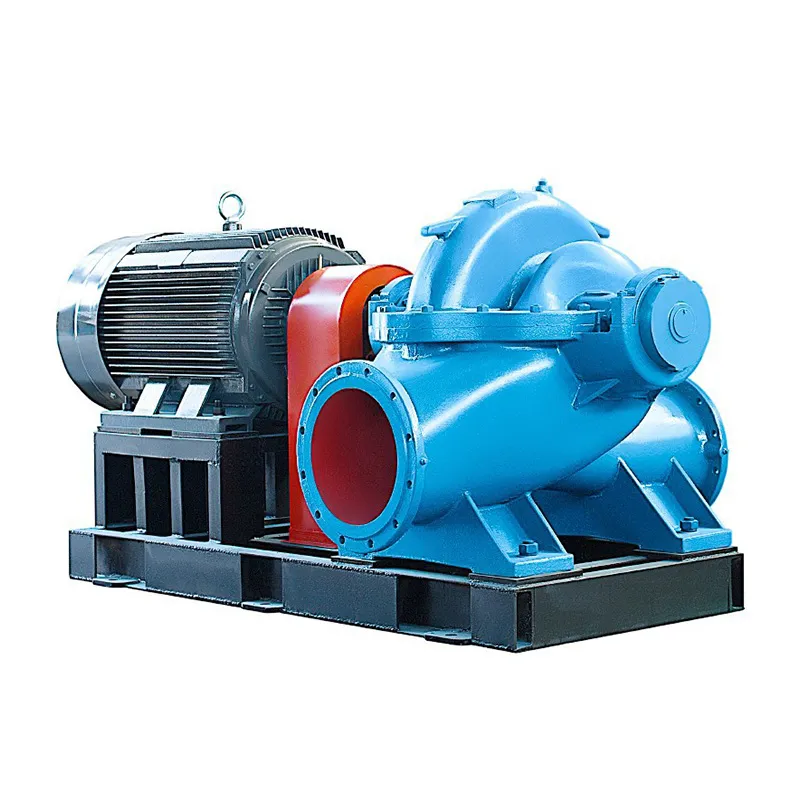
axial water pump Performance and Engineering
Introduction
The axial water pump is a dynamic hydrodynamic machine utilized for the transfer of fluids, specifically water, through a system by increasing its pressure. Positioned within the broader pump industry, it constitutes a significant segment alongside centrifugal, radial, and mixed-flow pumps. Its defining characteristic is the fluid flow moving parallel to the pump's axis of rotation, differentiating it from pumps exhibiting radial or mixed flow patterns. Core performance metrics include flow rate (typically measured in m³/h or GPM), head (expressed in meters or feet), efficiency (%), and net positive suction head required (NPSHr). Axial pumps excel in high-flow, low-head applications making them crucial in irrigation, drainage, cooling water circulation, and large-scale water supply systems. The selection of an axial pump over alternatives hinges on specific system requirements, particularly concerning flow rate versus head characteristics and the minimization of hydraulic losses inherent in its design. Industry pain points include cavitation susceptibility, efficiency losses due to misalignment, and the challenges associated with handling fluids containing solids.
Material Science & Manufacturing
Axial water pump construction relies heavily on materials resistant to corrosion, erosion, and mechanical stress. Impeller and diffuser materials commonly include cast iron (ASTM A48 Class 30), stainless steel (304, 316 – ASTM A240), and specialized alloys like duplex stainless steel for highly corrosive environments. Shaft materials typically consist of carbon steel (AISI 1045) or alloy steel, often hardened and tempered to enhance tensile strength and fatigue resistance. Casing materials can range from cast iron and ductile iron (ASTM A536) to fiberglass-reinforced polymers (FRP) depending on pressure requirements and fluid characteristics. Manufacturing processes begin with impeller casting, followed by precision machining to achieve aerodynamic profiles crucial for efficient fluid transfer. Welding (SMAW, GTAW – AWS D1.1) is extensively used for casing assembly, demanding strict quality control to prevent defects like porosity and incomplete fusion. Diffuser vanes are frequently produced through investment casting or precision forging. Balancing of the impeller is critical (ISO 1940-1) to minimize vibration and extend bearing life. Parameter control focuses on maintaining dimensional tolerances (ISO 2768-mK), surface finish (Ra values – ISO 4287), and ensuring material conformity to specified standards. The impeller’s blade angle and number directly impact the pump’s head-flow curve; deviations require recalibration. Coatings, like epoxy or polyurethane, are often applied to internal surfaces to enhance corrosion resistance and reduce friction losses.
Performance & Engineering
Axial pump performance is fundamentally governed by the principles of fluid dynamics, specifically Bernoulli's principle and the conservation of momentum. The pump imparts energy to the fluid via rotating blades, converting mechanical energy into kinetic energy, which is then converted into pressure energy. Force analysis considers centrifugal forces acting on the impeller, axial thrust loads, and bending moments on the shaft. These forces necessitate robust bearing designs (rolling element bearings – ISO 281) and effective thrust balancing mechanisms. Environmental resistance is paramount; pumps operating in harsh environments require appropriate sealing systems (mechanical seals – API 682) to prevent fluid leakage and ingress of contaminants. Compliance requirements vary by region but commonly include hydraulic institute standards (HI), and energy efficiency regulations (e.g., US Department of Energy pump efficiency standards). Functional implementation necessitates careful system design, including proper pipe sizing to minimize head losses, adequate suction lift considerations to avoid cavitation (NPSHa > NPSHr), and the selection of appropriate motor-pump coupling arrangements (direct drive, belt drive, gear drive). The pump's specific speed (Ns) is a crucial parameter determining its optimal application range. Understanding the affinity laws (relationships between flow, head, speed, and power) is essential for predicting pump performance under varying operating conditions. Cavitation, a significant failure mode, occurs when the absolute pressure drops below the vapor pressure of the fluid, forming vapor bubbles that collapse and cause erosion of impeller blades. Minimizing cavitation requires maintaining sufficient NPSHa.
Technical Specifications
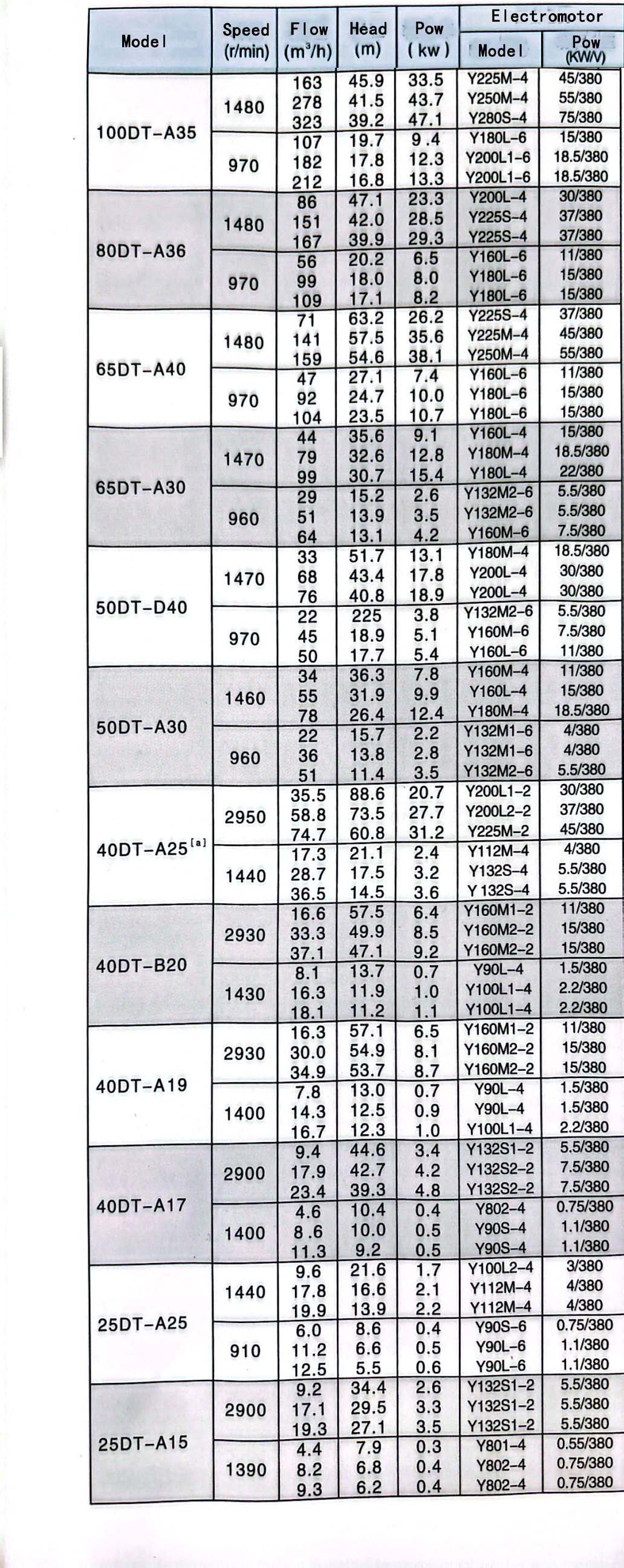
| Parameter | Typical Value (Small Axial Pump) | Typical Value (Medium Axial Pump) | Typical Value (Large Axial Pump) |
|---|---|---|---|
| Flow Rate (m³/h) | 0.5 - 5 | 10 - 50 | 100 - 500 |
| Head (m) | 2 - 10 | 10 - 30 | 30 - 60 |
| Power (kW) | 0.75 - 2.2 | 4 - 15 | 20 - 100 |
| Impeller Diameter (mm) | 150 - 300 | 400 - 800 | 900 - 1500 |
| Specific Speed (Ns) | 800 - 1500 | 1200 - 2000 | 1500 – 2500 |
| Efficiency (%) | 65 - 75 | 75 - 85 | 80 – 90 |
Failure Mode & Maintenance
Axial water pumps are susceptible to several failure modes. Fatigue cracking of the impeller, particularly at the blade roots, can occur due to cyclic loading and stress concentration. Erosion, caused by abrasive particles in the fluid, leads to material loss and reduced pump performance. Corrosion, especially in seawater or chemically aggressive fluids, weakens impeller and casing materials. Bearing failure, often stemming from inadequate lubrication or misalignment, results in increased vibration and eventual pump shutdown. Shaft deflection and misalignment induce increased radial loads on bearings, accelerating wear. Cavitation, as previously mentioned, causes pitting and erosion on impeller blades and the casing. Maintenance solutions include regular visual inspections for corrosion and erosion, vibration analysis to detect bearing wear and misalignment (ISO 10816), impeller balancing, and lubrication schedule adherence. Preventative maintenance should incorporate periodic impeller cleaning to remove deposits and maintain hydraulic efficiency. For pumps handling abrasive fluids, wear-resistant coatings or impeller materials should be employed. Mechanical seal replacement is crucial to prevent leakage. Regular monitoring of NPSHa to ensure it exceeds NPSHr is vital to prevent cavitation damage. Implementing a condition-monitoring program utilizing sensors (temperature, vibration, pressure) can provide early warning of potential failures.
Industry FAQ
Q: What is the primary difference between an axial flow pump and a centrifugal pump in terms of head and flow rate?
A: Axial flow pumps are designed for high flow rates and low heads, whereas centrifugal pumps are better suited for low flow rates and high heads. The axial pump imparts energy primarily in the direction of flow, resulting in a limited head increase, while the centrifugal pump increases the fluid’s velocity radially and then converts it into pressure, achieving a higher head.
Q: How critical is NPSH in axial pump applications, and what are the consequences of insufficient NPSH?
A: NPSH is extremely critical in axial pump applications. Axial pumps are particularly susceptible to cavitation due to their high rotational speeds and relatively low suction energy. Insufficient NPSH leads to cavitation, causing noise, vibration, reduced performance, and ultimately, erosion damage to the impeller and casing.
Q: What material selection considerations are most important when pumping seawater?
A: When pumping seawater, resistance to chloride-induced corrosion is paramount. Materials like duplex stainless steel, super duplex stainless steel, or high-nickel alloys are preferred. Coatings like epoxy or specialized marine coatings can also provide an additional layer of protection. Regular inspection for pitting corrosion is essential.
Q: How does impeller blade angle affect pump performance?
A: The impeller blade angle directly influences the pump’s head-flow curve. A larger blade angle generally results in a higher head but a lower flow rate, while a smaller blade angle leads to a lower head but a higher flow rate. Optimizing the blade angle for the specific application is crucial for maximizing pump efficiency.
Q: What are common methods for mitigating vibration in axial pumps?
A: Common methods for mitigating vibration include dynamic balancing of the impeller, proper alignment of the pump and motor, ensuring adequate foundation stiffness, and utilizing flexible couplings to dampen vibrations. Regular monitoring of vibration levels using vibration analysis equipment is also recommended.
Conclusion
The axial water pump, distinguished by its parallel flow path and high-flow/low-head characteristics, remains a vital component in numerous industrial applications. Its performance is intrinsically linked to precise material selection, meticulous manufacturing processes, and a thorough understanding of fluid dynamics principles. Effective operation relies on mitigating cavitation, ensuring appropriate NPSH, and adhering to stringent maintenance protocols to address fatigue, erosion, and corrosion failure modes.
Continued advancements in materials science, computational fluid dynamics (CFD) modeling, and condition monitoring technologies will further enhance the efficiency, reliability, and longevity of axial pumps. Future development will likely focus on optimizing impeller designs for reduced noise and vibration, exploring novel materials with superior corrosion resistance, and integrating smart sensors for predictive maintenance capabilities.
-
Precision at the Pump: How Better Machining Protects Flow and Uptime
News2026-11-20
-
Why Pump Reliability Begins Before the First Drop of Fluid
News2026-11-20
-
Beyond the Pump: Designing Safer Access Around Critical Water Infrastructure
News2026-11-20
-
Why Pumping Stations Depend on the Infrastructure Beneath the Pumps
News2026-11-20
-
Beyond the Pump Room: How Smarter Loading Protects Industrial Equipment
News2026-11-19
-
When Pumps Stop: Designing More Resilient Power for Critical Pumping Systems
News2026-11-19
-
The Hidden Role of Dust and Gas Monitoring in Reliable Pump Operations
News2026-11-19
-
The Hidden Role of Mineral Compounds in Extending Industrial Pump Lifespan
News2026-10-12
-
Why Pump System Reliability Depends on Precision Hose Assembly Methods
News2026-09-15
-
How Advanced Imaging Films Are Transforming Pump Component Quality Control
News2026-08-25
-
How Advanced Filtration Protects Pump Systems from Premature Wear and Costly Downtime
News2026-08-25
-
How Steel Material Selection Drives Pump Reliability in Heavy-Duty Systems
News2026-08-25
-
Ensuring Pump System Efficiency: The Role of High-Quality Pipe Fittings and Tubing
News2026-08-24
-
Optimizing Fluid Dynamics and Material Consistency in Industrial Processing
News2026-08-18
-
Innovations and Challenges in Hydraulic Systems for Heavy Machinery
News2026-08-13




