English
- Afrikaans
- Albanian
- Amharic
- Arabic
- Armenian
- Azerbaijani
- Basque
- Belarusian
- Bengali
- Bosnian
- Bulgarian
- Catalan
- Cebuano
- Corsican
- Croatian
- Czech
- Danish
- Dutch
- English
- Esperanto
- Estonian
- Finnish
- French
- Frisian
- Galician
- Georgian
- German
- Greek
- Gujarati
- Haitian Creole
- hausa
- hawaiian
- Hebrew
- Hindi
- Miao
- Hungarian
- Icelandic
- igbo
- Indonesian
- irish
- Italian
- Japanese
- Javanese
- Kannada
- kazakh
- Khmer
- Rwandese
- Korean
- Kurdish
- Kyrgyz
- Lao
- Latin
- Latvian
- Lithuanian
- Luxembourgish
- Macedonian
- Malgashi
- Malay
- Malayalam
- Maltese
- Maori
- Marathi
- Mongolian
- Myanmar
- Nepali
- Norwegian
- Norwegian
- Occitan
- Pashto
- Persian
- Polish
- Portuguese
- Punjabi
- Romanian
- Russian
- Samoan
- Scottish Gaelic
- Serbian
- Sesotho
- Shona
- Sindhi
- Sinhala
- Slovak
- Slovenian
- Somali
- Spanish
- Sundanese
- Swahili
- Swedish
- Tagalog
- Tajik
- Tamil
- Tatar
- Telugu
- Thai
- Turkish
- Turkmen
- Ukrainian
- Urdu
- Uighur
- Uzbek
- Vietnamese
- Welsh
- Bantu
- Yiddish
- Yoruba
- Zulu

Telephone: +86 13120555503
Email: frank@cypump.com


Apr . 01, 2024 17:55 Back to list
axial pumps Performance and Engineering
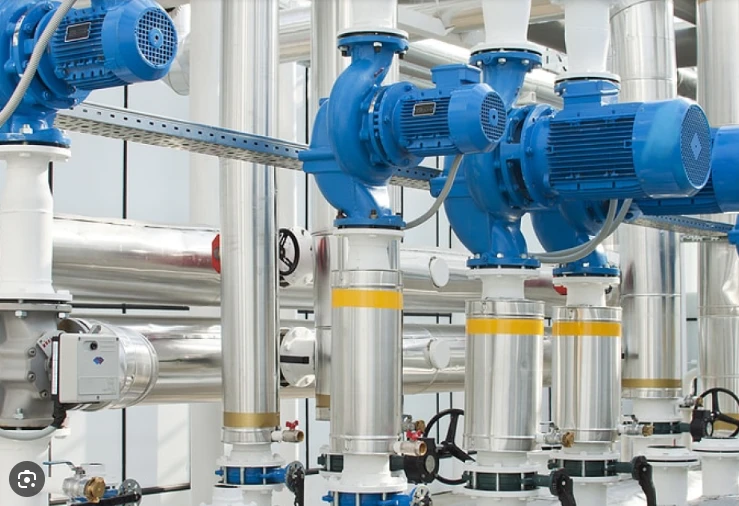
Introduction
Axial pumps are a class of dynamic pumps characterized by fluid flow parallel to the pump’s axis of rotation. Positioned within the broader pump industry, which encompasses centrifugal, radial, and mixed-flow pumps, axial pumps excel in applications requiring high flow rates at relatively low heads. They are prevalent in large-scale water transfer, irrigation, cooling water circulation in power plants, and as booster pumps in pipelines. Core performance characteristics – volumetric flow rate, head, efficiency, and net positive suction head required (NPSHr) – dictate their suitability for a given application. A key industry pain point is optimizing axial pump performance for varying flow conditions and minimizing hydraulic losses, impacting energy efficiency and overall system cost. The selection process demands careful consideration of fluid properties, system resistance, and operational requirements to prevent cavitation, vibration, and premature failure.
Material Science & Manufacturing
Axial pump construction typically utilizes a range of materials selected based on fluid compatibility, pressure, and corrosive potential. Impellers and diffusers, critical flow passage components, commonly employ stainless steel alloys (304, 316, 17-4 PH) due to their high strength, corrosion resistance, and machinability. Pump casings can be fabricated from cast iron, ductile iron, or steel, often with protective coatings (epoxy, polyurethane) to enhance resistance to erosion and corrosion. Shafts require high-tensile-strength alloys, such as 4140 or 4340 steel, with surface hardening treatments (induction hardening, nitriding) to resist wear and fatigue. Manufacturing processes include precision casting for impellers and casings, CNC machining for shafts and other critical components, and robotic welding for assembly. Key parameter control focuses on impeller blade profiles – angle, curvature, and thickness – to optimize hydraulic performance. Dimensional accuracy, particularly for impeller-diffuser clearances, is crucial to minimize recirculation losses. Non-destructive testing (NDT), including ultrasonic testing and radiographic inspection, is employed to ensure weld integrity and detect material defects. Surface finish quality within flow passages is a major factor in reducing friction and improving efficiency; electropolishing is frequently used. The selection of appropriate elastomers for seals (e.g., Viton, EPDM) is vital for long-term fluid containment and minimizing leakage.
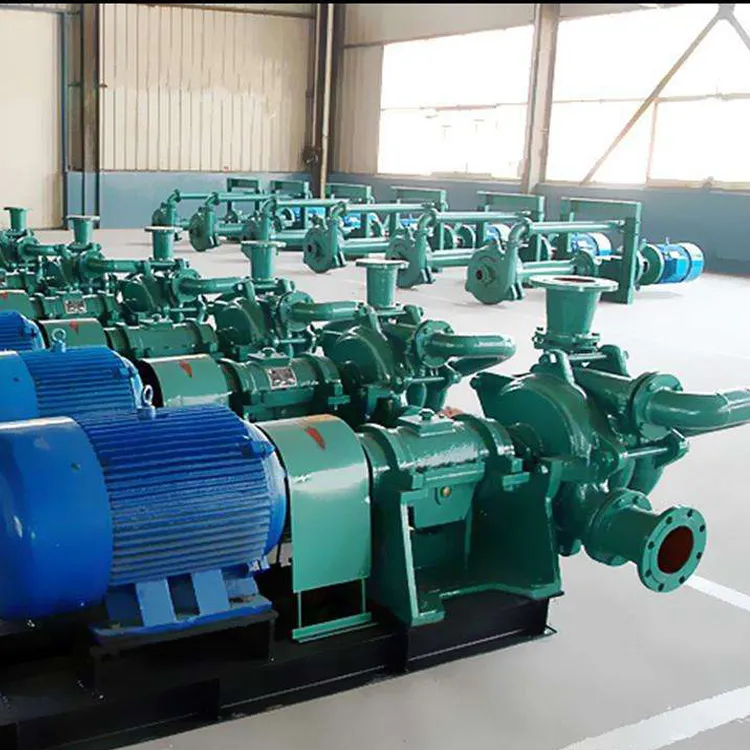
Performance & Engineering
Axial pump performance is governed by the principles of fluid dynamics, specifically Bernoulli’s principle and the Euler pump equation. Force analysis centers on balancing hydraulic forces acting on the impeller and diffuser, and minimizing vibration. The axial thrust generated by the pressure difference across the impeller is often counteracted by balance drums or discs. Environmental resistance considerations include operating temperature, fluid composition, and exposure to external elements. Cavitation, a critical concern, arises when the absolute pressure within the pump falls below the fluid’s vapor pressure, forming vapor bubbles that collapse violently, causing erosion and noise. NPSHr, a crucial performance parameter, represents the minimum absolute pressure required at the pump suction to prevent cavitation. Compliance requirements often include adherence to hydraulic institute standards (ANSI/HI) for pump testing and performance evaluation. The specific speed (Ns) classifies axial pumps based on their geometry and operating characteristics, influencing impeller design and flow rate capabilities. Variable frequency drives (VFDs) are increasingly employed to adjust pump speed and optimize performance for varying flow demands, enhancing energy efficiency. Proper alignment between the pump and motor is paramount to prevent premature bearing failure and shaft misalignment. Hydraulic losses, stemming from friction, recirculation, and turbulence, are minimized through optimized impeller and diffuser designs, smooth flow passage surfaces, and proper gap control.
Technical Specifications
| Parameter | Typical Range (Small Axial Pump) | Typical Range (Large Axial Pump) | Units |
|---|---|---|---|
| Flow Rate | 50 - 500 | 500 - 5000 | m³/h |
| Head | 5 - 30 | 20 - 150 | m |
| Specific Speed (Ns) | 800 - 1500 | 1500 - 3000 | RPM |
| Efficiency | 70 - 85 | 80 - 90 | % |
| NPSHr | 2 - 5 | 5 - 15 | m |
| Operating Temperature | -10 - 80 | -20 - 120 | °C |
Failure Mode & Maintenance
Axial pumps are susceptible to several failure modes. Fatigue cracking in impellers, particularly at the blade roots, is common due to cyclic loading. Erosion caused by abrasive particles in the fluid degrades impeller and diffuser surfaces, reducing efficiency. Corrosion, especially in corrosive fluid environments, weakens material integrity and leads to leakage. Cavitation damage manifests as pitting and erosion on impeller blades and casings. Bearing failure, often resulting from misalignment, inadequate lubrication, or excessive loading, leads to vibration and pump seizure. Delamination of coatings can occur due to improper application or adhesion failure. Oxidation of metallic components can compromise their structural integrity. Preventative maintenance includes regular vibration analysis, lubrication checks, impeller balancing, and seal replacement. Impeller inspection for cracks and erosion is critical. Casings should be inspected for corrosion and coating integrity. Regular monitoring of NPSHa (Net Positive Suction Head Available) is crucial to prevent cavitation. When replacing components, ensure compatibility with the fluid being pumped. Implementing a condition monitoring program utilizing sensors to track parameters like vibration, temperature, and pressure can provide early warning signs of impending failures, allowing for proactive maintenance interventions. Root cause analysis should be performed for all significant failures to prevent recurrence.
Industry FAQ
Q: What are the primary differences between axial and centrifugal pumps in terms of application suitability?
A: Axial pumps excel in high-flow, low-head applications like irrigation and water transport, while centrifugal pumps are more versatile and better suited for a wider range of head and flow conditions. Axial pumps are generally more efficient at high flow rates, but centrifugal pumps can handle viscous fluids more effectively and are less susceptible to cavitation in certain situations. The choice depends on the specific system requirements.
Q: How does impeller blade angle affect axial pump performance?
A: Impeller blade angle directly influences the pump's head and flow characteristics. Higher blade angles generally result in higher head but lower flow rates, while lower blade angles yield lower head and higher flow rates. Optimizing blade angle is a critical aspect of impeller design, tailored to the specific operating point.
Q: What methods can be employed to mitigate cavitation in axial pumps?
A: Increasing NPSHa, reducing pump speed, increasing suction pipe diameter, and lowering fluid temperature can all help mitigate cavitation. Proper impeller design, minimizing flow restrictions in the suction piping, and ensuring adequate submergence of the suction inlet are also crucial.
Q: What are the key considerations when selecting materials for axial pump components exposed to seawater?
A: Seawater is highly corrosive due to its chloride content. Materials like duplex stainless steels, super austenitic stainless steels, and nickel alloys are recommended for components in direct contact with seawater. Protective coatings, such as epoxy or ceramic linings, can also enhance corrosion resistance.
Q: How does variable frequency drive (VFD) control impact the energy efficiency of axial pumps?
A: VFD control allows adjusting pump speed to match actual flow demand, reducing energy consumption compared to traditional throttling methods. By operating the pump closer to its best efficiency point (BEP) for varying flow rates, significant energy savings can be achieved. The affinity laws govern the relationship between speed, flow, head, and power.
Conclusion
Axial pumps represent a crucial technology in fluid handling systems demanding high flow rates at moderate heads. Their performance is inherently linked to precise material selection, meticulous manufacturing processes, and a thorough understanding of fluid dynamics principles. Addressing the industry’s challenges – primarily cavitation prevention and efficiency optimization – requires a comprehensive approach encompassing careful system design, proactive maintenance strategies, and the adoption of advanced control technologies like VFDs.
Continued innovation in axial pump technology will focus on enhancing impeller designs for improved hydraulic performance, developing more durable materials for corrosive environments, and integrating smart sensors for predictive maintenance. The ability to accurately model and simulate pump behavior under varying operating conditions will be critical for optimizing efficiency and reliability, ensuring the long-term sustainability of these vital components in diverse industrial applications.
-
Precision at the Pump: How Better Machining Protects Flow and Uptime
News2026-11-20
-
Why Pump Reliability Begins Before the First Drop of Fluid
News2026-11-20
-
Beyond the Pump: Designing Safer Access Around Critical Water Infrastructure
News2026-11-20
-
Why Pumping Stations Depend on the Infrastructure Beneath the Pumps
News2026-11-20
-
Beyond the Pump Room: How Smarter Loading Protects Industrial Equipment
News2026-11-19
-
When Pumps Stop: Designing More Resilient Power for Critical Pumping Systems
News2026-11-19
-
The Hidden Role of Dust and Gas Monitoring in Reliable Pump Operations
News2026-11-19
-
The Hidden Role of Mineral Compounds in Extending Industrial Pump Lifespan
News2026-10-12
-
Why Pump System Reliability Depends on Precision Hose Assembly Methods
News2026-09-15
-
How Advanced Imaging Films Are Transforming Pump Component Quality Control
News2026-08-25
-
How Advanced Filtration Protects Pump Systems from Premature Wear and Costly Downtime
News2026-08-25
-
How Steel Material Selection Drives Pump Reliability in Heavy-Duty Systems
News2026-08-25
-
Ensuring Pump System Efficiency: The Role of High-Quality Pipe Fittings and Tubing
News2026-08-24
-
Optimizing Fluid Dynamics and Material Consistency in Industrial Processing
News2026-08-18
-
Innovations and Challenges in Hydraulic Systems for Heavy Machinery
News2026-08-13




