English
- Afrikaans
- Albanian
- Amharic
- Arabic
- Armenian
- Azerbaijani
- Basque
- Belarusian
- Bengali
- Bosnian
- Bulgarian
- Catalan
- Cebuano
- Corsican
- Croatian
- Czech
- Danish
- Dutch
- English
- Esperanto
- Estonian
- Finnish
- French
- Frisian
- Galician
- Georgian
- German
- Greek
- Gujarati
- Haitian Creole
- hausa
- hawaiian
- Hebrew
- Hindi
- Miao
- Hungarian
- Icelandic
- igbo
- Indonesian
- irish
- Italian
- Japanese
- Javanese
- Kannada
- kazakh
- Khmer
- Rwandese
- Korean
- Kurdish
- Kyrgyz
- Lao
- Latin
- Latvian
- Lithuanian
- Luxembourgish
- Macedonian
- Malgashi
- Malay
- Malayalam
- Maltese
- Maori
- Marathi
- Mongolian
- Myanmar
- Nepali
- Norwegian
- Norwegian
- Occitan
- Pashto
- Persian
- Polish
- Portuguese
- Punjabi
- Romanian
- Russian
- Samoan
- Scottish Gaelic
- Serbian
- Sesotho
- Shona
- Sindhi
- Sinhala
- Slovak
- Slovenian
- Somali
- Spanish
- Sundanese
- Swahili
- Swedish
- Tagalog
- Tajik
- Tamil
- Tatar
- Telugu
- Thai
- Turkish
- Turkmen
- Ukrainian
- Urdu
- Uighur
- Uzbek
- Vietnamese
- Welsh
- Bantu
- Yiddish
- Yoruba
- Zulu

Telephone: +86 13120555503
Email: frank@cypump.com


Apr . 01, 2024 17:55 Back to list
1 2 hp sewage ejector pump Performance Engineering
Introduction
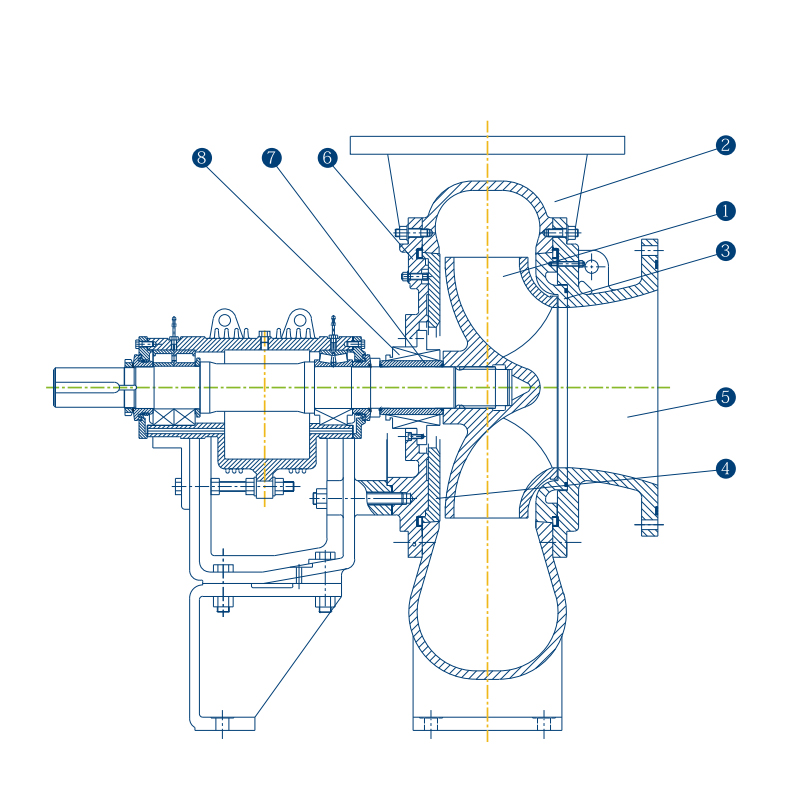
A 1.2 horsepower (hp) sewage ejector pump is a critical component in wastewater management systems, designed to transfer sewage and effluent from below-grade plumbing fixtures to the municipal sewer system or a septic tank. Unlike standard centrifugal pumps, ejector pumps are specifically engineered to handle solids and operate submerged. These pumps are vital in applications where gravity drainage is insufficient, such as basements, low-lying areas, or remote locations. The industry chain positions the sewage ejector pump as a final stage in residential and commercial wastewater collection, following in-fixture drainage and preceding municipal treatment or on-site septic systems. Core performance metrics include flow rate (gallons per minute or GPM), head (vertical lift in feet), solids handling capability (diameter of solids passed), and power consumption. A properly specified and maintained 1.2 hp ejector pump ensures efficient and reliable removal of wastewater, preventing backups and potential health hazards. Industry pain points include premature failure due to solids buildup, corrosion in aggressive wastewater environments, and inefficient motor performance leading to high energy costs.
Material Science & Manufacturing
The construction of a 1.2 hp sewage ejector pump involves several key materials, each selected for specific properties. Pump housings are commonly cast iron (ASTM A48 Class 30) due to its durability, resistance to corrosion from wastewater (though often coated for enhanced protection), and cost-effectiveness. Impellers, responsible for generating flow, are frequently manufactured from high-grade stainless steel (304 or 316 stainless steel – ASTM A581) to withstand abrasive solids and corrosive fluids. Shafts utilize 4140 alloy steel (ASTM A576) heat treated for high tensile strength and resistance to torsional stress. Seals are typically made of materials like nitrile rubber (NBR) or Viton (fluoroelastomer) selected for chemical compatibility with various wastewater compositions. The motor housing is often aluminum for heat dissipation and lightweight characteristics. Manufacturing processes include sand casting for the housing, investment casting or machining for the impeller, and CNC machining for the shaft. Critical parameter control during manufacturing focuses on impeller balance to minimize vibration, seal integrity to prevent leakage, and concentricity between the motor and pump components to ensure efficient power transmission. Coating processes like epoxy coating or fusion-bonded epoxy (FBE) are applied to the cast iron housing to enhance corrosion resistance. Weld integrity is paramount in assembled components and subject to non-destructive testing such as radiographic inspection.
Performance & Engineering
The performance of a 1.2 hp sewage ejector pump is fundamentally governed by hydraulic principles and motor characteristics. Force analysis considers the hydrodynamic forces exerted by the wastewater on the impeller, the static head (vertical distance the pump must lift the fluid), and frictional losses within the piping system. Environmental resistance is a critical design factor, with pumps requiring robust seals and corrosion-resistant materials to withstand prolonged exposure to potentially corrosive wastewater. Compliance requirements include adherence to National Electrical Manufacturers Association (NEMA) standards for motor performance and safety (NEMA MG 1), and Underwriters Laboratories (UL) listing for electrical safety. Functional implementation relies on a float switch system that automatically activates the pump when wastewater reaches a predetermined level and deactivates it when the level drops, preventing motor burnout. Pump curves, generated through extensive testing (Hydraulic Institute standards), detail the relationship between flow rate and head. Engineering considerations include pump selection based on Total Dynamic Head (TDH) calculations, which incorporate static head, friction losses, and pressure requirements. Cavitation, a phenomenon where vapor bubbles form and collapse within the pump, must be avoided through proper impeller design and adequate net positive suction head (NPSH) available. Pump efficiency is maximized through optimized impeller geometry and minimized internal clearances.
Technical Specifications
| Parameter | Specification | Testing Standard | Typical Range |
|---|---|---|---|
| Horsepower (HP) | 1.2 hp | NEMA MG 1 | 1.0 - 1.5 hp |
| Voltage | 120V/240V, 60Hz | UL 508A | 110V - 240V |
| Maximum Head | 25 ft | ANSI/HI 1.6 | 20-30 ft |
| Maximum Flow Rate | 55 GPM | ANSI/HI 1.6 | 40-65 GPM |
| Solids Handling Capability | 2 in | Manufacturer's Data | 1.5 - 3 in |
| Minimum Submergence | 14 in | Manufacturer's Data | 12-18 in |
Failure Mode & Maintenance
Common failure modes in 1.2 hp sewage ejector pumps include impeller clogging due to solids buildup (leading to reduced flow and increased motor load), seal failure resulting in leakage and potential motor damage, motor winding failure caused by overheating or moisture ingress, and switch malfunction preventing automatic operation. Failure analysis reveals that impeller clogging is often a result of inadequate pre-filtration or the presence of non-biodegradable materials. Seal failure is typically attributed to abrasive particles wearing down the seal faces or chemical attack by aggressive wastewater components. Motor winding failure can occur due to sustained overload, voltage fluctuations, or insulation breakdown. Routine maintenance is crucial to preventing these failures. This includes regular inspection and cleaning of the impeller and intake screen, lubrication of bearings (if applicable), testing of the float switch system, and checking for signs of corrosion. Preventive maintenance schedules should include annual inspection of electrical connections and motor insulation resistance testing. In the event of failure, disassembly should be performed by qualified personnel. Parts replacement should utilize OEM-approved components to ensure compatibility and performance. Repairing corroded housings or severely worn impellers may necessitate complete pump replacement.
Industry FAQ
Q: What is the impact of wastewater temperature on pump performance?
A: Elevated wastewater temperatures can reduce the viscosity of the fluid, potentially increasing flow rate but also accelerating corrosion rates of certain materials. It’s crucial to verify the pump's temperature operating limits and consider using materials with enhanced temperature resistance for consistently high wastewater temperatures.
Q: How do I determine the correct pump size for my application?
A: Proper pump sizing requires calculating the Total Dynamic Head (TDH), which includes static head, friction losses in the piping, and any pressure requirements. Accurate flow rate estimation based on anticipated wastewater volume is also critical. Consulting with a pump specialist and reviewing pump curves is highly recommended.
Q: What is the recommended maintenance schedule for a sewage ejector pump?
A: A typical maintenance schedule includes quarterly inspection of the float switch, annual impeller cleaning, and biennial seal inspection. Regular monitoring of pump performance (flow rate, amperage draw) can help identify potential issues before they lead to failure.
Q: What type of wastewater can damage a standard sewage ejector pump?
A: Highly abrasive materials (sand, grit), flammable liquids, and extremely corrosive chemicals (strong acids or bases) can significantly damage a standard sewage ejector pump. Specialized pumps designed for these conditions may be required.
Q: Is a check valve necessary in the discharge piping?
A: Yes, a check valve is highly recommended to prevent backflow of wastewater into the pump chamber when the pump is off. This prevents unnecessary cycling and reduces stress on the motor and pump components.
Conclusion
The 1.2 hp sewage ejector pump represents a vital component in wastewater conveyance, demanding careful consideration of material science, manufacturing precision, and hydraulic engineering principles. Proper selection, installation, and maintenance are paramount to ensuring long-term reliability and preventing costly failures. Understanding the common failure modes and implementing a proactive maintenance schedule are crucial for maximizing pump lifespan and minimizing downtime.
Future advancements in sewage ejector pump technology are likely to focus on improved impeller designs for increased solids handling capabilities, more durable and corrosion-resistant materials, and the integration of smart sensors for predictive maintenance. Furthermore, optimizing motor efficiency and incorporating variable frequency drives (VFDs) will contribute to reduced energy consumption and lower operating costs. A continued emphasis on adherence to industry standards (NEMA, UL, ANSI/HI) will be essential for maintaining product safety and performance.
-
1 2 hp sewage ejector pump Performance Engineering
News2026-05-25
-
Zoeller 1/2 hp sewage pump Performance Analysis
News2026-05-25
-
Effluent Pump Performance Analysis
News2026-05-25
-
sump pump vs effluent pump Performance Analysis
News2026-05-25
-
sewer pumps residential Performance Analysis
News2026-05-25
-
Sewage Pump Company Performance and Engineering
News2026-05-24
-
sewage pump 1/2 hp Performance Analysis
News2026-05-24
-
Sewage Ejector Systems Performance Analysis
News2026-05-24
-
Sewage Ejection System Material Science and Manufacturing
News2026-05-24
-
sewage and effluent pumps Performance Engineering
News2026-05-24
-
pump for sewage water Performance Analysis
News2026-05-23
-
plumbing sewage ejector pump Performance Engineering
News2026-05-23
-
home sewer pump station Performance and Engineering
News2026-05-23
-
high pressure sump pump Performance Analysis
News2026-05-23
-
high head effluent pump Performance Analysis
News2026-05-23




